

Is 16 inch bike too big for 4 year old
A 16-inch bike may be too big for a 4-year-old. It is a starting option only when the child is 40–48 in (102–122 cm) tall and passes an individual fit check.
Measure before choosing 16 inches
Measure the child’s height without shoes, standing straight against a wall. Then measure inseam from the floor to the crotch. Height places the rider in a useful wheel-size range; inseam helps you judge whether the child can stand over the actual bicycle comfortably.
Under the XBikes starting points, a 16-inch bike corresponds to ages 4–7 and heights of 40–48 in (102–122 cm). Age four by itself does not confirm the fit. A shorter four-year-old may need a 12- or 14-inch model, while a child within the 16-inch height range still needs to demonstrate comfortable control.
| Wheel size | Starting age | Rider height |
|---|---|---|
| 12 Inch | 3–4 | 34–40 in / 86–102 cm |
| 14 Inch | 3–6 | 37–45 in / 94–114 cm |
| 16 Inch | 4–7 | 40–48 in / 102–122 cm |
How to tell whether the bike is too big
Have the child try the complete bicycle rather than deciding from the wheel label alone. The bike is too big now if the rider cannot stand over it comfortably, reach the handlebars without stretching, steer smoothly, or operate the brakes reliably. The child should not need to lean far forward or shift awkwardly just to maintain control.
Also watch the first mounting, stopping and dismounting attempts in a clear area. Hesitation is not automatically a sizing problem, but an already cautious beginner needs especially easy access to the ground and controls. Current confidence matters alongside physical measurements.
Do not select an oversized 16-inch bicycle merely to leave room for growth. If basic control depends on the child growing taller, it is not the appropriate fit today.
Compare 12, 14 and 16 inches
If the child measures below 40 in (102 cm), compare a smaller option rather than assuming 16 inches will work. The 12-inch range starts at 34 in (86 cm), while the 14-inch range starts at 37 in (94 cm). Because the ranges overlap, the final choice should come from the real bicycle’s stand-over clearance, reach, brake access and the rider’s confidence.
- Below 40 in (102 cm): a 16-inch bike falls outside the supplied height starting point; compare 12- and 14-inch bicycles.
- 40–45 in (102–114 cm): the 14- and 16-inch starting ranges overlap, so test both rather than choosing by age.
- Above 45 in (114 cm): the child remains within the 16-inch starting range up to 48 in (122 cm), subject to the same fit and control checks.
A relevant three-size catalog comparison
The XJD Girls Bike for Kids Ages 3-8, 12/14/16 Inch with Training Wheels – Purple is relevant because its available SKU labels include 12 Inch, 14 Inch and 16 Inch. Those three distinct options let you compare the size ranges that commonly matter for this decision without treating one wheel size as equivalent to another. The ages in the product’s exact title are a catalog label, not proof that any particular child fits.
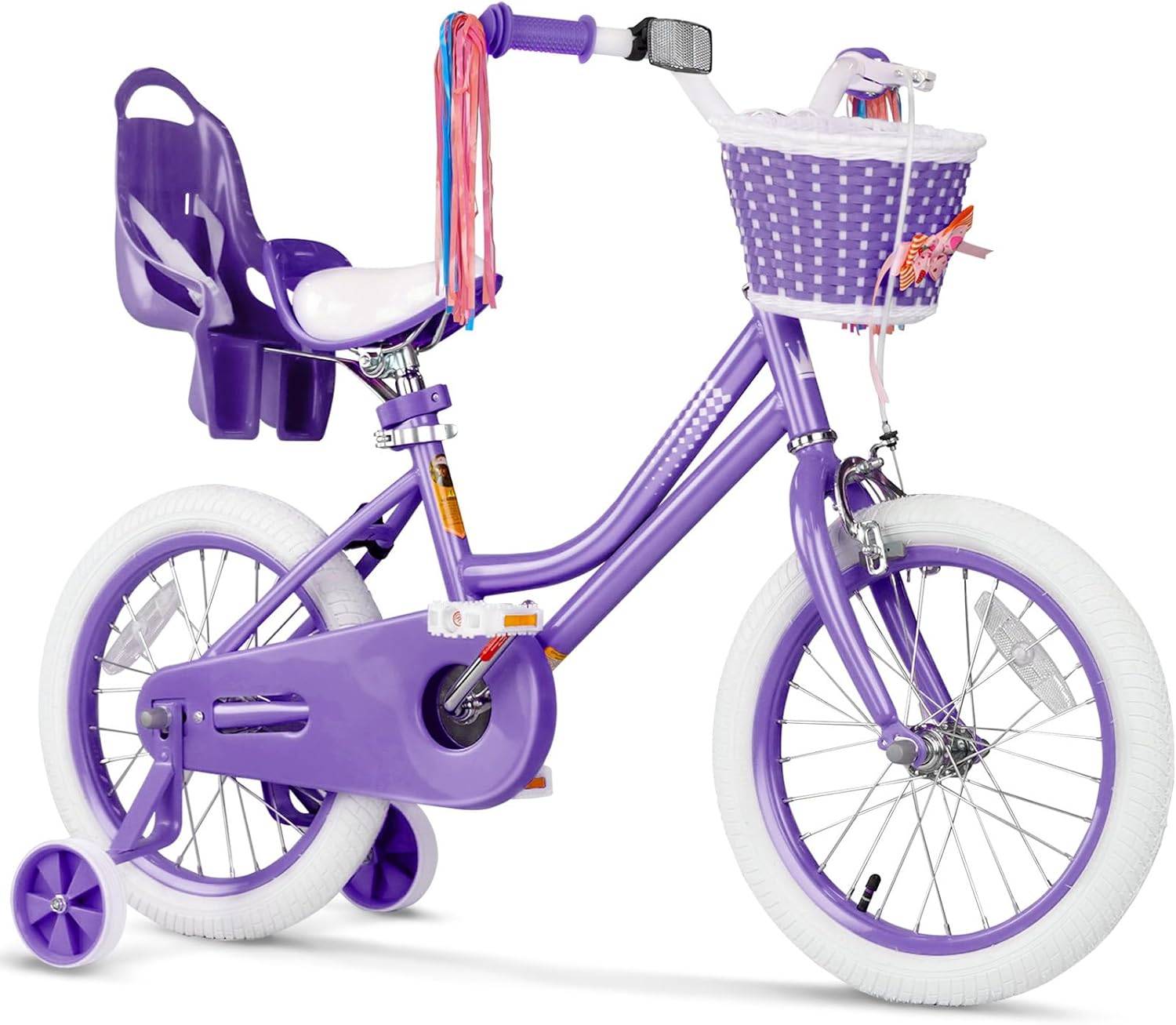
Use the child’s measurements to choose which SKU label is worth trying, then confirm fit on the actual bicycle. Training wheels do not make an oversized frame appropriate, and the supplied catalog facts do not establish brake type, weight, load limits, assembly details or compatibility. Follow the exact product manual for those matters, or ask a qualified bicycle mechanic.
What to do at the fit check
- Measure height and inseam accurately, then identify the applicable starting ranges.
- Have the child stand over the bicycle and check that the bike can be managed comfortably.
- Check that the child reaches the handlebars naturally and can turn them without overreaching.
- Confirm that the rider can reach and operate the brakes with control.
- Observe mounting, steering, stopping and dismounting in a clear, supervised area.
A properly fitting bicycle helmet is also essential. It should sit level, fit properly and use its straps according to the helmet manufacturer’s instructions. A helmet does not compensate for a bicycle that is too large.
The decision for your 4-year-old
Choose a 16-inch bike only if your child measures within 40–48 in (102–122 cm) and can comfortably pass every stand-over, reach, steering and brake-control check. If the child is below that height range or struggles during the trial, compare a 12- or 14-inch bike now instead of buying the 16-inch size for future growth.
Bikes for your next adventure
-
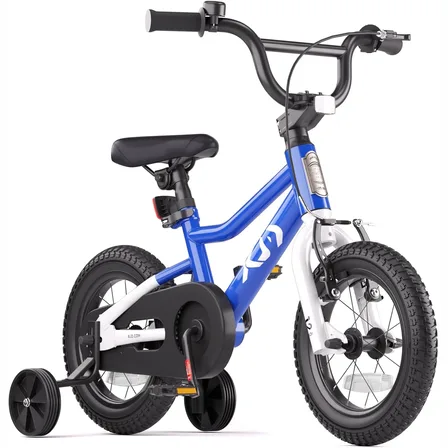
XJD Boys & Girls BMX Bike with Training Wheels, 12/14/16" – Blue
The XJD Boys & Girls BMX Bike in Blue is a first pedal bike for kids roughly age…$99.99
$119.99 -

XJD Girls BMX Bike 12/14/16 Inch with Training Wheels – Pink Blue
The XJD Girls BMX Bike in Pink/Blue is built as a first pedal bike for kids roug…$99.99
$119.99 -
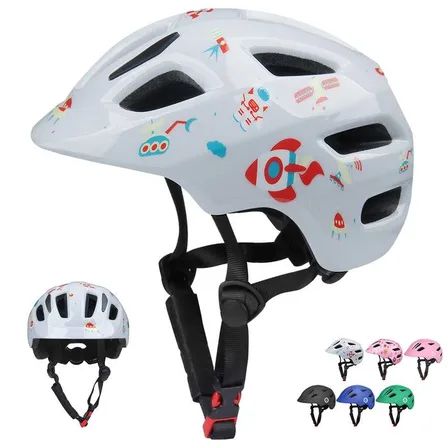
White Astronaut Bike Helmet for Kids by XJD – Toddler to Youth Sizes
4 reviews
The XJD White Astronaut kids' bike helmet is made for toddlers through younger e…$59.99