

Is a 12 bike good for a 4 year old
Yes—a 12-inch bike can be good for a 4-year-old who is 34–40 in (86–102 cm) tall and can comfortably stand over, reach and control it.
Start with height, not the fourth birthday
XBikes lists a 12-inch wheel bike as a starting point for ages 3–4 and rider heights of 34–40 in (86–102 cm). That makes it a reasonable size to try, but age alone cannot confirm the fit. Children of the same age can differ considerably in leg length, reach and confidence.
A 14-inch bike is the next comparison point, covering ages 3–6 and heights of 37–45 in (94–114 cm). The ranges overlap, so a child between 37 and 40 in may need to try both. Do not choose the larger bike merely to leave room for growth; the child must be able to control it now.
What to measure before choosing
Measure the child while they are wearing the shoes they will normally use for riding. Record height from the floor to the top of the head. Then measure inseam from the floor to the crotch, with the child standing straight and their feet naturally spaced.
Compare height with the XBikes starting ranges, then compare inseam with the stand-over and minimum saddle information for the exact bike and SKU. If those dimensions are not provided, arrange an in-person fit check or consult the exact product manual or a qualified bicycle mechanic. Wheel size by itself does not reveal frame clearance or saddle range.
Use a hands-on fit check
Have the child try the bicycle before deciding whenever possible. The American Academy of Pediatrics advises against buying an oversized bicycle for a child to grow into and emphasizes stand-over, control and brake reach.
- Stand-over: Ask the child to straddle the bike. They should not be forced onto tiptoes or pressed uncomfortably against the frame.
- Starting and stopping: Check that they can get on, begin moving and put their feet down without panic or a sudden loss of balance.
- Reach: Their hands should reach the controls without an extreme forward stretch, locked elbows or a twisted posture.
- Brake control: Confirm that they can reach and operate the fitted braking controls reliably. Follow the product manual for adjustment.
- Steering: Have them turn the handlebar both ways while seated and standing. Their knees, hands and body should remain comfortably clear.
If the child looks cramped on a 12-inch model, compare a 14-inch bike. If the 14-inch model makes mounting, stopping, steering or braking harder, it is too large for the present even when the height chart includes the child.
How the supplied bikes help with the comparison
The two supplied catalog options are training-wheel bikes with both 12-inch and 14-inch SKU labels, so they let a parent compare the two relevant wheel-size starting points without assuming that one size will fit every 4-year-old.
 XJD Kids' Training Wheel Bike for Boys & Girls, 12/14/16 Inch – White
Available in 12 Inch and 14 Inch comparison sizes relevant to many 4-year-olds, plus a separate 16 Inch SKU. Confirm the exact SKU through an individual fit check.
 Girls' Training Wheel Bike by XJD, 12–20 Inch Wheels – Blue
Offers 12 Inch and 14 Inch SKUs for the immediate comparison, alongside separate 16 Inch and 20 Inch options. Wheel labels are starting points, so verify the child's fit.
XJD Kids' Training Wheel Bike for Boys & Girls, 12/14/16 Inch – White is offered with 12 Inch, 14 Inch and 16 Inch SKU labels. For this question, compare its 12-inch and 14-inch versions; the 16-inch starting range is ages 4–7 and 40–48 in (102–122 cm), so it should not be selected solely because the rider is four.
Girls' Training Wheel Bike by XJD, 12–20 Inch Wheels – Blue has 12 Inch, 14 Inch, 16 Inch and 20 Inch SKU labels. Its 12-inch version is directly relevant, while its larger labels are separate sizes rather than equivalent alternatives. Apply the fit check to the exact SKU under consideration.
The catalog facts do not supply frame geometry, minimum saddle height, brake type, assembly details, load limits or compatibility information. Check the exact product manual for those details and instructions, or have a qualified bicycle mechanic inspect and adjust the bicycle.
Confidence can decide between overlapping sizes
A confident child still needs the same stand-over, reach and braking checks, but may adapt readily when both 12-inch and 14-inch bikes genuinely fit. A hesitant beginner usually benefits from the option they can mount, steer and stop with greater control. Training wheels do not correct a frame that is too tall or a reach that is too long.
After choosing the size, provide a properly fitting bicycle helmet. The U.S. Consumer Product Safety Commission says the helmet should sit level and its straps should be used according to the helmet manufacturer's instructions. Adult supervision and a traffic-free practice area remain important while the child learns.
The decision for your 4-year-old
Try a 12-inch bike first if your child measures 34–40 in (86–102 cm). If they are also within the 14-inch range of 37–45 in (94–114 cm), compare both in person. Choose 12 inches only when stand-over, inseam, reach, braking and present confidence all work comfortably; otherwise keep comparing rather than buying for future growth.
Bikes for your next adventure
-
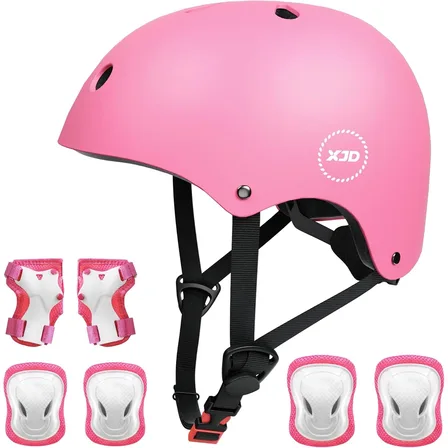
XJD Kids Helmet & Protective Gear Set for Girls, Pink
The XJD Kids Helmet & Protective Gear Set in Pink is a complete safety kit for g…$24.64
-
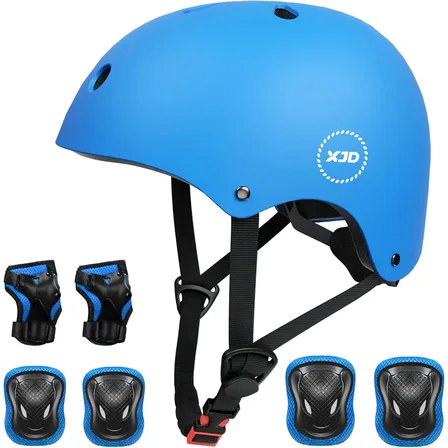
Blue XJD Helmet & Protective Gear Set for Kids, Sizes S/M
The Blue XJD Helmet & Protective Gear Set is made for kids roughly 3 to 8 years …$23.79
-

Light Pink XJD Girls' Bicycle with Basket & Training Wheels
The Light Pink XJD Girls' Bicycle with Basket & Training Wheels is a retro-style…$109.99
$129.99