

What inch bike should i get my 4 year old
Most 4-year-olds should start by trying a 14-inch bike; consider 12 or 16 inches only when the child’s measurements and control support that size.
Choose the starting size from height, not birthday
Measure your child’s height without shoes, standing straight against a wall. Compare that result with the XBikes starting points: a 12-inch bike covers 34–40 inches (86–102 cm), a 14-inch bike covers 37–45 inches (94–114 cm), and a 16-inch bike covers 40–48 inches (102–122 cm).
Because the ranges overlap, age four does not produce one automatic answer. A child under 40 inches will usually begin the comparison with 12 or 14 inches. At 40 inches or taller, add 16 inches to the bikes they physically try. Do not move up merely because a larger bike will last longer.
| Measured height | Sizes to compare first | What decides |
|---|---|---|
| 34–36 in / 86–93 cm | 12 Inch | Stand-over, reach and control |
| 37–39 in / 94–101 cm | 12 Inch and 14 Inch | The easier complete fit |
| 40–45 in / 102–114 cm | 14 Inch and 16 Inch | The easier complete fit |
| 46–48 in / 115–122 cm | 16 Inch | Stand-over, reach and control |
These are screening ranges, not a guarantee. Frame shapes, proportions and confidence differ, so the final choice must come from an individual fit check.
Measure inseam and check stand-over clearance
For an inseam measurement, have the child stand in socks with feet slightly apart. Place a firm, thin book between the legs, raise it gently to mimic a saddle, and measure vertically from the floor to the top edge. Keep this number available when checking the exact bicycle’s geometry or manual.
Have the child straddle the bike while standing over the top tube. There must be usable clearance rather than pressure against the frame. Also check that mounting and stepping off look controlled. If the child cannot stand over the bike comfortably, it is too large regardless of the age label or wheel-size chart.
Confirm reach, steering and brake control
Seat the child on the bike and watch their natural posture. They should reach the handlebar without stretching, locking their arms or leaning so far forward that steering becomes awkward. Ask them to turn the handlebar both ways while remaining balanced and relaxed.
They must also be able to reach and operate the bicycle’s brakes as configured. Check this during an in-person fitting, because hand size, brake arrangement and required force cannot be inferred from wheel diameter. A child who fits the height range but cannot steer, stop, mount or dismount confidently does not yet fit that bicycle.
The American Academy of Pediatrics’ HealthyChildren guidance supports having the child try the bicycle, checking stand-over and control, and avoiding an oversized purchase made only for growth.
How the supplied bikes help with the comparison
The three catalog options are relevant because each is offered with 12 Inch, 14 Inch and 16 Inch SKU labels, the three sizes most likely to enter a four-year-old’s fit comparison. They let you compare the applicable sizes after measuring, but their titles and wheel labels do not replace a physical fit check.
The Girls 12/14/16 Inch Kids Bike by XJD with Training Wheels – Peach is categorized as a training-wheel bike and offers 12-, 14- and 16-inch choices. The XJD Light Purple Girls Bike with Basket, Training Wheels, 12/14/16/20 Inch has supplied available SKU labels of 12 Inch, 14 Inch and 16 Inch; despite “20 Inch” appearing in its exact catalog title, a 20-inch SKU is not included in the supplied availability facts.
The XJD Girls BMX Bike 12/14/16 Inch with Training Wheels – Pink Blue is categorized as a Kids’ BMX Bike and likewise offers 12-, 14- and 16-inch labels. Compare these products by the child’s correct wheel-size starting point and their ability to control the exact bike, not by color, category wording or the age implied by marketing.
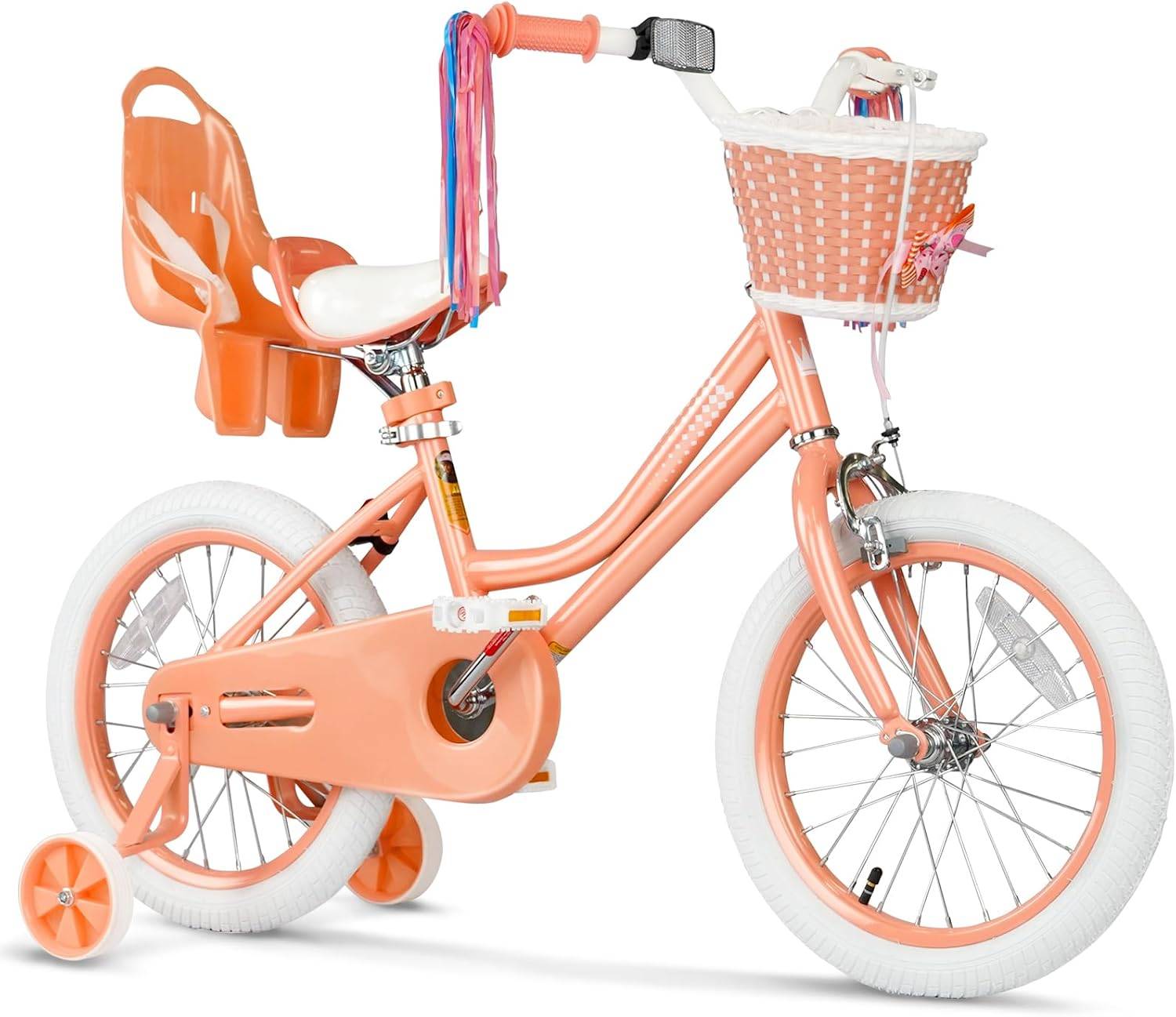 Girls 12/14/16 Inch Kids Bike by XJD with Training Wheels – Peach
Offers 12 Inch, 14 Inch and 16 Inch labels for comparing the likely size range after measuring a 4-year-old; it is categorized as a training-wheel bike.
 XJD Light Purple Girls Bike with Basket, Training Wheels, 12/14/16/20 Inch
A training-wheel bike with supplied 12 Inch, 14 Inch and 16 Inch SKU labels. Although 20 Inch appears in its title, that size is not listed among the supplied available labels.
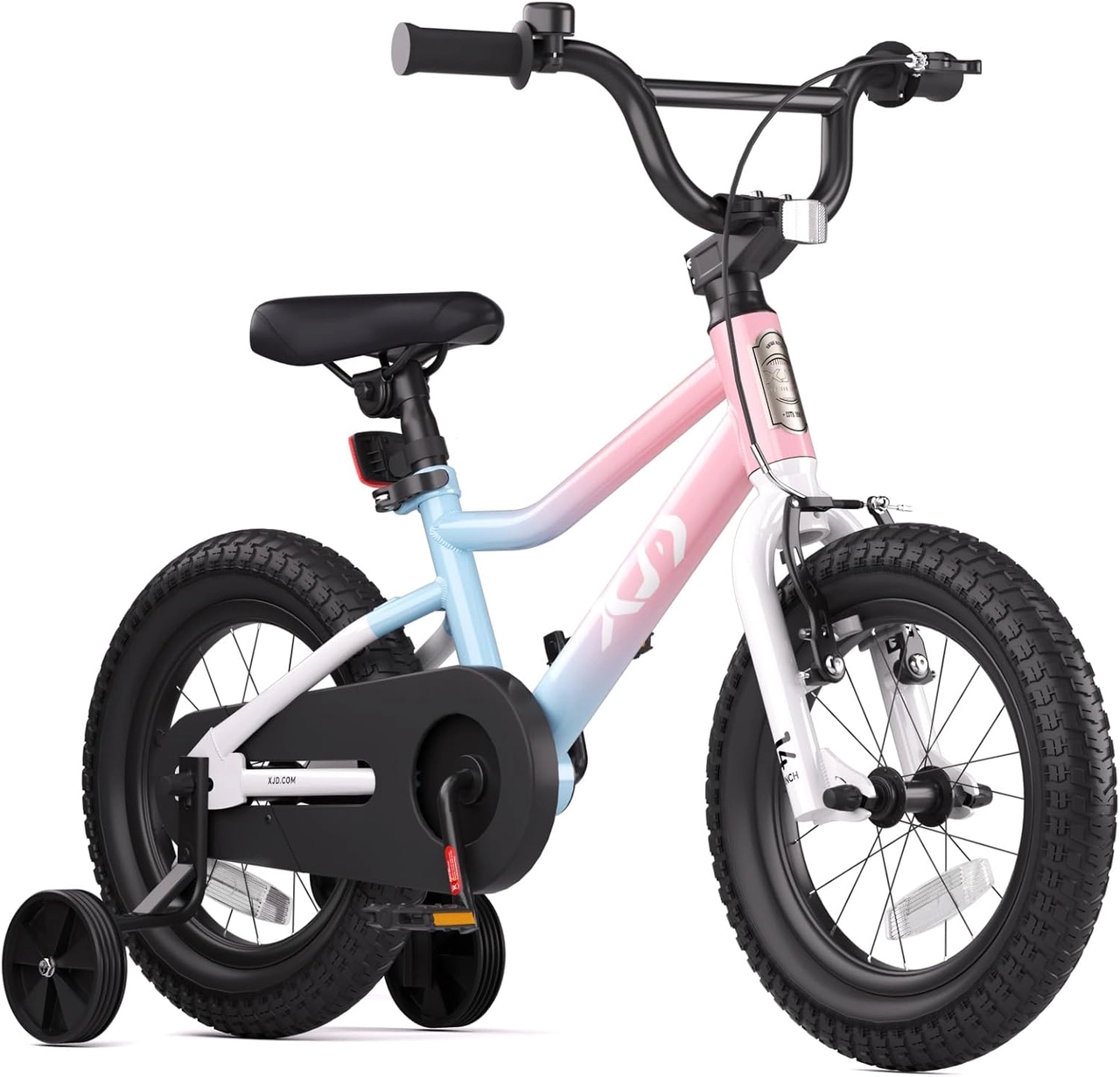 XJD Girls BMX Bike 12/14/16 Inch with Training Wheels – Pink Blue
Categorized as a Kids’ BMX Bike and supplied in 12 Inch, 14 Inch and 16 Inch labels, making it relevant once height and an individual control check identify sizes to compare.
Make the final decision in this order
- Measure height and inseam without shoes.
- Use height to shortlist 12, 14 or 16 inches.
- Have the child try each shortlisted size and check stand-over clearance.
- Confirm comfortable handlebar reach, steering, mounting, dismounting and brake operation.
- Choose the smaller, more manageable option when a larger one compromises control; do not size up solely for future growth.
Before riding, use a bicycle helmet that fits properly, sits level and has straps adjusted according to its manufacturer’s instructions, consistent with U.S. Consumer Product Safety Commission guidance. Follow the exact bike manual or ask a qualified bicycle mechanic about assembly, adjustments, maintenance, compatibility, load limits or torque.
For your 4-year-old, measure first: start with 14 inches, compare 12 inches if they are under 40 inches tall, and compare 16 inches only from 40 inches tall—then buy only the size they can stand over, reach, steer and stop confidently.
Bikes for your next adventure
-
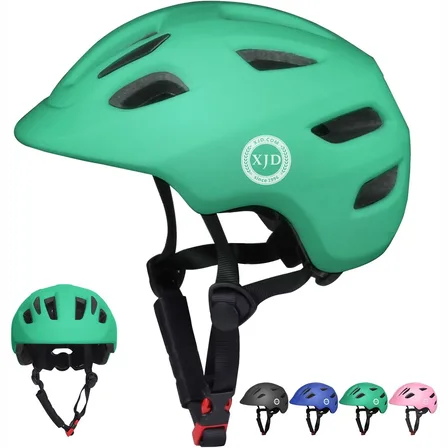
Green XJD Toddler Bike Helmet with Adjustable Fit, XS (46–51 cm)
The XJD toddler bike helmet in Green is built for the youngest riders — the size…$20.39
$23.99 -

Kids Bike Helmet by XJD for Boys & Girls – Black, Blue, Green, Pink, Purple
The XJD Kids Bike Helmet covers a wide 2-to-8-year age range thanks to two head-…$59.99
-

Kids Bike Helmet by XJD for Girls – Pink
The XJD Kids Bike Helmet in Pink is a lightweight multi-sport helmet for girls r…$59.99
$99