

What kind of bike to get a 4 year old
For most 4-year-olds, start by comparing a 12-inch, 14-inch or 16-inch bike—but choose only after measuring the child and checking control in person.
Start with height, not the fourth birthday
Measure the child’s height without shoes, standing straight against a wall. Then use the XBikes wheel-size starting points to narrow the options:
| Wheel size | Starting age range | Rider height |
|---|---|---|
| 12 Inch | 3–4 | 34–40 in / 86–102 cm |
| 14 Inch | 3–6 | 37–45 in / 94–114 cm |
| 16 Inch | 4–7 | 40–48 in / 102–122 cm |
A 4-year-old near the shorter end may begin with a 12-inch bike. A child in the overlapping height ranges may need to compare 12-inch and 14-inch bikes, while a rider at least 40 inches / 102 cm tall may also compare a 16-inch model. These figures narrow the search; they do not establish fit by themselves.
Measure inseam and check stand-over clearance
Measure inseam from the floor to the crotch while the child stands naturally. Do not convert that measurement directly into a wheel size, because frame shapes and usable adjustment ranges can differ. Instead, take the measurement to the fit check and compare it with the actual bicycle.
With the child straddling the bike, confirm there is comfortable clearance between the child and the frame. The child should not be forced onto tiptoes merely to manage the bicycle. Have the child try the bike rather than buying an oversized model for future growth.
Check reach, brakes and confidence
Seat the child in a normal riding position and look for relaxed control. The child should be able to reach the handlebar without stretching, turn it without losing balance, and operate the fitted brake controls comfortably. A wheel-size chart cannot confirm any of those points.
- Reach: Can the child steer both directions while keeping a stable posture?
- Brake control: Can the child reach and use the fitted controls without shifting into an awkward position?
- Starting and stopping: Can the child set off and stop without panic or excessive assistance?
- Current confidence: Does the size suit the skills the child has now, rather than the skills an adult expects later?
If two wheel sizes match the height range, compare both in person. Favor the bicycle the child can control now; a larger wheel is not automatically an upgrade.
When training-wheel models are relevant
The two supplied catalog options are relevant when you want to compare 12-inch, 14-inch and 16-inch bicycles equipped with training wheels. Their available size labels cover the main XBikes starting points for many 4-year-olds, but the product titles and labels do not replace an individual fit check.
XJD Light Purple Girls Bike with Basket, Training Wheels, 12/14/16/20 Inch is categorized as a Training Wheel Bike. The supplied available SKU labels are 12 Inch, 14 Inch and 16 Inch. Although “20 Inch” appears in the exact catalog title, a 20-inch available SKU label was not supplied here, so do not assume that option is currently available.
XJD Girls BMX Bike 12/14/16 Inch with Training Wheels – Pink Blue is categorized as a Kids’ BMX Bike and has supplied available SKU labels of 12 Inch, 14 Inch and 16 Inch. “Girls” and “BMX” describe the catalog listing; neither establishes whether its geometry or controls fit a particular child.
These particular options help answer what kind of bike to get because they let a parent compare the three relevant starting wheel sizes in training-wheel formats, including a Training Wheel Bike listing and a Kids’ BMX Bike listing.
 XJD Light Purple Girls Bike with Basket, Training Wheels, 12/14/16/20 Inch
A Training Wheel Bike listing with supplied 12 Inch, 14 Inch and 16 Inch SKU labels, making it relevant for size comparisons after measuring the child and completing an individual fit check.
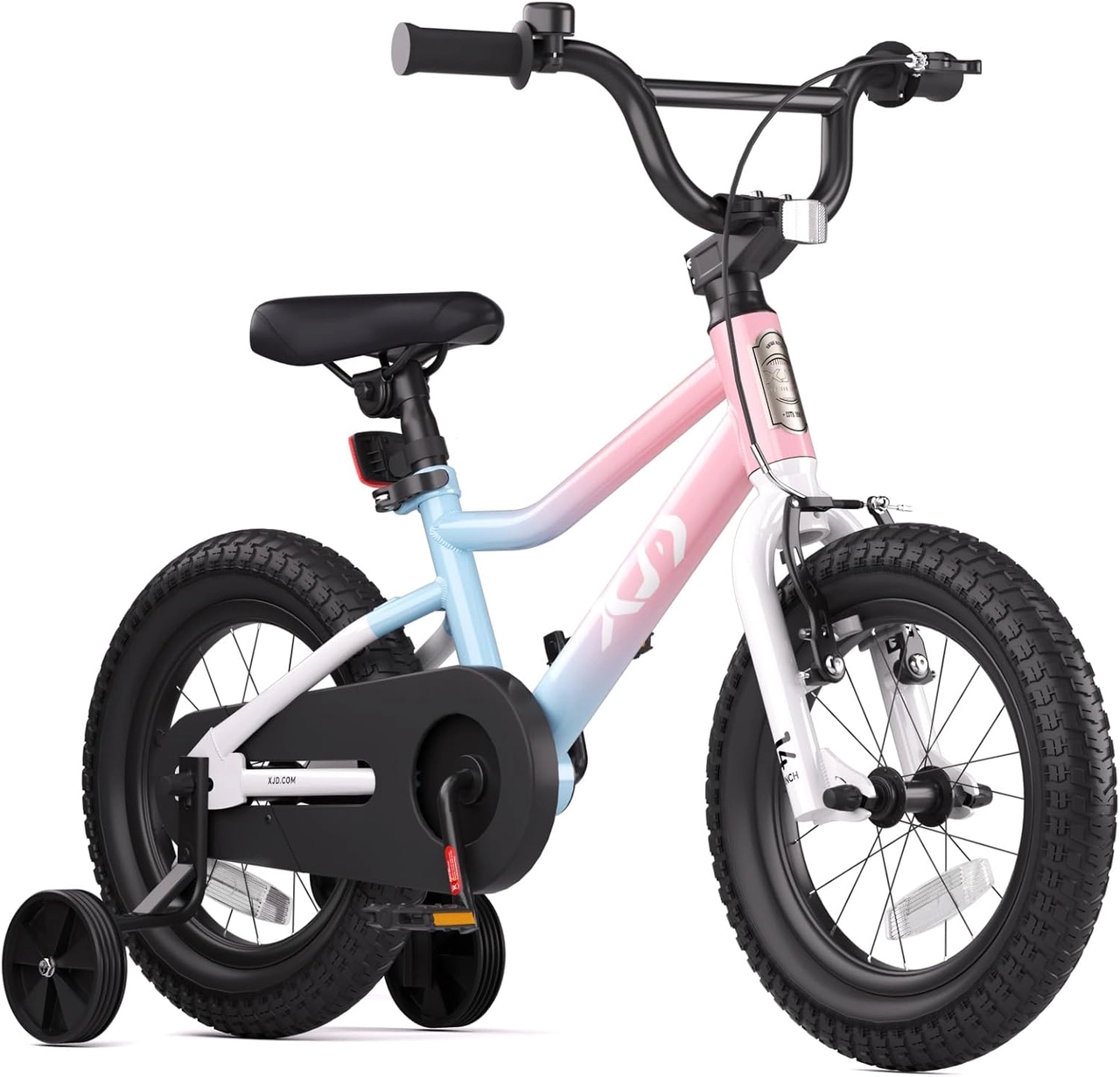 XJD Girls BMX Bike 12/14/16 Inch with Training Wheels – Pink Blue
A Kids’ BMX Bike listing with training wheels and supplied 12 Inch, 14 Inch and 16 Inch SKU labels; consider it only when the child’s measurements and in-person control checks support the selected size.
What to compare between these options
First select only the size labels consistent with the child’s measured height. Then have the child try the candidate bicycles and compare stand-over clearance, reach, steering control, access to the fitted brakes and confidence. Choose between the two catalog styles only after those fit checks pass.
The supplied facts do not state weight, frame material, brake type, load limit, detailed adjustment range or assembly procedure. Check the exact product manual for those details. Follow that manual for assembly, maintenance, compatibility and torque requirements, or use a qualified bicycle mechanic rather than guessing.
Make the 4-year-old decision
- Measure height and inseam.
- Shortlist 12, 14 or 16 inches using the height ranges above.
- Try each plausible size and verify stand-over clearance, reach, steering and brake control.
- Reject any bike that is oversized for growth or undermines the child’s present confidence.
- Fit a bicycle helmet so it sits level, fits properly and has its straps adjusted according to the helmet manufacturer’s instructions.
For a 4-year-old, buy the 12-inch, 14-inch or 16-inch option that matches measured height and gives comfortable, confident control today; if none passes every check, keep looking rather than sizing up.
Bikes for your next adventure
-

Flower Pink XJD Girls Bike with Doll Seat & Basket
The XJD Flower Pink girls' bike is made for riders 71–122 cm tall (roughly ages …$69.99
-
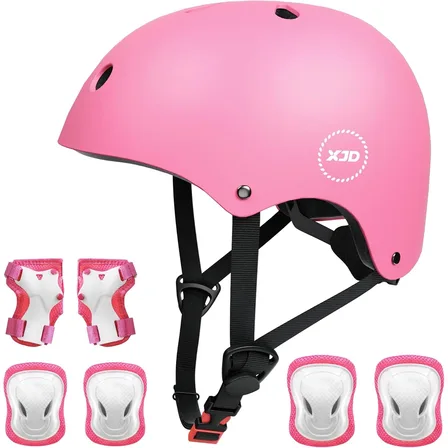
XJD Kids Helmet & Protective Gear Set for Girls, Pink
The XJD Kids Helmet & Protective Gear Set in Pink is a complete safety kit for g…$24.64
-

Kids Bike Helmet by XJD for Boys & Girls – Black, Blue, Green, Pink, Purple
The XJD Kids Bike Helmet covers a wide 2-to-8-year age range thanks to two head-…$59.99