

What's a good size bike for a 4 year old
A good bike size for a 4-year-old is usually 12, 14 or 16 inches, depending on measured height and fit—not age alone. Start with height, then check inseam, reach, brake control and confidence on the actual bicycle.
Choose the starting wheel size by height
Measure your child standing straight without shoes, with their back against a wall. Record the floor-to-top-of-head height. Compare it with the XBikes starting points below; these ranges help narrow the options but do not confirm fit by themselves.
| Wheel size | Age starting point | Rider height |
|---|---|---|
| 12 Inch | 3–4 | 34–40 in / 86–102 cm |
| 14 Inch | 3–6 | 37–45 in / 94–114 cm |
| 16 Inch | 4–7 | 40–48 in / 102–122 cm |
For a 4-year-old measuring below 40 inches, compare 12- and 14-inch bikes first. At 40 inches or taller, a 16-inch bike also enters the comparison. Where height ranges overlap, choose by actual control and comfort rather than automatically selecting the larger wheel.
Measure inseam before deciding
Height identifies likely wheel sizes; inseam helps reveal whether the bicycle is manageable. Have the child stand against a wall in socks, feet slightly apart. Place a firm book between the legs and raise it gently to simulate a saddle. Measure vertically from the floor to the top edge of the book.
Compare that measurement with the bicycle’s stand-over clearance and lowest usable saddle position in the exact model’s specifications or manual. The child should be able to straddle the bike without being forced onto tiptoes or pressed against the frame. Because the supplied catalog facts do not include frame geometry or saddle ranges, wheel size alone cannot establish this clearance.
Do a hands-on fit check
Have your child try the bicycle rather than buying one oversized for future growth. With the bike supported, check these points:
- Stand-over: The child can straddle the frame comfortably and stabilize the bicycle.
- Reach: They can hold the handlebar without locking their elbows, stretching their torso or losing an upright, controlled posture.
- Brake control: They can reach and operate the fitted controls reliably. Consult the exact manual or a qualified bicycle mechanic for adjustments or procedures not provided here.
- Starting and stopping: They can set off, steer, slow down and put a foot down without panic or excessive assistance.
- Confidence: The bike does not feel so tall or long that the child becomes hesitant or loses control.
If two sizes appear possible, repeat these checks on both. A larger size is not a better value when it makes mounting, braking or steering harder.
How the available XBikes options compare
The three supplied catalog options are relevant because each offers 12 Inch, 14 Inch and 16 Inch SKU labels—the three XBikes starting sizes that can apply at age four. They let you compare the appropriate labeled size after measuring, but their shared wheel-size choices do not mean their individual frame fit is identical.
 Purple XJD Girls' Bike with Doll Seat & Basket
A Training Wheel Bike offered in 12 Inch, 14 Inch and 16 Inch labels, making it relevant for comparison after measuring the child's height and checking individual fit.
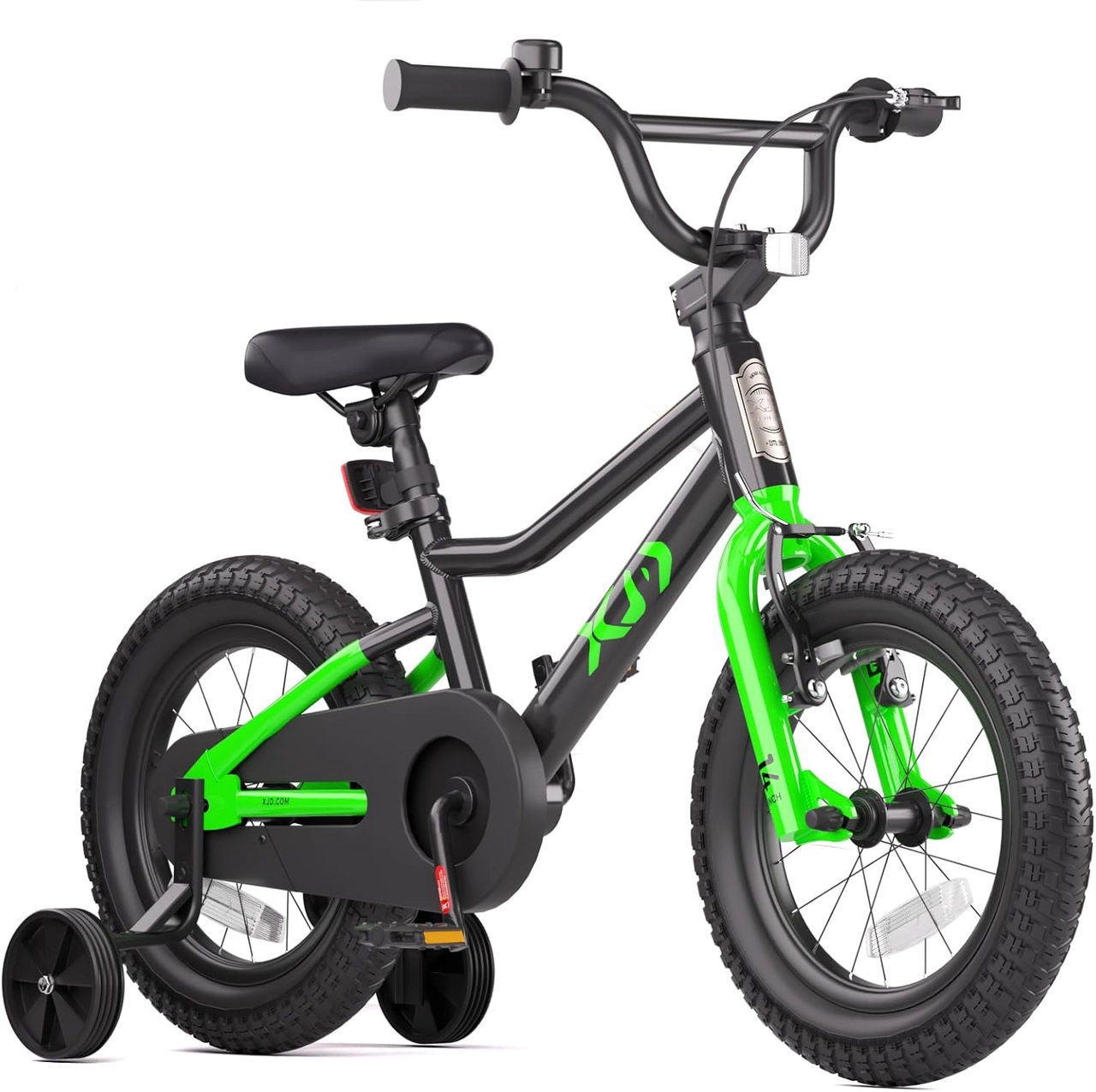 Black XJD Kids' BMX Bicycle with Training Wheels
A Kids' BMX Bike with Training Wheels offered in 12 Inch, 14 Inch and 16 Inch labels. Compare the height-based starting size, then confirm stand-over, reach and control.
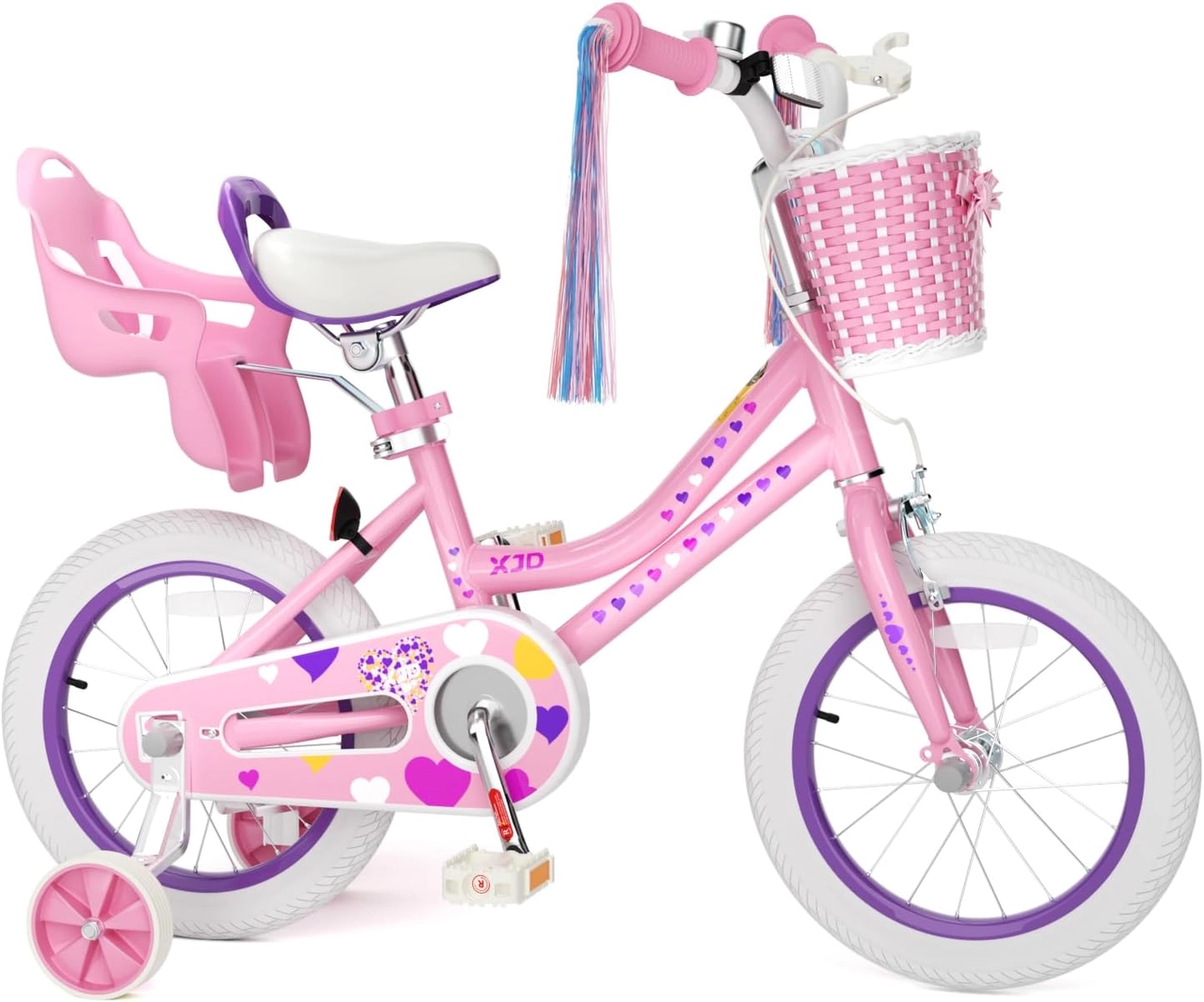 Pink Girls' 12/14/16" Bike by XJD – Basket & Doll Seat
A Training Wheel Bike available in 12 Inch, 14 Inch and 16 Inch labels. Its relevant SKU depends on measured height and a hands-on fit check, not age alone.
Purple XJD Girls' Bike with Doll Seat & Basket is categorized as a Training Wheel Bike and is available in 12 Inch, 14 Inch and 16 Inch labels. Pink Girls' 12/14/16" Bike by XJD – Basket & Doll Seat is also categorized as a Training Wheel Bike with the same three available labels.
Black XJD Kids' BMX Bicycle with Training Wheels is categorized as a Kids' BMX Bike and likewise has 12 Inch, 14 Inch and 16 Inch labels. These catalog categories and titles distinguish the options, but they do not supply geometry, brake type, weight, load limit or assembly details. Verify those points in the exact product information and manual; use a qualified bicycle mechanic when needed.
When these products are not relevant
Do not select one of these products merely because the child is four. A child shorter than the 12-inch starting range, taller than the 16-inch range, unable to straddle the selected frame, unable to reach its controls, or uncomfortable riding it needs a different comparison. None of the catalog titles overrides the measured fit check.
Training wheels mentioned in the supplied product categories or titles also do not determine wheel size. Current balance skills and confidence matter, but the chosen bicycle must still suit the child’s height, inseam, reach and control.
Make the final decision
- Measure standing height and inseam.
- Shortlist 12, 14 or 16 inches from the height table.
- Try each plausible size and compare stand-over, reach, brake operation, starting and stopping.
- Choose the size the child can control now, without sizing up solely for growth.
Before riding, use a properly fitting bicycle helmet that sits level, with straps secured according to its manufacturer’s instructions. For this 4-year-old, the right next step is simple: measure first, try the shortlisted size or sizes, and buy only when the child can comfortably straddle, reach, brake and stop the exact bicycle.
Bikes for your next adventure
-

Light Purple XJD Toddler Bike Helmet, Adjustable, Size XS (46–51 cm)
This Light Purple XJD toddler bike helmet is made for the smallest riders — the …$20.39
-

Light Pink XJD Girls' Bicycle with Basket & Training Wheels
The Light Pink XJD Girls' Bicycle with Basket & Training Wheels is a retro-style…$109.99
$129.99 -

Kids Bike Helmet by XJD for Girls – Pink
The XJD Kids Bike Helmet in Pink is a lightweight multi-sport helmet for girls r…$59.99
$99