

What size bike should my 4 year old be riding
For a 4-year-old, compare 12-, 14- and 16-inch bikes using measured height: 12 inch for 34–40 in, 14 inch for 37–45 in, or 16 inch for 40–48 in. Because these ranges overlap, the correct choice is the one the child can stand over, reach, steer and brake confidently during an individual fit check.
Start with height, not the fourth birthday
Measure the child without shoes, standing straight against a wall. Record the height from the floor to the top of the head. Then compare it with the XBikes starting points below; age is only an initial clue.
| Wheel size | XBikes age starting point | Rider height |
|---|---|---|
| 12 Inch | Ages 3–4 | 34–40 in / 86–102 cm |
| 14 Inch | Ages 3–6 | 37–45 in / 94–114 cm |
| 16 Inch | Ages 4–7 | 40–48 in / 102–122 cm |
A 4-year-old measuring 36 inches falls only within the 12-inch starting range. At 38 inches, both 12 and 14 inches are comparison candidates. At 41 inches, compare 14 and 16 inches. Do not resolve an overlap by automatically choosing the larger wheel; resolve it by trying the bikes and checking control.
Measure inseam and check stand-over
For inseam, have the child stand in socks with feet slightly apart. Place a firm book upright between the legs, gently raising it to mimic a saddle, then measure from the floor to the book’s top edge. Use that measurement when checking the bicycle’s stand-over and saddle adjustment against the exact manufacturer’s guidance.
With the child straddling the bicycle, confirm that standing over it feels stable and unforced. HealthyChildren guidance supports having the child try the bicycle and warns against buying an oversized model merely to allow room for growth. If the child cannot stand securely, the bike is not a suitable fit even when the age or height chart appears to match.
Check reach, braking and confidence
Seat the child in a normal riding position while an adult securely steadies the bicycle. The child should be able to hold the handlebars without stretching, turn them without losing position, and look ahead comfortably. Hands must be able to operate the fitted brake controls reliably. Because the supplied catalog facts do not specify brake type or adjustment procedures, follow the exact product manual or ask a qualified bicycle mechanic for setup help.
Next, observe a short supervised trial in a clear, controlled area. The rider should start, steer, stop and put a foot down without panic or excessive effort. A smaller, manageable bicycle is more appropriate than a larger one the child cannot control. Current confidence matters alongside physical measurements, especially for a new rider.
How the supplied training-wheel bikes compare
The three supplied XBikes options help answer the sizing question because each is catalogued as a Training Wheel Bike and is offered with 12 Inch, 14 Inch and 16 Inch SKU labels—the three wheel sizes that can include a 4-year-old under the XBikes starting points. Choose a size label only after applying the height and hands-on checks above.
 Blue XJD Girls Bike with Training Wheels – 12/14/16 Inch
A Training Wheel Bike offered in 12 Inch, 14 Inch and 16 Inch labels, making it relevant for height-based comparison followed by an individual fit check.
 XJD Boys 12/14/16" Training Wheel Bike – Blue
This blue Training Wheel Bike has 12 Inch, 14 Inch and 16 Inch SKU labels; measured height, reach, brake access and control should determine relevance.
 XJD Kids' Training Wheel Bike for Boys & Girls, 12/14/16 Inch – White
This white Training Wheel Bike is available with 12 Inch, 14 Inch and 16 Inch labels, covering the XBikes starting ranges that can include age four.
Blue XJD Girls Bike with Training Wheels – 12/14/16 Inch
This model provides 12 Inch, 14 Inch and 16 Inch size choices. Compare only the size or sizes containing the child’s measured height, then verify stand-over, reach, brake access and control in person. Its wording is a catalog title, not separate evidence that it fits a particular child.
XJD Boys 12/14/16" Training Wheel Bike – Blue
This Training Wheel Bike also has 12 Inch, 14 Inch and 16 Inch SKU labels. The title’s gender wording does not change the sizing method: measured height and actual control determine which option deserves consideration.
XJD Kids' Training Wheel Bike for Boys & Girls, 12/14/16 Inch – White
This option covers the same three supplied size labels and belongs to the same Training Wheel Bikes category. That makes it relevant for comparing catalog choices, but it does not remove the need to test the individual child’s inseam, reach and confidence.
The catalog facts do not provide assembly instructions, maintenance procedures, load limits, component compatibility or torque settings for these products. For any of those details, use the manual for the exact product and SKU or consult a qualified bicycle mechanic.
Complete the fit and safety check
- Measure height and inseam rather than relying on age alone.
- Shortlist only the wheel sizes whose XBikes height ranges include that measured height.
- Have the child try each shortlisted size; reject any bike that compromises stand-over, reach, steering or braking.
- Choose according to present control and confidence, not hoped-for future growth.
- Use a properly fitting bicycle helmet. It should sit level, with straps used according to the helmet manufacturer’s instructions, consistent with U.S. Consumer Product Safety Commission guidance.
For your 4-year-old, measure now, shortlist 12, 14 or 16 inches from the height table, and buy only the size the child can physically control during a real fit check.
Bikes for your next adventure
-
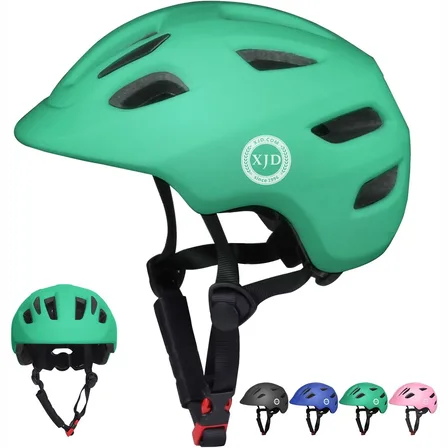
Green XJD Toddler Bike Helmet with Adjustable Fit, XS (46–51 cm)
The XJD toddler bike helmet in Green is built for the youngest riders — the size…$20.39
$23.99 -

Kids Bike Helmet by XJD for Boys & Girls – Black, Blue, Green, Pink, Purple
The XJD Kids Bike Helmet covers a wide 2-to-8-year age range thanks to two head-…$59.99
-

Kids Bike Helmet by XJD for Girls – Pink
The XJD Kids Bike Helmet in Pink is a lightweight multi-sport helmet for girls r…$59.99
$99