

What kind of bike can a 2 year old ride
A 2-year-old will usually need a small balance bike that lets both feet reach the ground securely. Consider a pedal bike only after an in-person fit check confirms comfortable stand-over clearance, easy reach, brake control and confident handling.
Measure your child before choosing
Age is only a starting clue. Measure your child’s standing height and inseam while they are wearing the shoes they will ride in. For the inseam, have the child stand upright with feet slightly apart, then measure from the floor to the crotch.
Compare those measurements with the bicycle’s published dimensions and adjustment range. The seat must adjust low enough for the child’s present ability, and the frame must provide appropriate clearance when standing over it. Do not select a larger bicycle merely to leave room for growth.
A useful home measurement narrows the choices, but it cannot prove that a bike fits. The child should sit on and handle the exact bicycle before you decide.
Why a balance bike is usually the practical answer
A balance bike removes the complication of pedaling and allows a young child to move, stop and steady the bike with their feet. Look for a position in which the child can sit without stretching, place both feet securely on the ground and hold the handlebars with relaxed, slightly bent arms.
Watch what happens rather than encouraging the child to push through difficulty. A suitable bike should let the rider walk it forward, steer without fighting the handlebars and stop under control. If the child repeatedly tips, reaches excessively or cannot control the bike’s movement, try a smaller or more adjustable option.
When a pedal bike may be appropriate
A pedal bike is worth considering only when the individual child can mount, steer and stop confidently and can operate the bicycle’s controls. Check that the child can stand over the frame comfortably, reach the handlebars without leaning far forward and reach and operate any fitted brake controls.
The supplied XBikes wheel-size starting points begin with a 12 Inch bicycle for ages 3–4 and rider heights of 34–40 in / 86–102 cm. Because that starting point does not include age two, do not assume a 12 Inch pedal bike is suitable merely because it is the smallest listed wheel size. A measured height within that range is useful information, but it does not replace checks of inseam, reach, control and confidence.
How the available catalog bike relates
Pink Girls' 12/14/16" Bike by XJD – Basket & Doll Seat is categorized as a Training Wheel Bike and is offered with 12 Inch, 14 Inch and 16 Inch SKU labels. These options help show the available step-up sizes, but only the 12 Inch label is close enough to the youngest XBikes starting point to merit comparison for this question; it still starts at ages 3–4, not age two.
The catalog option below is relevant for comparison when a parent is assessing whether the child is approaching the 12 Inch starting point or planning a later transition. It is not evidence that a training-wheel bike currently fits a particular 2-year-old.

The 14 Inch option starts at ages 3–6 and heights 37–45 in / 94–114 cm. The 16 Inch option starts at ages 4–7 and heights 40–48 in / 102–122 cm. Those larger labels should not be chosen for a 2-year-old simply to provide growing room. If considering any SKU, confirm its exact dimensions, adjustment, assembly, brake operation and other requirements in the product manual or with a qualified bicycle mechanic.
Use a short in-person fit check
- Stand-over: Have the child straddle the bicycle and confirm comfortable clearance rather than contact or forced tiptoeing.
- Seat position: Check that the child can sit securely and place their feet as required for their current riding ability.
- Reach: Confirm that the handlebars can be held without locked elbows, shoulder strain or an exaggerated forward lean.
- Control: Ask the child to walk or ride a few feet, steer around a simple marker and stop on command.
- Brakes: If brake controls are fitted, make sure the child can reach and operate them reliably without releasing the handlebar.
If any check fails, do not treat practice as a substitute for fit. Choose a smaller suitable bike or wait and measure again later.
Prepare for the first rides
Use a properly fitting bicycle helmet every time. It should sit level and its straps should be adjusted according to the helmet manufacturer’s instructions. Begin in a flat area away from traffic, driveways, slopes, stairs and other hazards, with close adult supervision.
Before each session, follow the exact bicycle manual for inspection, assembly and maintenance. If the instructions are missing, unclear or the bicycle does not operate correctly, use a qualified bicycle mechanic rather than guessing at adjustments, compatibility or torque.
Make the decision now
For most 2-year-olds, start by fitting a small balance bike and observing whether both feet, reach, steering and stopping are secure. Consider the supplied 12 Inch training-wheel option only when the child is approaching its 34–40 in / 86–102 cm starting range and passes the full in-person fit check; otherwise, wait rather than sizing up.
Bikes for your next adventure
-

Flower Pink XJD Girls Bike with Doll Seat & Basket
The XJD Flower Pink girls' bike is made for riders 71–122 cm tall (roughly ages …$69.99
-
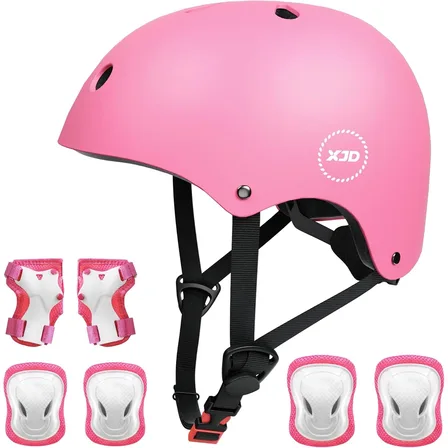
XJD Kids Helmet & Protective Gear Set for Girls, Pink
The XJD Kids Helmet & Protective Gear Set in Pink is a complete safety kit for g…$24.64
-

Kids Bike Helmet by XJD for Boys & Girls – Black, Blue, Green, Pink, Purple
The XJD Kids Bike Helmet covers a wide 2-to-8-year age range thanks to two head-…$59.99