

What size bike for a 3 1 2 year old
For a 3 1/2-year-old, start by comparing a 12-inch bike with a 14-inch bike. Use measured height—not age alone—and choose only after checking stand-over room, reach, brake control and confidence on the actual bicycle.
Choose the starting size from height
XBikes lists a 12-inch bike as a starting point for ages 3–4 and heights of 34–40 in (86–102 cm). A 14-inch bike starts at ages 3–6 and heights of 37–45 in (94–114 cm). Because those height bands overlap, either size may appear plausible for some 3 1/2-year-olds, but they are not interchangeable.
| Measured rider height | Size to compare first | What to do next |
|---|---|---|
| 34–36 in (86–93 cm) | 12 inch | Perform the complete fit check. |
| 37–40 in (94–102 cm) | 12 and 14 inch | Try both; choose by control and confidence. |
| 41–45 in (103–114 cm) | 14 inch | Perform the complete fit check. |
If the child falls outside these ranges, do not force a choice from this table. Measure again, consult the exact bike information and use a qualified bicycle mechanic or experienced fitter if the appropriate starting point remains unclear.
Measure before comparing bikes
- Height: Have the child stand without shoes, upright against a wall. Place a flat object level on the head and measure from the floor to the mark.
- Inseam: With feet slightly apart, place a book upright between the legs so it meets the body like a saddle. Measure from the floor to the book’s top edge.
- Reach and control: On the bicycle, observe whether the child can hold the handlebar naturally, steer without stretching and operate the brakes comfortably.
Record height and inseam in both inches and centimetres if convenient. Wheel size is only a starting label; frame shape and adjustment can make two bicycles with the same wheel size fit differently.
Complete the individual fit check
Have the child try the bicycle. While standing over it, the frame should not press into the child, and the child should look stable rather than balanced on tiptoes merely to clear it. Seated, the rider should reach the handlebar without a strained posture or locked arms.
Ask the child to demonstrate steering, starting, stopping and brake operation in a controlled area. The controls must be within comfortable reach, and the child should understand how to use them. Current confidence matters: a technically possible fit can still be unsuitable if the bicycle feels intimidating or is difficult to control.
Do not buy an oversized bicycle solely to allow room for growth. If the 14-inch option compromises stand-over, reach or braking, the 12-inch option is the more appropriate comparison now. If both fit, favor the one the child can control more naturally and confidently.
How the supplied XBikes options relate
The supplied catalog choices are useful because each offers a 12-inch and a 14-inch SKU, the two relevant starting comparisons for many 3 1/2-year-olds. Their larger labels help distinguish available variants, but do not establish fit for this child.
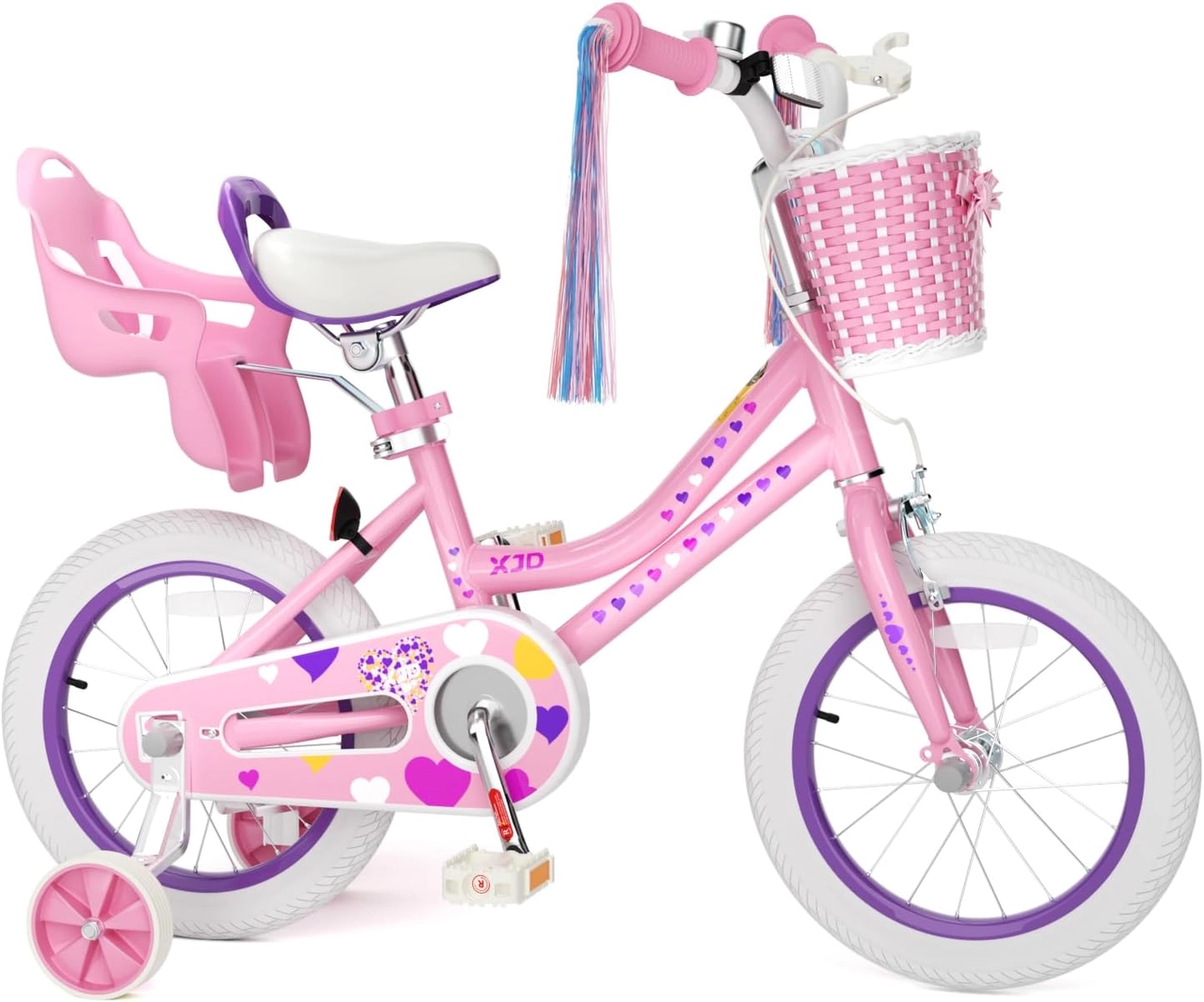 Pink Girls' 12/14/16" Bike by XJD – Basket & Doll Seat
Its 12-inch and 14-inch SKUs are relevant comparison points for a measured 3 1/2-year-old; the listed 16-inch SKU should not be chosen simply for growth.
 Pink 12/14/16/20" XJD Girls Bike with Training Wheels & Basket
This training wheel bike includes 12-inch and 14-inch SKUs relevant to the initial fit comparison, plus 16-inch and 20-inch options that follow larger XBikes starting ranges.
 Black XJD Kids Bike for Boys – 12, 14 & 16 Inch Sizes
Its 12-inch and 14-inch SKUs provide the relevant starting comparison for this age, subject to measured height and a complete individual fit check.
Pink Girls' 12/14/16" Bike by XJD – Basket & Doll Seat is categorized as a training wheel bike and has 12-inch, 14-inch and 16-inch SKU labels. For this question, compare only its 12-inch and 14-inch versions after measuring the rider.
Pink 12/14/16/20" XJD Girls Bike with Training Wheels & Basket is also categorized as a training wheel bike. It offers 12-inch, 14-inch, 16-inch and 20-inch labels. The 16-inch starting point is ages 4–7 and 40–48 in (102–122 cm); the 20-inch starting point is ages 7–12 and 48–60 in (122–152 cm), so neither should be selected for a 3 1/2-year-old merely to provide growing room.
Black XJD Kids Bike for Boys – 12, 14 & 16 Inch Sizes is categorized as a training wheel bike with those three SKU labels. Again, the 12-inch and 14-inch versions are the relevant initial comparisons; its title is a catalog label, not evidence of an individual fit.
Before the first ride
Use a properly fitting bicycle helmet. It should sit level and its straps should be adjusted according to the helmet manufacturer’s instructions. Supervise practice in a controlled area away from traffic while the child becomes comfortable starting, steering, braking and stopping.
For assembly, adjustment, maintenance, load limits, compatibility and torque requirements, follow the exact product manual or use a qualified bicycle mechanic. Do not guess settings that are specific to the bicycle.
The next step is simple: measure the child’s height and inseam today, compare 12-inch and 14-inch candidates where the height table directs, and buy only the size the child can stand over, reach, brake and control confidently now.
Bikes for your next adventure
-

XJD Girls Bike for Kids Ages 3-8, 12/14/16 Inch with Training Wheels – Purple
The XJD Girls Bike in Purple is a training-wheel bicycle for kids ages 3 to 8, f…$149
$169 -

Pink Girls' 12/14/16" Bike by XJD – Basket & Doll Seat
The XJD Pink Girls' Bike with Basket & Doll Seat is made for riders 71–122 cm ta…$75.99
$99.99 -
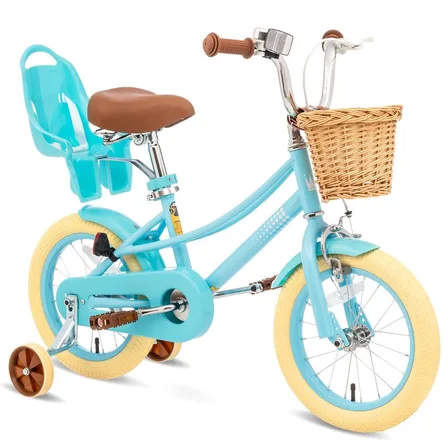
Girls' Training Wheel Bike by XJD, 12–20 Inch Wheels – Blue
This XJD girls' training wheel bike in Blue covers one of the widest fit ranges …$139
$159