

What size bike frame for a 2 year old
For a 2-year-old, do not choose a bike frame by age alone. Measure the child’s height and inseam, then confirm stand-over, reach, brake control and confidence on the exact bicycle. In the XBikes guide, 12-inch wheels start at age 3 and 34 inches (86 cm), so many 2-year-olds will not yet match a listed size.
The direct size answer
Children’s bicycles are commonly compared by wheel size rather than an adult-style frame measurement. XBikes lists 12 inches as its smallest starting point: ages 3–4 and rider height 34–40 inches (86–102 cm). There is no XBikes numerical starting point specifically for age 2.
If your child is shorter than 34 inches (86 cm), none of the supplied wheel-size ranges matches their measured height. Do not treat a 12-inch bicycle as equivalent simply because it is the smallest available option. If the child is at least 34 inches tall, a 12-inch model can be tried, but the height range is only a screening step—not proof of fit or readiness.
What to measure before comparing bikes
- Standing height: Measure without shoes, with the child upright against a wall. Compare the result with the XBikes height range before arranging a bike trial.
- Inseam: With the child standing naturally, measure from the floor to the crotch. Compare this measurement with the stand-over height and usable saddle adjustment of the exact bicycle.
- Reach and hand control: On the actual bike, check whether the child can hold the handlebar comfortably, steer without stretching and operate any fitted brakes reliably.
- Current confidence: Notice whether the child remains balanced and responsive rather than becoming rigid, frightened or dependent on an adult to control the bicycle.
Do not infer missing dimensions from a wheel label. Ask for the exact bicycle’s measurements or consult its product manual when stand-over height, saddle range or other specifications are not supplied.
How to perform the fit check
Have the child try the exact bicycle while closely supervised. First check stand-over: the frame should not prevent the child from standing securely over the bike. Then set the saddle within the manufacturer’s permitted adjustment range and confirm that the child can get on and off without being lifted into position.
Next, watch the upper body. The child should be able to reach the handlebar and turn it without an exaggerated lean or locked arms. Check that hands remain securely placed during steering. If brakes are fitted, the child must be able to reach and operate them with control; a brake lever that cannot be used reliably is a failed fit check.
The American Academy of Pediatrics advises having a child try a bicycle and warns against buying an oversized bike for future growth. A bike that will fit later is not the right size now.
How the supplied 12-, 14- and 16-inch options compare
| Wheel label | XBikes starting point | Meaning for a 2-year-old |
|---|---|---|
| 12 Inch | Ages 3–4; 34–40 in / 86–102 cm | The nearest listed comparison, but only worth trying when measured height and the complete fit check support it. |
| 14 Inch | Ages 3–6; 37–45 in / 94–114 cm | A larger comparison point, not a substitute for 12 inches and not justified by age 2 alone. |
| 16 Inch | Ages 4–7; 40–48 in / 102–122 cm | Outside the listed age starting point for a 2-year-old and must not be bought for growth. |
The XJD Pink Girls' Bike – Kids 12/14/16 Inch Training Wheel Bicycle is relevant because its available SKU labels—12 Inch, 14 Inch and 16 Inch—let you compare the smallest three XBikes starting points within one catalog listing. Those labels do not replace measurements or an individual trial.
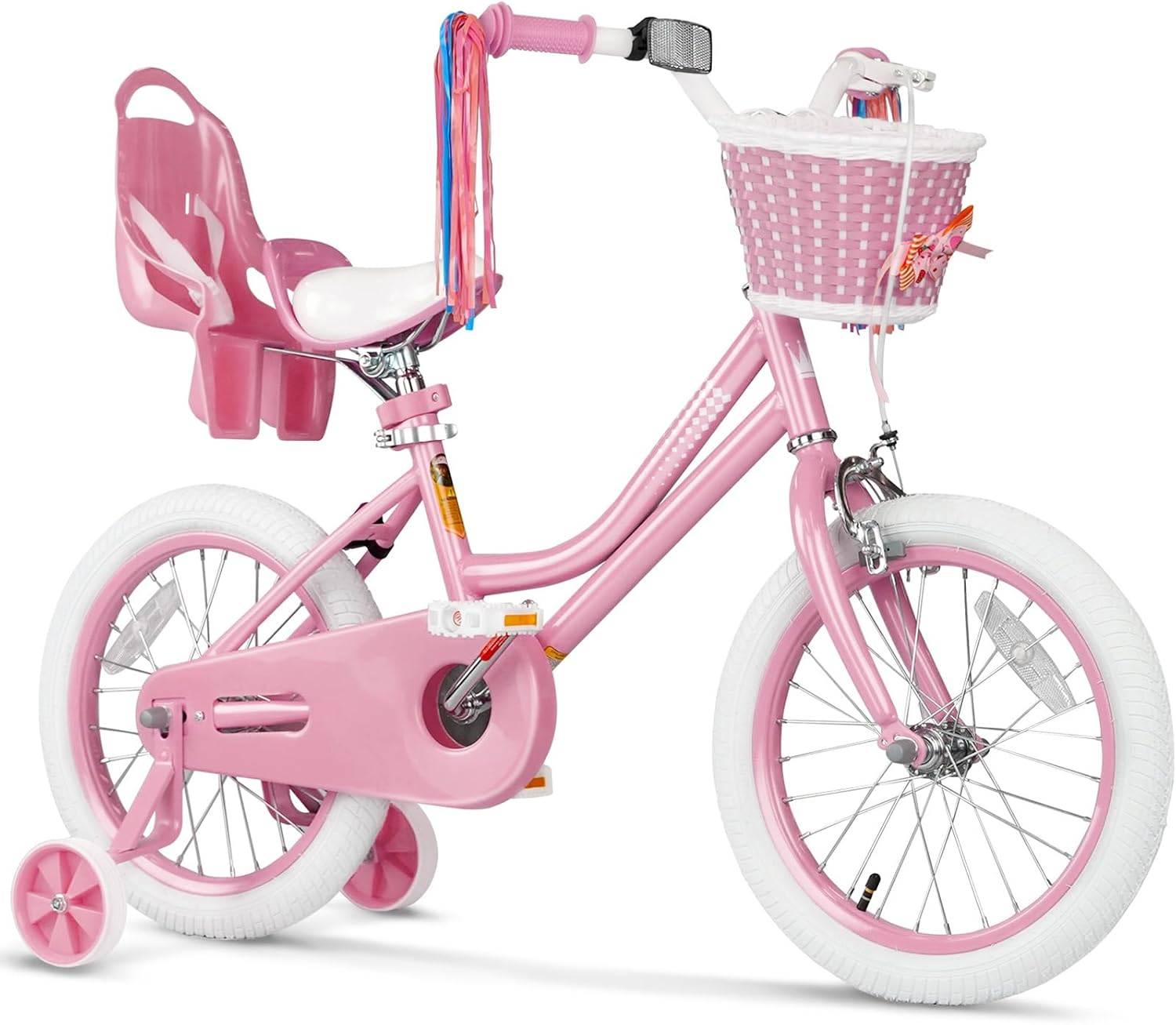
For this title, the 12 Inch SKU is the nearest-size comparison. The 14 Inch and 16 Inch SKUs are distinct, larger sizes, not equivalent alternatives. The supplied facts do not include frame geometry, saddle range, brake details or assembly measurements, so consult the exact product manual or a qualified bicycle mechanic rather than assuming those details.
What to do after measuring
If the child is under 34 inches (86 cm), or cannot pass every control check, postpone these supplied bicycle sizes and measure again later. If the child measures within 34–40 inches (86–102 cm), arrange a supervised trial of the 12-inch option and reject it if stand-over, reach, mounting, steering or brake use is uncertain.
Do not move up to 14 or 16 inches merely to extend usable life. Height ranges can overlap, but overlapping numbers do not make wheel sizes interchangeable. Choose only the exact bicycle the child can control now.
Helmet and final decision
For every ride, use a bicycle helmet that fits properly. The U.S. Consumer Product Safety Commission advises that it sit level and that its straps be used according to the helmet manufacturer’s instructions.
The decision for a 2-year-old is therefore simple: measure first; consider 12 inches only from 34 inches (86 cm) tall; verify the exact bike in person; and wait if any stand-over, reach, brake-control or confidence check fails.
Bikes for your next adventure
-

Pink Girls' 12/14/16" Bike by XJD – Basket & Doll Seat
The XJD Pink Girls' Bike with Basket & Doll Seat is made for riders 71–122 cm ta…$75.99
$99.99 -

XJD Girls Bike for Kids Ages 3-8, 12/14/16 Inch with Training Wheels – Purple
The XJD Girls Bike in Purple is a training-wheel bicycle for kids ages 3 to 8, f…$149
$169 -

XJD Kids Bike for Girls – Pink, 12/14/16/20 Inch with Training Wheels
The XJD Kids Bike for Girls in Pink is a training-wheel bike built to carry your…$139
$159