

Can 3 year old ride bike
Yes, many 3-year-olds can ride a bike if the bike fits and they can steer, stop and remain in control. Measure your child rather than choosing by age alone.
Start with height, then check the actual fit
Measure your child’s height without shoes, standing straight against a wall. For a 3-year-old, the XBikes starting points are 12-inch wheels for riders 34–40 in (86–102 cm) tall and 14-inch wheels for riders 37–45 in (94–114 cm) tall. The ranges overlap, so height narrows the choice but does not settle it.
| Wheel size | Starting age | Rider height | Relevance at age 3 |
|---|---|---|---|
| 12 Inch | 3–4 | 34–40 in / 86–102 cm | Likely first size to try within this height range |
| 14 Inch | 3–6 | 37–45 in / 94–114 cm | Worth comparing for a taller child within this range |
| 16 Inch | 4–7 | 40–48 in / 102–122 cm | Usually outside the age starting point; consider only after a careful individual fit check |
Do not select a larger bicycle merely to leave growing room. A bike that is too large can make starting, stopping and steering harder. Have the child try the exact bicycle whenever possible.
What to check during the try-out
First check stand-over clearance: your child should be able to straddle the bike comfortably rather than being pressed against the frame. Then observe whether the seated position allows easy, controlled contact with the pedals and whether the child can reach the handlebar without stretching or locking the arms.
Ask the child to demonstrate these actions in a quiet, traffic-free practice area under close adult supervision:
- Hold the handlebar and look ahead while maintaining a stable position.
- Turn in both directions without losing control or overreaching.
- Operate the bike’s braking controls reliably with their current hand reach and strength.
- Start and stop without panic, even if an adult initially provides support.
If any control requires stretching, unusually awkward movement or adult intervention every time, the bike is not a good current fit. Compare another size or postpone riding rather than expecting the child to grow into it.
How 12-inch and 14-inch bikes differ for this decision
A 12-inch model is the most direct catalog match to the XBikes age-three starting point, provided the rider is 34–40 in (86–102 cm) tall and passes the fit checks. A 14-inch model overlaps for children at least 37 in (94 cm) tall, but it should be chosen only when its stand-over, reach, braking and handling are genuinely manageable.
A 16-inch wheel begins at ages 4–7 and 40–48 in (102–122 cm) in the XBikes guide. Age three alone therefore does not support moving to 16 inches. Even for a tall 3-year-old, measured fit, brake control and confidence must decide. A 20-inch option begins at ages 7–12 and 48–60 in (122–152 cm), so it is not an appropriate age-based starting point for this question.
Which supplied bikes are relevant?
All three supplied models are training-wheel bicycles with 12-inch, 14-inch and 16-inch choices, so they let a parent compare the wheel sizes most plausibly encountered around this decision. One also has a 20-inch option, but that larger label does not make it relevant to a typical 3-year-old fit.
 Light Pink XJD Girls' Bicycle with Basket & Training Wheels
Available in 12, 14, 16 and 20 Inch options. For a 3-year-old, the 12-inch and possibly 14-inch versions are relevant starting comparisons, subject to measured height and an individual fit check.
 Blue XJD Girls Bike with Training Wheels – 12/14/16 Inch
This training-wheel bicycle is available in 12, 14 and 16 Inch sizes. Its 12-inch option aligns with the age-three starting band; compare 14 Inch only when the rider’s measured height and control support it.
 XJD Boys 12/14/16" Training Wheel Bike – Blue
Offered with training wheels in 12, 14 and 16 Inch sizes. The two smaller options are the relevant comparisons for this question, but stand-over, reach, braking and confidence must determine fit.
Light Pink XJD Girls' Bicycle with Basket & Training Wheels is offered in 12 Inch, 14 Inch, 16 Inch and 20 Inch. For this title, begin by comparing only its 12-inch and, when the measured height supports it, 14-inch versions. Its basket does not affect whether the bicycle fits.
Blue XJD Girls Bike with Training Wheels – 12/14/16 Inch offers the three listed wheel sizes. Its 12-inch version matches the initial age-three size band; its 14-inch version is a comparison option for a child within the overlapping height range.
XJD Boys 12/14/16" Training Wheel Bike – Blue has the same supplied size choices: 12 Inch, 14 Inch and 16 Inch. Choose among them using the child’s measurements and try-out, not the wording of the product title.
Training wheels can provide lateral support, but they do not correct an oversized frame, excessive reach or inaccessible braking controls. For assembly, adjustment, compatibility, maintenance, load limits and torque requirements, follow the exact product manual or ask a qualified bicycle mechanic.
Helmet and practice setup
Use a bicycle helmet that fits properly, sits level and has straps adjusted according to its manufacturer’s instructions. Practice away from vehicles, slopes, obstacles and crowds, with an adult close enough to intervene. Begin with short sessions so fatigue or frustration does not undermine control.
Clothing and footwear should not interfere with the wheels, pedals or controls. Before each ride, an adult should also follow the bicycle manual’s prescribed checks. If anything appears loose, damaged or incorrectly assembled, stop and consult the manual or a qualified bicycle mechanic.
Make the age-three decision
Measure height first, try a 12-inch bike when the child is 34–40 in (86–102 cm), and compare a 14-inch bike only from 37 in (94 cm) upward. Buy neither unless the child can straddle, reach, steer and brake confidently. If those checks fail, wait and try again later; being three does not create a deadline to ride.
Bikes for your next adventure
-
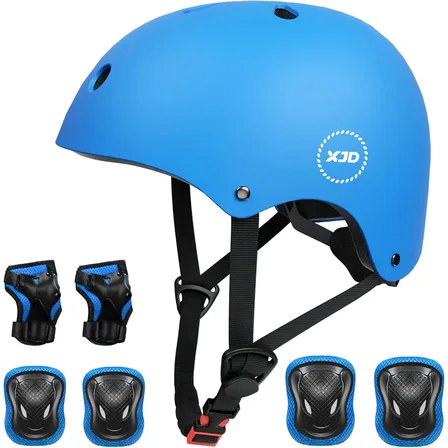
Blue XJD Helmet & Protective Gear Set for Kids, Sizes S/M
The Blue XJD Helmet & Protective Gear Set is made for kids roughly 3 to 8 years …$23.79
-
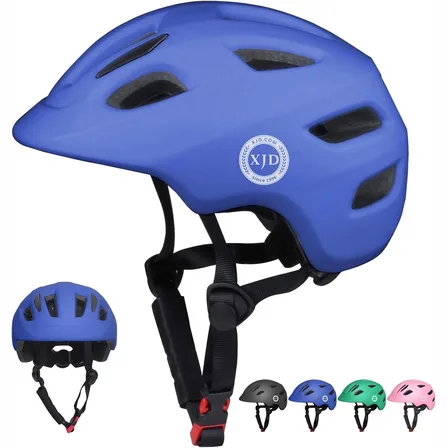
Blue XJD Kids' Bike Helmet, Adjustable Fit – Sizes XS & S
The Blue XJD Kids' Bike Helmet is a lightweight, adjustable helmet for toddlers …$20.39
-
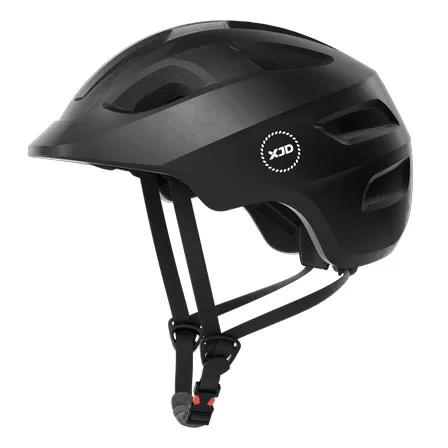
Kids Multi-Sport Bike Helmet by XJD – Black
7 reviews
The XJD Kids Multi-Sport Bike Helmet in Black is a lightweight, adjustable helme…$59.99
$49