

How to teach a 3 year old to ride bike
To teach a 3-year-old to ride a bike, choose a correctly fitted bicycle, practise balance and braking first, then add pedalling in short, calm sessions.
Measure your child before choosing the bike
Measure your child’s standing height and inseam while they are wearing the shoes they will ride in. Age is only a starting point: compare those measurements with the bicycle, then check reach, brake control and confidence in person.
Have your child try the bike. They should be able to stand over it comfortably, reach the handlebar without stretching, and operate the brakes they are expected to use. Do not buy an oversized bicycle for future growth; a bike that is difficult to mount, stop or steer makes learning harder.
| Wheel size | XBikes starting point | Relevance at age 3 |
|---|---|---|
| 12 Inch | Ages 3–4; height 34–40 in / 86–102 cm | A common starting comparison if the individual fit works |
| 14 Inch | Ages 3–6; height 37–45 in / 94–114 cm | Compare if the child is within the height range and can control it |
| 16 Inch | Ages 4–7; height 40–48 in / 102–122 cm | Usually outside the age starting point for a 3-year-old; never size up on age or growth expectations |
Choose between balance practice and training wheels
A 3-year-old needs to learn several separate skills: mounting, looking ahead, steering, stopping, balancing and pedalling. Training wheels can support the bicycle while the child learns steering and pedalling, but they do not remove the need for a precise fit or teach unsupported two-wheel balance by themselves.
If the bicycle can be configured for balance practice, follow its exact manual rather than improvising modifications. For training-wheel height, assembly, compatibility, maintenance or torque instructions, use the product manual or ask a qualified bicycle mechanic.
The supplied catalog option is relevant because it is a training-wheel bicycle offered in 12 Inch, 14 Inch and 16 Inch labels, allowing parents to compare the two size starting points that include age 3 without assuming that either will fit automatically.
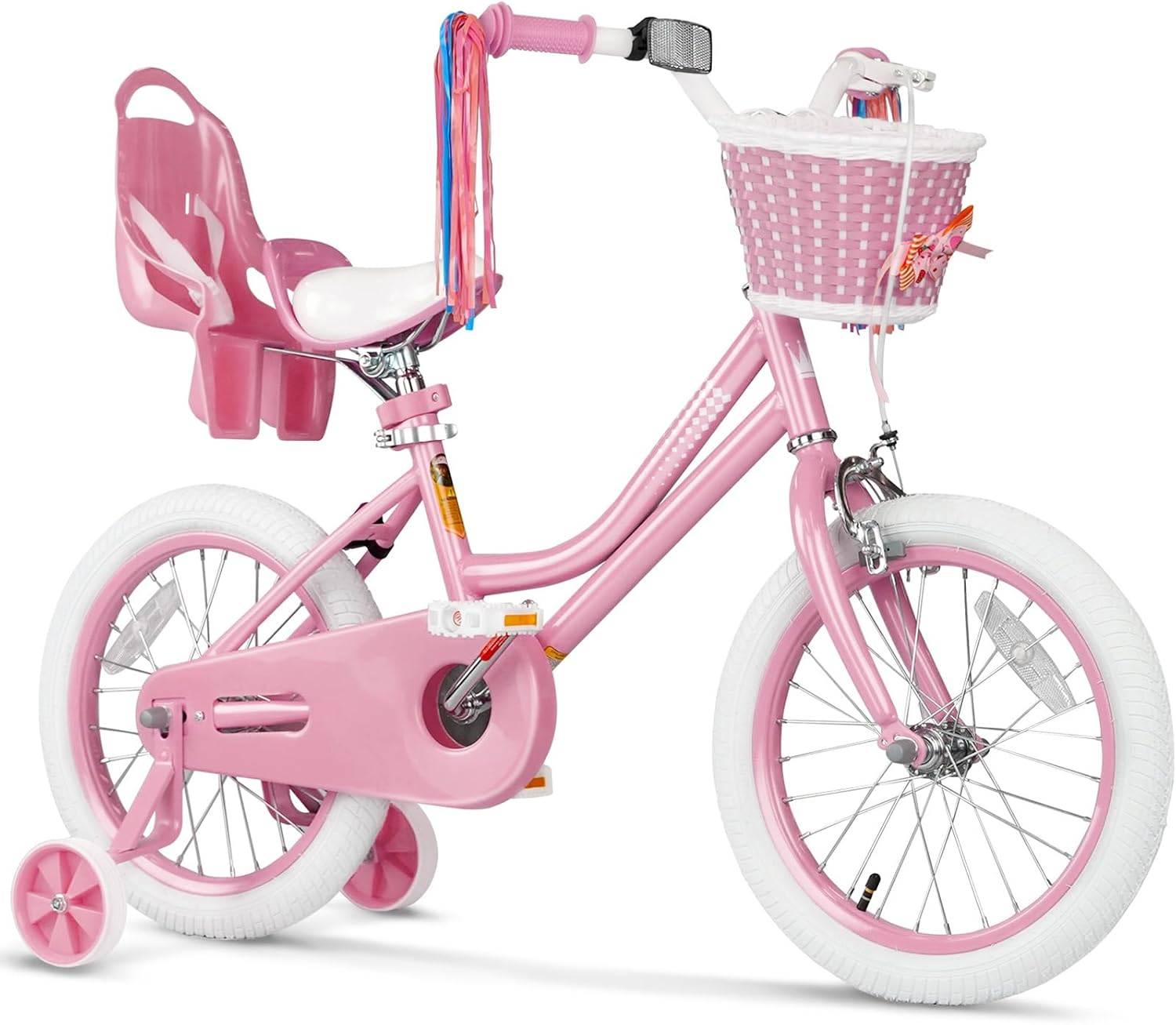
XJD Pink Girls' Bike – Kids 12/14/16 Inch Training Wheel Bicycle is listed under Training Wheel Bikes and has 12 Inch, 14 Inch and 16 Inch SKU labels. For most 3-year-old comparisons, begin with 12 Inch and 14 Inch against measured height and actual control. The 16 Inch label is not equivalent: XBikes places it at ages 4–7 and heights 40–48 in / 102–122 cm, so it should not be chosen merely to allow room for growth.
Teach the skills in a simple order
- Start with mounting and stopping. In a flat, open area away from traffic, help your child get on and off while keeping the bike steady. Practise the bicycle’s intended stopping method until the child responds without panic.
- Introduce steering. Ask the child to look toward a nearby destination rather than down at the front wheel. Use wide, gentle paths before attempting tighter turns.
- Build balance. Let the child experience coasting and keeping the handlebar steady using a configuration permitted by the manual. Stay close enough to assist, but avoid pulling the handlebar because that takes steering control away.
- Add pedalling. Help position a pedal for an easy first push, then encourage the child to look ahead and keep moving. Offer brief support at the torso or approved bicycle support point, not by steering for them.
- Combine starting, riding and stopping. End each attempt at a clear destination so the child learns to slow and stop deliberately.
Keep each practice session productive
Use a level, dry, traffic-free space with room for gentle turns and predictable stops. Keep sessions short enough that attention and patience remain intact. Finish after a small success—such as a controlled stop—rather than continuing until the child is tired or frustrated.
A properly fitting bicycle helmet should be worn for every ride. It must sit level, fit properly and have its straps adjusted according to the helmet manufacturer’s instructions. Clothing and footwear should not interfere with pedals, wheels or steering.
Know when to reduce support
Reduce assistance only when the child can start with minimal help, look ahead, steer a planned path and stop on request. If using training wheels, follow the bicycle manual for any adjustment or removal. A qualified bicycle mechanic can help when the instructions are unclear or the setup does not remain secure.
If the child leans heavily on the supports, cannot reach the controls, repeatedly loses steering control or appears frightened, pause. Recheck height, inseam, reach, brake operation and the bicycle’s setup before trying again. A different wheel size may be appropriate, but only a hands-on fit check can confirm it.
Make the decision for your 3-year-old
Measure first, then compare 12 Inch and 14 Inch starting points and have your child try the bicycle. Choose only the size they can stand over, reach, steer and stop confidently today. Begin with mounting and braking, progress through steering and balance, and add independent pedalling only when those foundations are controlled.
Bikes for your next adventure
-

Kids Bike Helmet by XJD for Boys & Girls – Black, Blue, Green, Pink, Purple
The XJD Kids Bike Helmet covers a wide 2-to-8-year age range thanks to two head-…$59.99
-

Kids Bike Helmet by XJD for Girls – Pink
The XJD Kids Bike Helmet in Pink is a lightweight multi-sport helmet for girls r…$59.99
$99 -

XJD Kids Bike for Girls – Pink, 12/14/16/20 Inch with Training Wheels
The XJD Kids Bike for Girls in Pink is a training-wheel bike built to carry your…$139
$159