

Is 16 inch bike too big for 3 year old
Usually, yes: a 16-inch bike is too big for a typical 3-year-old. XBikes places 16-inch bikes at 40–48 in (102–122 cm) and ages 4–7, so choose one only after confirming your child fits and controls it safely.
Measure your child before choosing
Age is only a starting point. Measure your child’s standing height without shoes, then measure the inseam from the floor to the crotch while the child stands naturally. Compare standing height with the XBikes ranges below, but use the inseam during an actual stand-over check. Wheel size alone cannot reveal whether a particular frame will fit.
| Wheel size | XBikes age starting point | Rider height starting point |
|---|---|---|
| 12 Inch | 3–4 | 34–40 in / 86–102 cm |
| 14 Inch | 3–6 | 37–45 in / 94–114 cm |
| 16 Inch | 4–7 | 40–48 in / 102–122 cm |
If your 3-year-old is shorter than 40 in (102 cm), the XBikes starting points indicate looking first at a 12- or 14-inch bike, not a 16-inch bike. A child who is at least 40 in tall has reached the 16-inch height range, but that still does not prove the bike fits.
Perform a hands-on fit check
Have your child try the exact bicycle. The American Academy of Pediatrics advises against buying an oversized bike merely so a child can grow into it. During the fitting, check all of the following:
- Stand-over: The child can straddle the bicycle rather than being forced onto tiptoes or against the frame. Compare the child’s measured inseam with the actual bicycle.
- Reach: Seated in a normal riding position, the child reaches the handlebar without stretching, locking the elbows or leaning excessively.
- Brake control: The child can reach and operate the fitted controls as intended. Do not assume a control is usable simply because it is present.
- Handling: The child can start, steer, stop and get off without the bicycle’s size overwhelming them.
- Confidence: The child remains composed and attentive. Fear, repeated tipping or difficulty turning are reasons to try a smaller option.
Fit also varies among bicycles carrying the same wheel-size label. Follow the exact product manual for setup, adjustment, compatibility, maintenance and limits. If the fit or assembly is uncertain, use a qualified bicycle mechanic.
How the supplied bikes help with the decision
All three supplied catalog options include multiple wheel-size labels, including the 16-inch size in question and smaller sizes useful for comparison. That makes them relevant for testing whether 12, 14 or 16 inches better matches the child; their titles and training-wheel category do not establish individual fit.
 XJD Kids Bike for Girls – Pink, 12/14/16/20 Inch with Training Wheels
Offers 12-, 14-, 16- and 20-inch catalog options with training wheels, allowing comparison of the questioned 16-inch size against smaller listed sizes. An individual fit check remains necessary.
 XJD Pink Girls' Bike – Kids 12/14/16 Inch Training Wheel Bicycle
Its 12-, 14- and 16-inch catalog options with training wheels provide relevant size-comparison choices for a 3-year-old. The product title alone does not establish fit.
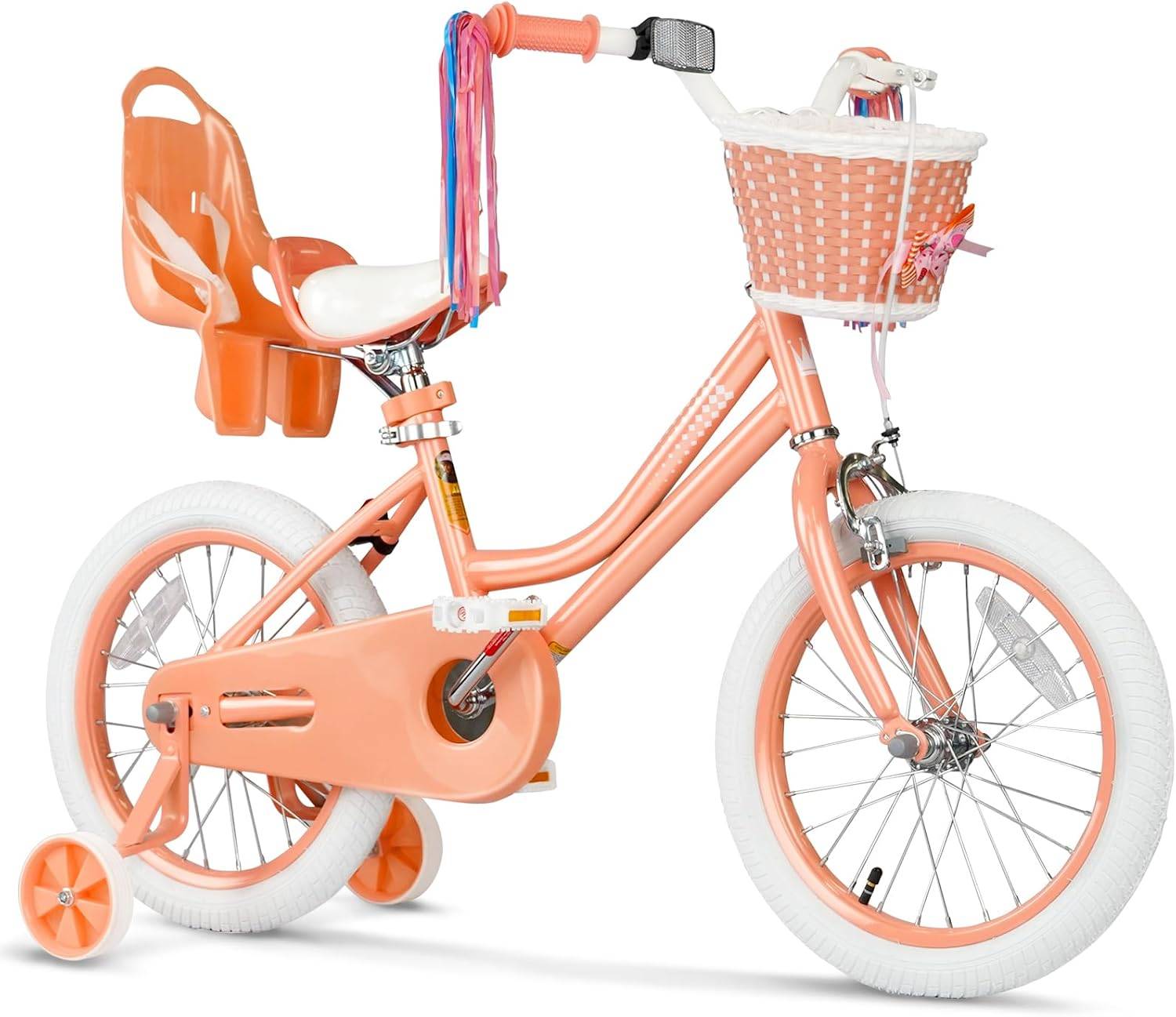 Girls 12/14/16 Inch Kids Bike by XJD with Training Wheels – Peach
Provides 12-, 14- and 16-inch catalog options with training wheels, making it useful for comparing smaller sizes with 16 inches after measuring the child and checking control.
XJD Kids Bike for Girls – Pink, 12/14/16/20 Inch with Training Wheels offers catalog size labels of 12, 14, 16 and 20 inches. For this question, compare its 12-, 14- and 16-inch options; the 20-inch label falls well beyond the listed starting ranges for most 3-year-olds.
XJD Pink Girls' Bike – Kids 12/14/16 Inch Training Wheel Bicycle provides 12-, 14- and 16-inch catalog options. Girls 12/14/16 Inch Kids Bike by XJD with Training Wheels – Peach provides the same three size labels. Either can serve as a direct size comparison, but neither title proves which option fits your child.
Training wheels can support balance while learning, but they do not correct excessive stand-over height, an overlong reach or controls the child cannot operate. Do not use their presence as a reason to accept an oversized frame.
What to do next
- Record the child’s height and inseam.
- Start with the wheel-size range matching the measured height: commonly 12 or 14 inches for a 3-year-old under 40 in, and consider 16 inches only from 40 in upward.
- Have the child try the exact bike and check stand-over, reach, braking, steering, stopping and confidence.
- Select the size the child can control now rather than a larger size intended mainly for future growth.
- Fit a bicycle helmet that sits level and uses its straps according to the helmet manufacturer’s instructions, as advised by the U.S. Consumer Product Safety Commission.
Decision: treat a 16-inch bike as too big for your 3-year-old unless the child is at least 40 in (102 cm) tall and passes every hands-on fit and control check on that exact bicycle. If either condition fails, compare the 12- and 14-inch options instead.
Bikes for your next adventure
-
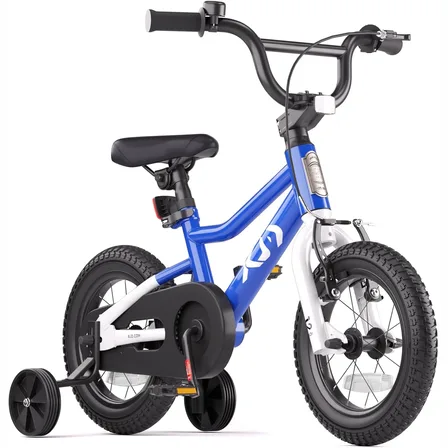
XJD Boys & Girls BMX Bike with Training Wheels, 12/14/16" – Blue
The XJD Boys & Girls BMX Bike in Blue is a first pedal bike for kids roughly age…$99.99
$119.99 -

XJD Girls BMX Bike 12/14/16 Inch with Training Wheels – Pink Blue
The XJD Girls BMX Bike in Pink/Blue is built as a first pedal bike for kids roug…$99.99
$119.99 -
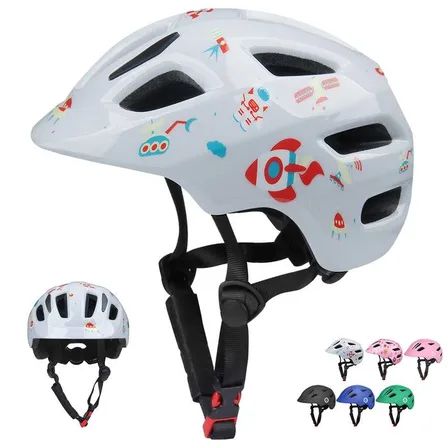
White Astronaut Bike Helmet for Kids by XJD – Toddler to Youth Sizes
4 reviews
The XJD White Astronaut kids' bike helmet is made for toddlers through younger e…$59.99