

What kind of bike should a 3 year old have
Most 3-year-olds should start by trying a 12-inch bike; a taller child may fit a 14-inch bike. Measure height and inseam, then check control in person.
Start with 12 inches, but decide by fit
XBikes uses 12-inch wheels as the starting point for ages 3–4 and rider heights of 34–40 inches (86–102 cm). A 14-inch bike starts at ages 3–6 and heights of 37–45 inches (94–114 cm). These ranges overlap, so age alone cannot choose the bike.
For a 3-year-old under 37 inches (94 cm), begin the fit check with a 12-inch model. At 37–40 inches (94–102 cm), compare both 12- and 14-inch bikes. Above 40 inches (102 cm), a 14-inch model is the more relevant starting point within this standard, but it still must fit the individual child.
| Wheel size | XBikes starting range | How to use it for a 3-year-old |
|---|---|---|
| 12 Inch | Ages 3–4; 34–40 in / 86–102 cm | First size to try for many children this age |
| 14 Inch | Ages 3–6; 37–45 in / 94–114 cm | Compare when the child is at least 37 in / 94 cm tall |
| 16 Inch | Ages 4–7; 40–48 in / 102–122 cm | Usually outside the age starting point; consider only after a careful individual fit check |
Measure before comparing bikes
Measure the child barefoot or in the shoes normally worn for riding. Record total height. For inseam, have the child stand straight with feet slightly apart, place a thin book firmly between the legs, and measure from the floor to the book’s top edge.
Height helps narrow the wheel size, while inseam helps determine whether the child can stand over the bicycle comfortably. Bicycle geometry varies, so an inseam measurement cannot prove fit without the bicycle’s actual dimensions and an in-person check. Do not infer those dimensions from wheel size.
What a proper trial should show
Have the child try the exact bicycle rather than buying a larger one for future growth. The American Academy of Pediatrics’ guidance emphasizes stand-over clearance, control and brake reach. During the trial, check that the child can:
- Stand over the frame without being forced onto tiptoes or into an awkward position.
- Reach the handlebars without stretching, locking the elbows or losing balance.
- Steer smoothly in both directions while remaining in control.
- Reach and operate the bicycle’s braking controls, whatever controls the exact model provides.
- Start, stop and put a foot down predictably at the child’s present confidence level.
If the child looks cramped on a 12-inch bike but cannot confidently control a 14-inch bike, neither trial is a good fit. Do not treat “room to grow” as a reason to accept poor control now.
Where training-wheel bikes fit the decision
Training wheels may be relevant when a child is learning to pedal and is not yet ready to balance independently. They do not correct a frame that is too large, an excessive reach or inaccessible braking controls. Compare the child’s fit and confidence first, then decide whether training wheels match the learning stage.
The supplied catalog options help because both include 12- and 14-inch labels, the two wheel sizes most directly relevant to a 3-year-old under the XBikes starting points. They also let parents compare labeled sizes within the same product category.
 XJD Kids' Training Wheel Bike for Boys & Girls, 12/14/16 Inch – White
A training-wheel bike with 12 Inch, 14 Inch and 16 Inch SKU labels. Its 12- and 14-inch options are the relevant starting comparisons for a 3-year-old, subject to measured height and an individual fit check.
 Girls' Training Wheel Bike by XJD, 12–20 Inch Wheels – Blue
A training-wheel bike offered in 12 Inch, 14 Inch, 16 Inch and 20 Inch labels. For a 3-year-old, compare only the size supported by measured height, reach, brake control and current confidence.
How the two catalog options compare
XJD Kids' Training Wheel Bike for Boys & Girls, 12/14/16 Inch – White is a training-wheel bicycle offered with 12 Inch, 14 Inch and 16 Inch SKU labels. For this age, begin with its 12- or 14-inch option according to measured height and the individual fit check.
Girls' Training Wheel Bike by XJD, 12–20 Inch Wheels – Blue is also a training-wheel bicycle. Its available labels are 12 Inch, 14 Inch, 16 Inch and 20 Inch. The additional larger labels do not make those sizes appropriate for a 3-year-old: under the supplied standard, 20 inches starts at ages 7–12 and heights of 48–60 inches (122–152 cm).
The catalog facts do not provide geometry, brake type, weight, load limit or assembly details. Confirm those matters in the exact product manual, and use a qualified bicycle mechanic when assembly, compatibility or adjustment is uncertain.
Helmet and first-ride checks
Use a bicycle helmet that fits properly. Following U.S. Consumer Product Safety Commission guidance, position it level and secure its straps according to the helmet manufacturer’s instructions. A helmet cannot compensate for an oversized or poorly controlled bicycle.
Before each ride, follow the bicycle’s exact manual for inspection and maintenance. Begin in a traffic-free, level area under close adult supervision so the child can practise starting, steering, braking and stopping.
Make the choice
Measure the 3-year-old now. Try a 12-inch bike first at 34–40 inches (86–102 cm), and compare a 14-inch bike at 37–45 inches (94–114 cm). Choose only the size the child can stand over, reach, steer and brake confidently today; if neither passes those checks, postpone the purchase rather than sizing up.
Bikes for your next adventure
-

Flower Pink XJD Girls Bike with Doll Seat & Basket
The XJD Flower Pink girls' bike is made for riders 71–122 cm tall (roughly ages …$69.99
-
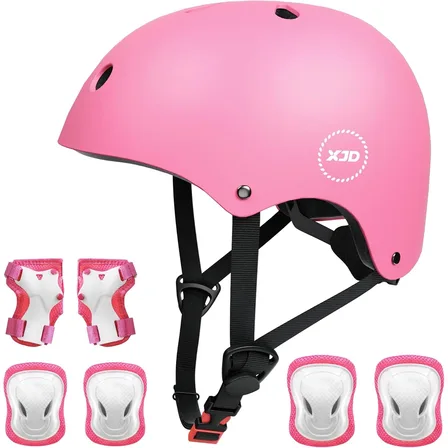
XJD Kids Helmet & Protective Gear Set for Girls, Pink
The XJD Kids Helmet & Protective Gear Set in Pink is a complete safety kit for g…$24.64
-

Kids Bike Helmet by XJD for Boys & Girls – Black, Blue, Green, Pink, Purple
The XJD Kids Bike Helmet covers a wide 2-to-8-year age range thanks to two head-…$59.99