

What size bike should my 3 year old have
Most 3-year-olds should start by trying a 12-inch bike; a taller child may fit a 14-inch bike. Measure height and inseam, then check control.
Choose between 12 and 14 inches
XBikes uses a 12-inch wheel as the starting point for ages 3–4 and heights of 34–40 inches (86–102 cm). A 14-inch wheel starts at ages 3–6 and heights of 37–45 inches (94–114 cm). Because those ranges overlap, age alone cannot settle the choice.
If your child is 34–36 inches tall, begin with a 12-inch model. From 37–40 inches, compare both 12- and 14-inch bikes in person. From 41–45 inches, begin with a 14-inch model. These are starting points, not guarantees: the correct bike is the one the child can stand over, reach, steer and stop confidently.
| Wheel size | XBikes age starting point | Rider height |
|---|---|---|
| 12 Inch | 3–4 | 34–40 in / 86–102 cm |
| 14 Inch | 3–6 | 37–45 in / 94–114 cm |
| 16 Inch | 4–7 | 40–48 in / 102–122 cm |
Measure your child before shopping
Measure without shoes on a hard, level floor. For height, have your child stand upright against a wall and mark the top of the head. Measure from the floor to that mark.
For inseam, place a firm, thin book between the legs with its edge gently raised to represent the bicycle saddle. Keep the book level, then measure from the floor to its top edge. Record both height and inseam in inches or centimetres.
Use measured height to select the first wheel size to try. Use inseam during the stand-over and mounting checks. Wheel diameter does not reveal the bicycle’s complete geometry, so two bikes with the same wheel label may not feel identical.
Do an individual fit check
Have your child try the exact bicycle rather than buying solely from an age label. Do not choose an oversized bike simply to leave growing room. A bike that is too large can make starting, stopping and steering harder.
- Stand-over: With the child straddling the bike and both feet on the ground, confirm there is comfortable clearance and no forced balancing on tiptoes.
- Mounting: Check that the child can get on and off without being caught by the frame or losing control.
- Reach: Seated naturally, the child should reach the handlebar without stretching, locking the elbows or leaning excessively.
- Steering: Ask the child to turn the handlebar both ways while remaining balanced and in control.
- Braking: Confirm the child can reach and operate the fitted brake controls. Follow the exact product manual for their use and adjustment.
- Confidence: Watch for relaxed, repeatable starts, stops and turns. If the child looks intimidated or cannot control the bike, try a smaller option.
How the supplied bikes help you compare
The supplied catalog options are relevant because all three offer both 12-inch and 14-inch labels, the two sizes most likely to need comparison for a 3-year-old. Their size labels identify useful candidates, but they do not replace the measurements and hands-on checks above.
 Pink 12/14/16/20" XJD Girls Bike with Training Wheels & Basket
Offers 12- and 14-inch variants relevant to the usual comparison for a 3-year-old, plus 16- and 20-inch labels. Select by measured height and an individual fit check.
 Black XJD Kids Bike for Boys – 12, 14 & 16 Inch Sizes
Its available 12- and 14-inch labels make it relevant when comparing likely sizes for a 3-year-old; a 16-inch label is also offered but requires height and fit support.
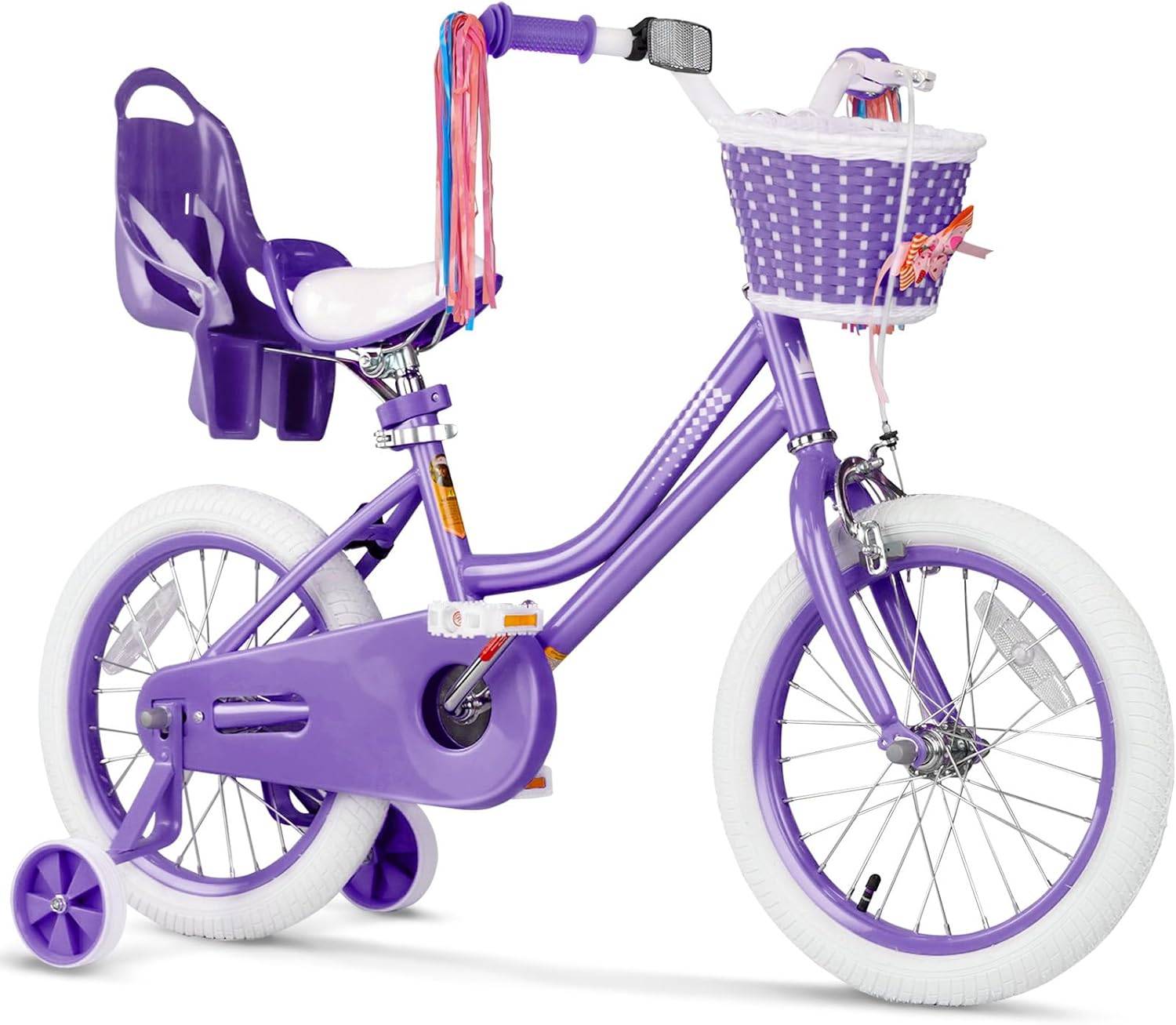 XJD Girls Bike for Kids Ages 3-8, 12/14/16 Inch with Training Wheels – Purple
Offers 12-, 14- and 16-inch labels. The age wording is part of its catalog title, so choose a variant using the XBikes height standard and a hands-on fit check.
The Pink 12/14/16/20" XJD Girls Bike with Training Wheels & Basket has 12-, 14-, 16- and 20-inch size labels. For this question, compare only its 12- and 14-inch variants unless the child’s measured height supports a larger starting point under the XBikes standard.
The Black XJD Kids Bike for Boys – 12, 14 & 16 Inch Sizes offers 12-, 14- and 16-inch labels. Its 12- and 14-inch variants provide the relevant comparison for most children who have just turned three.
The XJD Girls Bike for Kids Ages 3-8, 12/14/16 Inch with Training Wheels – Purple also offers 12-, 14- and 16-inch labels. Treat “Ages 3-8” as part of its catalog title, not proof that every listed variant fits every child in that age span.
All three products are categorized as training wheel bikes. The supplied facts do not establish whether a particular child needs training wheels, so make that decision from current confidence and control. For assembly, adjustment, maintenance, compatibility, load limits or torque, follow the exact product manual or consult a qualified bicycle mechanic.
Before the first ride
Choose an open, level practice area away from traffic. Use a bicycle helmet that fits properly, sits level on the head and has its straps secured according to the helmet manufacturer’s instructions. Recheck that the child can operate the controls before riding.
Your next step is simple: measure height and inseam, shortlist 12 inches or 14 inches from the table, and have your 3-year-old try that exact bike. Buy only when stand-over clearance, reach, braking and confident control all work now—not after the child grows.
Bikes for your next adventure
-

Green XJD Toddler Bike Helmet with Adjustable Fit, XS (46–51 cm)
The XJD toddler bike helmet in Green is built for the youngest riders — the size…$20.39
$23.99 -

Kids Bike Helmet by XJD for Boys & Girls – Black, Blue, Green, Pink, Purple
The XJD Kids Bike Helmet covers a wide 2-to-8-year age range thanks to two head-…$59.99
-

Kids Bike Helmet by XJD for Girls – Pink
The XJD Kids Bike Helmet in Pink is a lightweight multi-sport helmet for girls r…$59.99
$99