

What bike to buy for a 12-year-old boy
For most 12-year-old boys, start by trying a 24-inch bike; choose by measured height and real-world control, not age or extra growing room.
Choose the starting wheel size from height
Measure the rider without shoes, standing straight against a wall. At age 12, the relevant XBikes starting points usually overlap: a 20-inch bike covers rider heights of 48–60 in (122–152 cm), while a 24-inch bike covers 54–64 in (137–163 cm). A rider over 60 in (153 cm) can also begin comparing 26-inch youth or adult bikes.
| Measured rider height | Size to try | What it means |
|---|---|---|
| 48–54 in (122–137 cm) | 20 Inch | The 20-inch starting range applies; 24 inch begins at 54 in. |
| 54–60 in (137–152 cm) | 20 and 24 Inch | Try both because the published ranges overlap. |
| 60–64 in (153–163 cm) | 24 and 26 Inch | Compare control carefully; 26 inch starts above 60 in. |
These ranges narrow the search, but they cannot select the bike by themselves. Body proportions, skill and bike geometry can make two bikes with the same wheel label feel very different.
Measure inseam and check stand-over
Measure inseam from the floor to the crotch while the child stands upright. Keep that number available when checking the exact bicycle or its sizing information; do not turn wheel diameter into an assumed frame fit.
Have the rider straddle the bicycle while standing over its frame. He should be able to stand comfortably and stabilize the bike rather than being forced onto tiptoes or against the frame. Because the required clearance depends on the particular bicycle, follow its exact manual or ask a qualified bicycle mechanic instead of applying an invented universal number.
Do not buy a larger bike solely to provide growing room. An oversized bicycle can make starting, stopping, turning and dismounting harder today.
Test reach, brakes and confidence
Put the rider in a normal riding position and check whether he can hold the handlebar without stretching, locking his elbows or leaning awkwardly. He should be able to steer in both directions while remaining balanced.
Next, check brake control on the actual bicycle. The child must be able to reach and operate every fitted brake control confidently from the riding position. Do not assume a control is suitable merely because the wheel size matches his height. Any permitted adjustment, assembly requirement or compatibility question should be resolved through the exact product manual or a qualified bicycle mechanic.
Finally, let him start, ride slowly, turn, stop and dismount in a controlled setting. If he appears tense, cannot stop predictably or struggles to manage the bike's size, compare another fit. Current confidence matters: a capable rider may prefer a different setup from a hesitant rider of identical height.
When the supplied catalog option is relevant
The supplied catalog choice helps only in a specific part of this decision: XJD Kids Bike for Girls – Pink, 12/14/16/20 Inch with Training Wheels is categorized and themed as a training-wheel bike and has 12-, 14-, 16- and 20-inch SKU labels. For a 12-year-old, only its 20-inch label overlaps a typical age-based starting point, and height plus an individual fit check still decide whether it works.
This particular option is useful to compare when the boy measures 48–60 in (122–152 cm), needs or wants a training-wheel bike, and is comfortable with the product's pink presentation. It does not provide a 24- or 26-inch SKU in the supplied facts, so it is not relevant when the fit check points to those sizes. The word “Girls” in its catalog title describes the listing; it is not fit evidence and does not prevent another child from considering it.

Compare the final candidates
Once height identifies the sizes to try, compare candidates in this order:
- Stand-over: Can he straddle and stabilize each bike comfortably?
- Reach: Can he steer without stretching or adopting an awkward posture?
- Brake control: Can he reach and operate the fitted controls reliably?
- Handling: Can he start, turn, stop and dismount with present-day confidence?
- Purpose: Is the setup appropriate for how and where he will ride?
If two wheel sizes overlap his measured height, choose the bicycle he controls better now, not automatically the larger one. Consult the exact manual or a qualified mechanic for assembly, maintenance, load limits, component compatibility and torque requirements that are not provided here.
Make the purchase decision
Measure height and inseam first, then arrange an actual fit check. Begin with 24 inches for many 12-year-olds, compare 20 and 24 inches at 54–60 in, or 24 and 26 inches above 60 in. Buy only after he can stand over, reach, brake, steer and stop confidently. Add a properly fitting bicycle helmet worn level, with its straps secured according to the helmet manufacturer's instructions.
Bikes for your next adventure
-
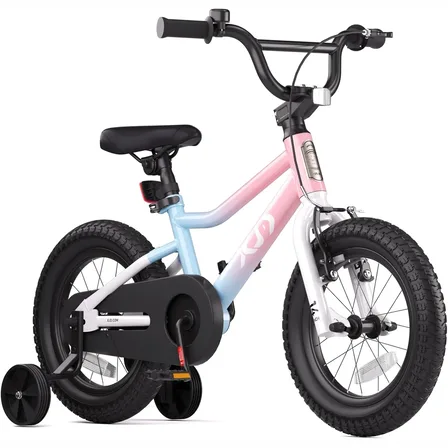
XJD Girls BMX Bike 12/14/16 Inch with Training Wheels – Pink Blue
The XJD Girls BMX Bike in Pink/Blue is built as a first pedal bike for kids roug…$99.99
$119.99 -

Blue XJD Kids Bike Helmet for Boys & Girls
The Blue XJD Kids Bike Helmet is a lightweight, adjustable multi-sport helmet fo…$59.99
$99 -

Kids Bike Helmet by XJD for Boys & Girls – Black, Blue, Green, Pink, Purple
The XJD Kids Bike Helmet covers a wide 2-to-8-year age range thanks to two head-…$59.99