

What is the best name brand 18 inch boys bike
The best name-brand 18-inch boys’ bike is the one that fits the rider now—not simply the most familiar logo. Choose an actual 18-inch bike only after checking height, inseam, reach, brake control and confidence.
Start with the 18-inch fit range
XBikes uses an 18-inch wheel bike as a starting point for ages 5–9 and rider heights of 43–52 inches (109–132 cm). Height is more useful than age, but neither measurement proves fit by itself. Children of the same height can have different leg lengths, arm reach and riding ability.
Measure the child’s height without shoes. Then measure inseam from the floor to the crotch while the child stands naturally. Use those measurements to screen possible bikes, then arrange an individual fit check. Do not buy a larger bike merely to leave growing room.
Check the bike with the child on it
A name brand cannot compensate for awkward fit. The American Academy of Pediatrics recommends having the child try the bicycle and checking stand-over clearance, control and brake reach. During the tryout, confirm these points:
- The child can stand over the frame without being forced onto tiptoes or against the frame.
- The child can get on, start, stop and step off without panic or a sudden loss of balance.
- The handlebars are within comfortable reach, without a strained back or locked elbows.
- The child can operate the brakes confidently while maintaining a secure grip and steering control.
- The bike feels manageable at the child’s current skill level, including turns and controlled stops.
If any of these checks fail, reject that model even when its age label or brand reputation appears suitable. Ask the seller about another frame design or size and repeat the same trial.
Compare the neighboring wheel sizes carefully
The closest wheel sizes can help identify whether 18 inches is genuinely appropriate. They are separate sizes, not interchangeable equivalents.
| Wheel size | XBikes age starting point | Rider-height starting point |
|---|---|---|
| 16 Inch | Ages 4–7 | 40–48 in / 102–122 cm |
| 18 Inch | Ages 5–9 | 43–52 in / 109–132 cm |
| 20 Inch | Ages 7–12 | 48–60 in / 122–152 cm |
The ranges overlap, so a height near a boundary does not automatically settle the choice. Inseam, stand-over position, reach, brake access and present confidence should decide between sizes. An 18-inch bike remains the target only if the actual trial supports it.
What “best name brand” should mean
There is no evidence here that one brand is universally best for every boy. Treat the brand name as one comparison factor, then evaluate the specific bicycle. Check whether its exact configuration fits the child, whether the controls are usable, and whether the correct product manual is available.
Also compare how clearly the manufacturer documents assembly and maintenance. Follow the exact manual for setup, adjustments, compatibility, load limits and torque. If instructions are missing, unclear or beyond your experience, use a qualified bicycle mechanic rather than guessing.
How the supplied XBikes products help
Neither supplied catalog product is offered in an 18-inch SKU, and both exact titles describe girls’ bikes. They are therefore nearest-size comparison points—not substitutes for the requested 18-inch boys’ bike. They help show what a smaller or larger listed option looks like in the current catalog while you keep the 18-inch fit decision separate.
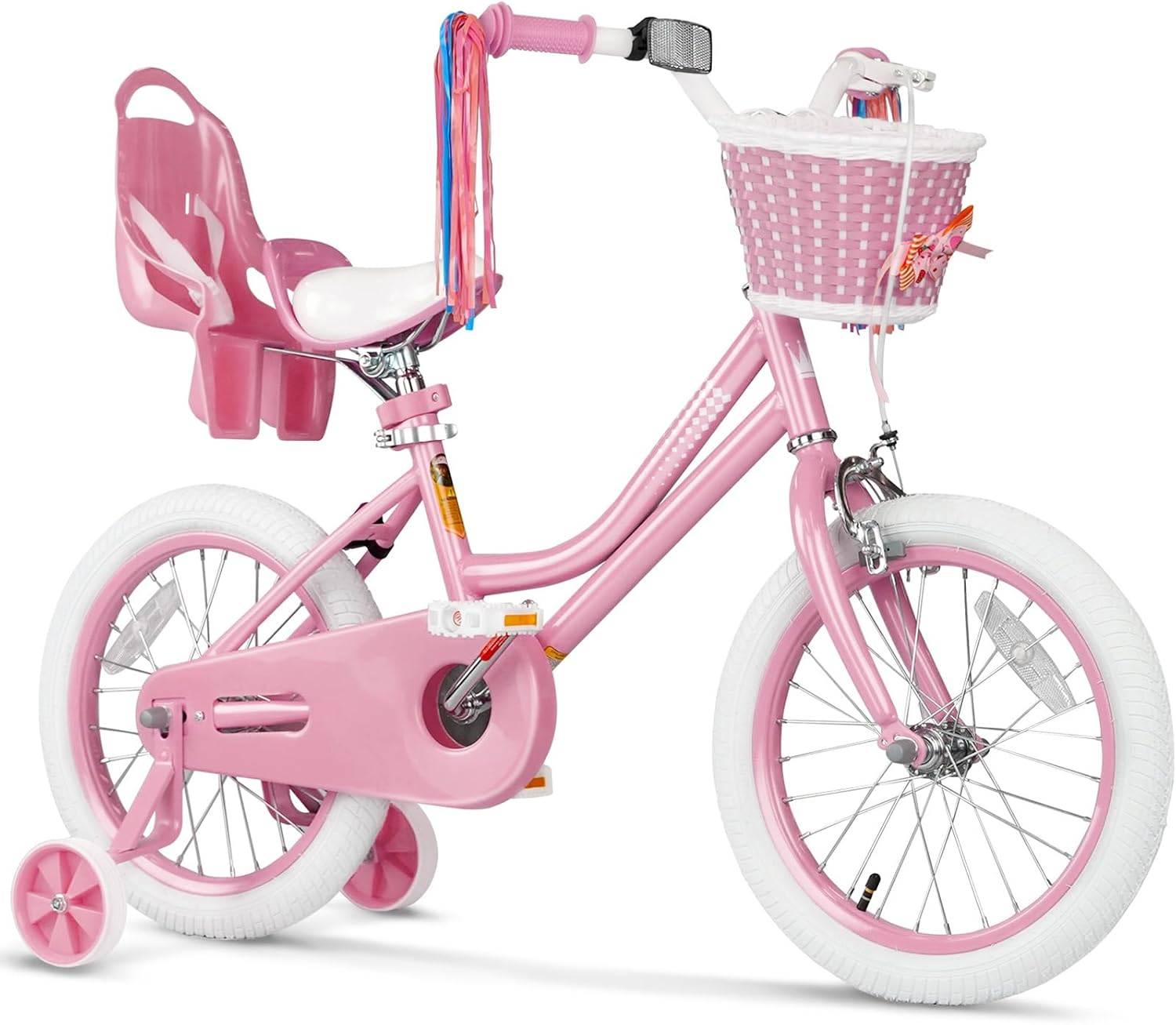 XJD Pink Girls' Bike – Kids 12/14/16 Inch Training Wheel Bicycle
A smaller comparison point: this Training Wheel Bikes model has 12-inch, 14-inch and 16-inch SKU labels, but no 18-inch option and is not a substitute for the requested size.
 XJD Pink Beach Cruiser for Girls – Rear Rack & V-Brake
A larger comparison point: this Beach Cruiser Bikes model has 20-inch, 24-inch and 26-inch SKU labels. Its 20-inch option is above the requested size and should not be chosen merely for growth.
Smaller comparison point
XJD Pink Girls' Bike – Kids 12/14/16 Inch Training Wheel Bicycle is listed under Training Wheel Bikes with 12-inch, 14-inch and 16-inch SKU labels. Its 16-inch option is the nearest supplied size below 18 inches. Use it only to compare how a smaller size fits; do not treat 16 inches as equal to 18 inches.
Larger comparison point
XJD Pink Beach Cruiser for Girls – Rear Rack & V-Brake is listed under Beach Cruiser Bikes with 20-inch, 24-inch and 26-inch SKU labels. Its 20-inch option is the nearest supplied size above 18 inches. The title identifies a rear rack and V-brake, but the child must still demonstrate comfortable reach and brake control. Do not size up solely for growth.
Make the final 18-inch decision
First measure height and inseam. If the rider falls near the 18-inch starting range of 43–52 inches (109–132 cm), arrange a real tryout of an actual 18-inch boys’ bike. Confirm stand-over clearance, natural reach, reliable brake operation and calm starts and stops. Compare brands only among models that pass every fit check.
Before riding, provide a bicycle helmet that fits properly, sits level and has its straps used according to the helmet manufacturer’s instructions, consistent with U.S. Consumer Product Safety Commission guidance. If no actual 18-inch model passes the child’s fit and control check, do not choose one on brand recognition alone; keep comparing correctly sized models.
Bikes for your next adventure
-

Kids Bike Helmet by XJD for Boys & Girls – Black, Blue, Green, Pink, Purple
The XJD Kids Bike Helmet covers a wide 2-to-8-year age range thanks to two head-…$59.99
-

Kids Bike Helmet by XJD for Girls – Pink
The XJD Kids Bike Helmet in Pink is a lightweight multi-sport helmet for girls r…$59.99
$99 -

XJD Kids Bike for Girls – Pink, 12/14/16/20 Inch with Training Wheels
The XJD Kids Bike for Girls in Pink is a training-wheel bike built to carry your…$139
$159