

What size bike 13 year old boy
Most 13-year-old boys should start by trying a 24-inch bike if they are 54–64 inches (137–163 cm) tall; riders over 60 inches (153 cm) should also compare a 26-inch bike. In the 60–64-inch overlap, choose by actual fit and control—not age or room to grow.
Measure him before choosing a wheel size
Measure the rider’s height without shoes, standing straight against a wall. Then measure inseam from the floor to the crotch while he stands naturally. Height identifies the most useful starting size; inseam helps you assess clearance when he tries the actual bicycle.
Use the XBikes wheel-size starting points that are relevant around age 13:
| Wheel size | Starting age range | Rider height |
|---|---|---|
| 20 Inch | Ages 7–12 | 48–60 in / 122–152 cm |
| 24 Inch | Ages 10–14 | 54–64 in / 137–163 cm |
| 26 Inch | Youth and adults | Over 60 in / 153 cm |
These ranges overlap because wheel diameter alone cannot determine fit. A shorter 13-year-old may need to compare a 20-inch bike with a 24-inch bike, while a rider above 60 inches should compare 24- and 26-inch options. Frame shape and adjustment range can make two bicycles with the same wheel size feel different.
How to check the bike in person
Have him try the exact bicycle rather than relying only on an age label. With the bike upright, check that he can stand over it with useful clearance and without being pressed against the frame. He should be able to get on and off without awkward leaning or help.
Next, have him sit in a normal riding position and hold the bars. His arms should not be locked or excessively stretched. He must be able to steer smoothly, operate each brake confidently, and reach the brake controls without shifting his hands into an unstable position.
Finally, let him start, ride slowly, turn, stop and put a foot down in a controlled setting. Current confidence matters: a size that is theoretically suitable by height is not suitable if the rider cannot control it comfortably.
Do not size up just for growth
A larger bicycle may seem economical, but an oversized bike can make mounting, steering and braking harder. Follow the American Academy of Pediatrics guidance to have the child try the bicycle, check stand-over and brake reach, and avoid buying an oversized model merely so he can grow into it.
If he sits between sizes, compare both. Prefer the bicycle on which he can maintain a comfortable reach, use the brakes, turn predictably and stop with confidence. Recheck fit after adjustments, and follow the exact product manual or ask a qualified bicycle mechanic for assembly, adjustment, compatibility, maintenance, load-limit or torque questions.
How the supplied XBikes option fits this decision
The catalog includes the XJD 24-Inch Green Beach Cruiser Bike with U-Brake, categorized as a beach cruiser bike. Its available labels are Green / 24 Inch, Pink / 24 Inch and Pink / 26 Inch. That makes it useful for comparing the two wheel-size starting points most likely to concern a 13-year-old, while the color labels do not provide fit evidence.
These catalog options help answer the title because they provide 24-inch and 26-inch comparison points within one named product listing. They are relevant only when the rider’s measurements and hands-on control support the corresponding size.
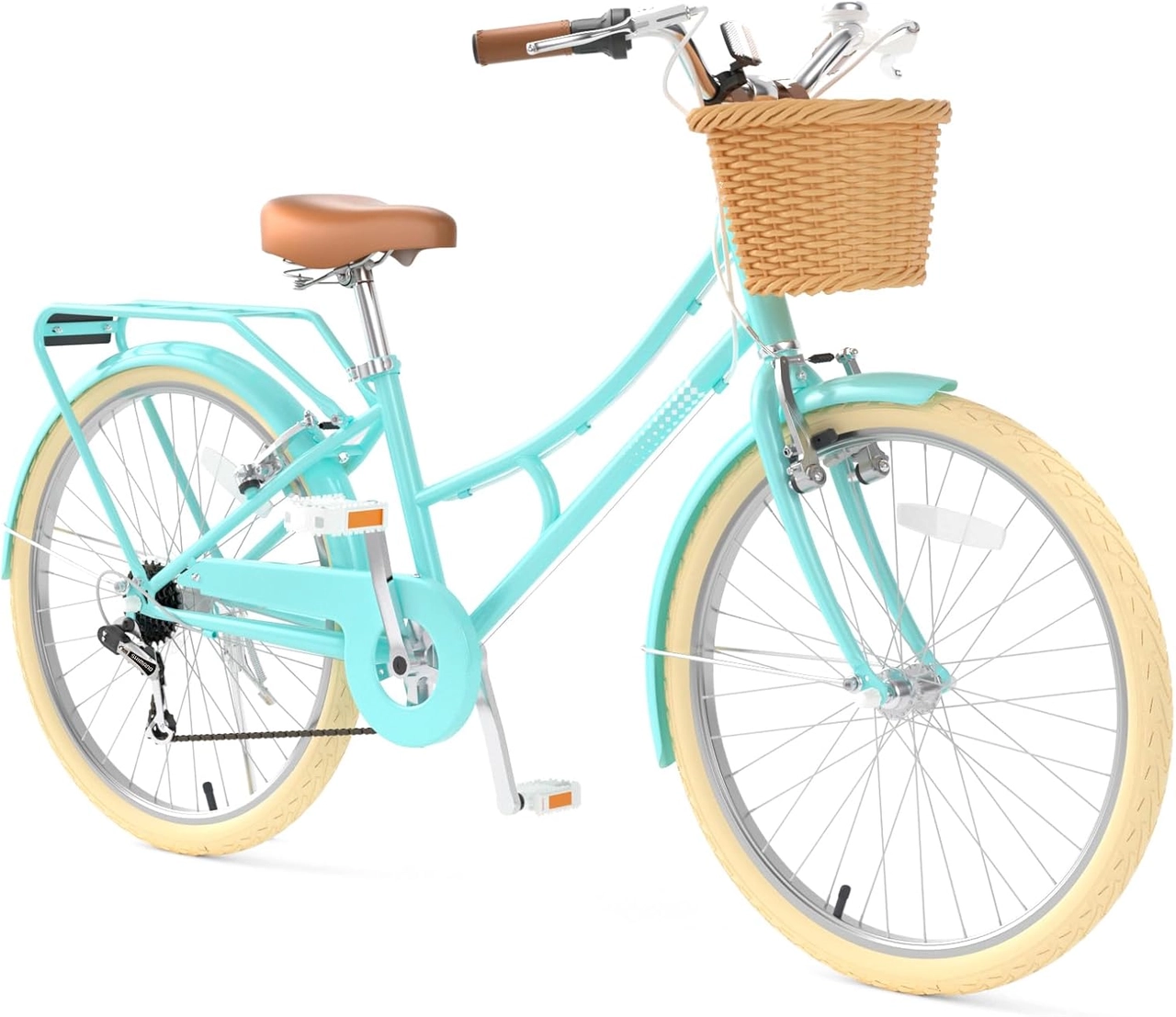
Do not assume the 24-inch and 26-inch versions fit alike or that either one is automatically appropriate. The supplied facts do not establish frame dimensions, weight, load limit, adjustment range or detailed component specifications. Verify those details in the exact product manual and complete the same stand-over, reach and brake-control checks on the selected version.
Complete the safety check
Choose a bicycle helmet that fits the rider properly. Following U.S. Consumer Product Safety Commission guidance, position it level and adjust its straps according to the helmet manufacturer’s instructions. A helmet does not correct a poorly fitting bicycle, so check both separately.
- Confirm measured height and inseam.
- Compare the rider’s height with the wheel-size table.
- Test stand-over clearance, reach, steering and brake operation.
- Watch him start, turn, stop and put a foot down confidently.
- Use the exact manuals or a qualified bicycle mechanic where specifications or adjustments are uncertain.
The practical answer for your 13-year-old
If he is 54–60 inches tall, begin with a 24-inch bike. From over 60 through 64 inches, try both 24- and 26-inch bikes and let fit and control decide. Above 64 inches, the table points toward 26 inches; below 54 inches, compare the smaller height-appropriate starting point rather than forcing a 24-inch bike. Measure him now, then choose only after he demonstrates comfortable clearance, reach, braking and low-speed control on the exact bicycle.
Bikes for your next adventure
-

XJD Girls Bike for Kids Ages 3-8, 12/14/16 Inch with Training Wheels – Purple
The XJD Girls Bike in Purple is a training-wheel bicycle for kids ages 3 to 8, f…$149
$169 -

Pink Girls' 12/14/16" Bike by XJD – Basket & Doll Seat
The XJD Pink Girls' Bike with Basket & Doll Seat is made for riders 71–122 cm ta…$75.99
$99.99 -

Light Purple XJD Toddler Bike Helmet, Adjustable, Size XS (46–51 cm)
This Light Purple XJD toddler bike helmet is made for the smallest riders — the …$20.39