

What size bike for a 4 foot 9 inch boy
For a boy who is 4 feet 9 inches tall (57 inches / about 145 cm), start with a 20-inch bike and also try a 24-inch bike. His measured inseam, reach, brake control and confidence should decide between them; do not buy the larger size merely for growth.
Why two wheel sizes are possible
XBikes lists 20-inch bikes for riders 48–60 inches (122–152 cm) tall and 24-inch bikes for riders 54–64 inches (137–163 cm) tall. At 57 inches, this rider falls within both starting ranges.
| Wheel size | XBikes rider-height range | What it means at 4 feet 9 inches |
|---|---|---|
| 20 Inch | 48–60 in / 122–152 cm | A valid starting point, often worth trying first |
| 24 Inch | 54–64 in / 137–163 cm | Also within range, but only if control and reach are comfortable |
These ranges narrow the search; they do not establish fit. Frame geometry, saddle adjustment and handlebar position can make two bicycles with the same wheel size feel different. Age alone should not override what the rider can actually control.
Measure before choosing
Confirm the child's current standing height rather than relying on an old measurement. Then measure inseam: have him stand upright with his feet naturally spaced, place a rigid book level between his legs to represent the saddle area, and measure from the floor to the top edge of the book.
Compare that inseam measurement with the stand-over and saddle information for the exact bicycle being considered. If those dimensions are not published, have the child try the bicycle. Do not infer them from wheel diameter, and follow the exact product manual or ask a qualified bicycle mechanic about adjustments and compatibility.
Perform the fit check
With an adult stabilizing the bicycle, check the complete riding position rather than asking only whether the child's feet touch the ground.
- Stand-over: He should be able to straddle the bicycle without the frame preventing a stable stance.
- Saddle position: He should be able to start and stop in a controlled way at an appropriate saddle setting permitted by the manual.
- Reach: He should reach the handlebar without stretching, locking his elbows or losing a balanced posture.
- Brake access: He must comfortably reach and operate the fitted brake controls. Do not assume a control is usable merely because his fingertips touch it.
- Low-speed control: He should steer, start, stop and turn without the bicycle feeling cumbersome or unstable.
The American Academy of Pediatrics advises having a child try the bicycle and avoiding an oversized bike bought for future growth. If the 24-inch model compromises stand-over, reach or braking, choose a suitably fitting 20-inch model. If both fit, compare which one gives him more confident starts, stops and turns.
How the supplied catalog option relates
The supplied XJD Boys 12/14/16" Training Wheel Bike – Blue offers 12 Inch, 14 Inch and 16 Inch SKU labels. Those sizes help show the lower end of the catalog comparison, but they are not substitutes for a 20-inch or 24-inch bicycle. XBikes places 16-inch bikes at 40–48 inches (102–122 cm), well below a measured height of 57 inches; 12-inch and 14-inch options have still lower height ranges. This product is therefore unlikely to be relevant for this rider under the supplied height standard, even if training wheels sound appealing.

Do not choose one of these smaller SKUs simply because the bicycle can be ridden or because the title says “Boys.” Fit is determined by the individual rider and bicycle, not by gender wording. If balance support is needed, look for an appropriately fitting 20-inch or 24-inch solution and verify its features from that exact product's specifications and manual.
Check control and equipment before riding
Once a size is selected, use the exact bicycle manual for assembly, maintenance, fastener settings, load limits and component adjustments. Where instructions are missing or uncertain, use a qualified bicycle mechanic rather than guessing.
A bicycle helmet is essential, but helmet fit is separate from bicycle fit. Following U.S. Consumer Product Safety Commission guidance, use a properly fitting helmet that sits level, with its straps adjusted according to the helmet manufacturer's instructions.
The practical decision
Measure height and inseam now, then arrange a controlled tryout of both a 20-inch and a 24-inch bicycle. Select the one that lets this 4-foot-9-inch boy straddle securely, reach comfortably, operate the brakes and complete starts, stops and turns with confidence. If the 24-inch bike fails any of those checks, do not size up for growth; choose the fitting 20-inch bike.
Bikes for your next adventure
-

Black XJD Kids Bike for Boys – 12, 14 & 16 Inch Sizes
For a son between roughly 3 and 8 years old, the XJD Kids Bike in Black covers t…$169
$199 -
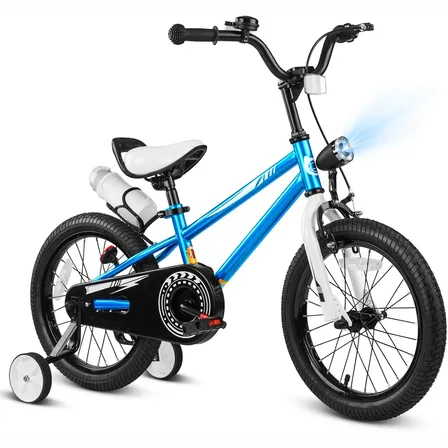
XJD Boys 12/14/16" Training Wheel Bike – Blue
The XJD Boys Bike in Blue is a training wheel bike for riders 71–122 cm tall—rou…$169
$199 -

Light Pink XJD Girls' Bicycle with Basket & Training Wheels
The Light Pink XJD Girls' Bicycle with Basket & Training Wheels is a retro-style…$109.99
$129.99