

What size bike should a 5' boy ride
A boy who is 5 feet tall should start by comparing a 20-inch bike with a 24-inch bike. At exactly 60 inches (152 cm), he is at the top of the XBikes range for 20-inch wheels and within the range for 24-inch wheels. Choose only after checking his inseam, stand-over clearance, reach, braking control and confidence on the actual bicycle.
Why both 20-inch and 24-inch bikes are possible
Wheel size is a starting point, not a complete fit measurement. The XBikes height guidance places a 20-inch bike at 48–60 inches (122–152 cm) and a 24-inch bike at 54–64 inches (137–163 cm). A 5-foot rider therefore sits where those two ranges overlap.
Age should not settle the choice. XBikes lists 20-inch bikes as a starting point for ages 7–12 and 24-inch bikes for ages 10–14, but the rider’s measured dimensions and ability to control the bike matter more. A shorter-reach 24-inch bicycle may feel manageable while another bicycle with the same wheel size may not.
Measure him before comparing bikes
- Confirm standing height: Have him stand without shoes against a wall, looking straight ahead, and measure from the floor to the top of his head. Five feet should read 60 inches or about 152 cm.
- Measure inseam: While he stands in socks with feet slightly apart, measure from the floor to the crotch. Keep this number available when checking the bicycle maker’s geometry or fit guidance.
- Observe reach: On the bike, he should be able to hold the handlebar without stretching excessively, locking his elbows or losing a comfortable riding position.
- Check brake access: With his hands in their normal riding position, make sure he can reach and operate the brake controls securely. Do not assume a control will become manageable with practice.
Perform the fit check on each bicycle
Have him try both candidate sizes if possible. When straddling the bicycle, he needs usable clearance over the frame rather than uncomfortable contact. Seated, he should be able to start, stop, steer and put a foot down predictably. The exact seat adjustment and required clearance depend on the bicycle, so follow its manual or ask a qualified bicycle mechanic.
Next, watch a controlled test ride in a quiet, traffic-free area. He should be able to set off without wobbling, turn in both directions, look ahead, brake smoothly and stop where intended. If the 24-inch bike makes any of these tasks hesitant or awkward, it is too large for him now even though his height falls within its starting range.
Do not buy an oversized bicycle merely to allow room for growth. A size that compromises stand-over clearance, reach or control is not the right current fit.
How the supplied catalog option helps
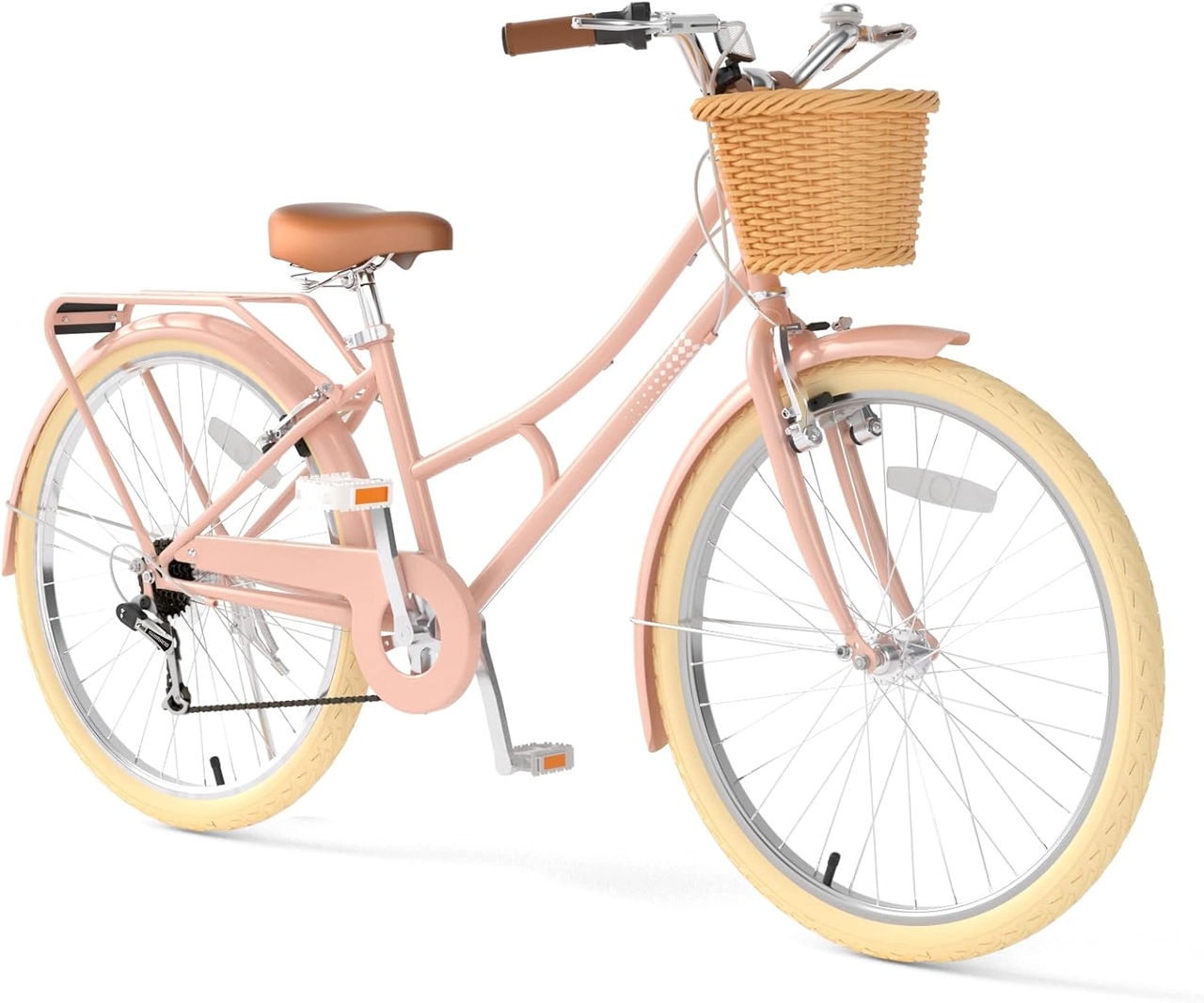
The Pink XJD Beach Cruiser Bike, 24"/26", U-Brake is offered with 24 Inch and 26 Inch SKU labels. Its 24-inch option is relevant because 60 inches falls within the XBikes 24-inch starting range. Its 26-inch option is a comparison point only: XBikes places 26-inch bikes for youth and adults over 60 inches (153 cm), so a boy measuring exactly 5 feet does not meet that height starting point. Neither option removes the need for an individual fit check.
Choose between 20 and 24 inches
| What you observe | What to do next |
|---|---|
| He controls both sizes confidently and reaches the brakes comfortably | Compare stand-over clearance, reach and the maker’s fit guidance; do not decide from wheel size alone. |
| The 24-inch bike causes stretching, uncertain starts or awkward stops | Choose an appropriately fitting 20-inch bike for now. |
| The 20-inch bike feels cramped but the 24-inch bike remains easy to control | The 24-inch size is the more relevant starting point, subject to the exact bicycle’s fit. |
| Neither size permits comfortable, confident control | Do not purchase either one; consult a qualified bicycle mechanic or try different bicycle geometry. |
A 26-inch label should not be treated as equivalent to 24 inches. If he later measures more than 60 inches, it becomes a height-based starting point, but inseam, reach, brake control and confidence still determine whether a particular bicycle fits.
Finish the decision safely
Before riding, use a properly fitting bicycle helmet. It should sit level, and its straps should be adjusted according to the helmet manufacturer’s instructions. Follow the exact bicycle manual for assembly, maintenance, adjustments, load limits, compatibility and torque; where the manual does not resolve a question, use a qualified bicycle mechanic.
For a boy who measures exactly 5 feet, test a 20-inch and a 24-inch bicycle now, reject any option that compromises control, and consider 26 inches only after he is over 60 inches and passes a fresh individual fit check.
Bikes for your next adventure
-

Kids Bike Helmet by XJD for Boys & Girls – Black, Blue, Green, Pink, Purple
The XJD Kids Bike Helmet covers a wide 2-to-8-year age range thanks to two head-…$59.99
-

Kids Bike Helmet by XJD for Girls – Pink
The XJD Kids Bike Helmet in Pink is a lightweight multi-sport helmet for girls r…$59.99
$99 -

XJD Kids Bike for Girls – Pink, 12/14/16/20 Inch with Training Wheels
The XJD Kids Bike for Girls in Pink is a training-wheel bike built to carry your…$139
$159