

A child rides a bike around the block
A child can ride a bike around the block when the bike fits, the route is familiar and low-risk, and an attentive adult has confirmed the child can start, steer, brake and stop reliably.
Check the child before choosing the route
Measure the rider’s height without shoes, then use the XBikes wheel-size ranges only as starting points. Age overlaps heavily between sizes, so height, inseam, reach, brake control and current confidence matter more than age alone.
| Wheel size | Starting age | Rider height |
|---|---|---|
| 12 Inch | 3–4 | 34–40 in / 86–102 cm |
| 14 Inch | 3–6 | 37–45 in / 94–114 cm |
| 16 Inch | 4–7 | 40–48 in / 102–122 cm |
| 18 Inch | 5–9 | 43–52 in / 109–132 cm |
| 20 Inch | 7–12 | 48–60 in / 122–152 cm |
| 24 Inch | 10–14 | 54–64 in / 137–163 cm |
| 26 Inch | Youth and adults | Over 60 in / 153 cm |
Have the child try the actual bicycle. With the bike held steady, check that the rider can stand over it, reach the controls without stretching, turn the handlebar comfortably and operate the brakes with confidence. Do not buy an oversized bicycle merely to leave room for growth.
Decide whether “around the block” is suitable today
A block is not automatically a beginner route. Walk it first and note every driveway, intersection, blind corner, parked vehicle, rough patch, slope and place where the child must stop. Consider the time of day as well as the street layout; traffic and visibility can change.
Before leaving, ask the child to demonstrate the following in a quiet, controlled area:
- Start without swerving into the road or another rider.
- Hold a predictable line while looking ahead.
- Slow down and stop at a chosen marker.
- Place a foot down without panic.
- Respond promptly to the supervising adult’s stop instruction.
If any of these actions are inconsistent, shorten the outing to driveway, path or closed-area practice. Completing the full loop can wait.
Prepare the bike and helmet
Check the bicycle before each ride for anything visibly loose, damaged, rubbing or underinflated. Confirm that the controls operate as intended. For assembly instructions, tire guidance, maintenance intervals, fastener torque, load limits or component compatibility, follow the exact product manual or use a qualified bicycle mechanic.
A bicycle helmet should fit properly, sit level and have its straps adjusted according to the helmet manufacturer’s instructions. Secure footwear and close-fitting clothing help avoid distractions or snagging. Avoid loose laces and items hanging near moving parts.
Supervise the first loop deliberately
Set the rules before the wheels move: where to stop, whether the child stays ahead or beside the adult, and what command means an immediate stop. For a first circuit, an adult can walk or ride close enough to intervene while still giving the child room to steer.
- Begin on the quietest side of the block.
- Pause before every driveway and intersection until the routine is reliable.
- Walk the bicycle through any section beyond the child’s present control.
- End the ride if attention, braking or steering deteriorates.
Training wheels may support a child who is still developing balance confidence, but they do not establish route readiness. The rider still needs suitable fit, reachable controls and dependable stopping behavior.
How the supplied bike option fits this decision
The XJD Girls' Bike with Training Wheels, 12/14/16/20 Inch – Purple is relevant when training wheels suit the rider’s current stage. Its available 12 Inch, 14 Inch, 16 Inch and 20 Inch labels let a parent compare several XBikes height starting points, but the chosen bicycle must still pass the individual stand-over, reach, brake-control and confidence checks. An option is not suitable merely because its catalog size matches an age band.

This product is not relevant if the child needs an 18 Inch, 24 Inch or 26 Inch starting point: those exact sizes are not among its supplied options. The available sizes are comparison points, not equivalent substitutes. It is also a poor match if the child no longer needs training wheels or cannot comfortably control the actual bicycle.
Make the go-or-practice decision
Go around the block only when the child fits the bike, controls it consistently, wears a properly fitted helmet and can follow the planned stopping routine on the inspected route. Otherwise, measure again, compare the correct wheel-size starting point, adjust only as the manuals permit, and practice the weakest skill in a controlled area before attempting the loop.
Bikes for your next adventure
-
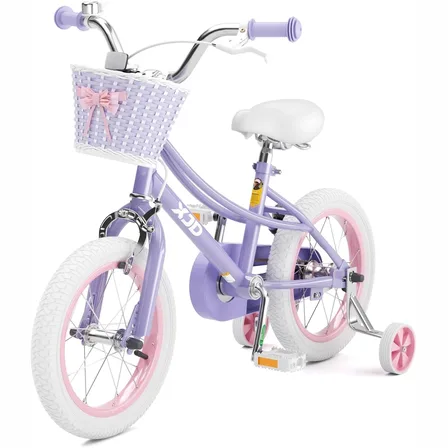
Girls' Training Wheel Bike by XJD with Basket – Purple
If you're shopping for a first bike for a girl roughly 3 to 12 years old (91–152…$75.99
-
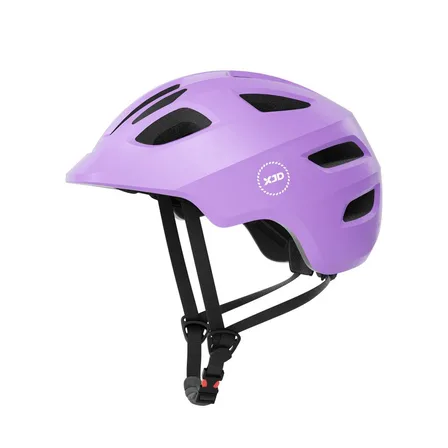
Girls' Bike Helmet from XJD – Purple
The XJD kids bike helmet in purple is a multi-sport helmet built for toddlers an…$59.99
$49 -
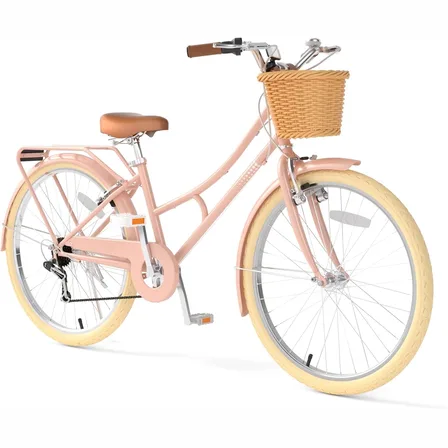
Pink XJD Beach Cruiser Bike, 24"/26", U-Brake
The XJD Pink Beach Cruiser Bike is a single-speed cruiser built for older kids a…$159.99