

A kid riding a bicycle
A kid riding a bicycle needs a correctly sized bike, a properly fitted helmet, reachable controls and a calm place to practise under adult supervision.
Measure the rider before choosing
Start with the child’s current height and inseam, measured while wearing the shoes they will normally ride in. Age can narrow the search, but it cannot confirm fit. Body proportions, reach, brake control and confidence differ among children of the same age.
Use these XBikes wheel-size ranges only as starting points:
| Wheel size | Starting age | Rider height |
|---|---|---|
| 12 Inch | 3–4 | 34–40 in / 86–102 cm |
| 14 Inch | 3–6 | 37–45 in / 94–114 cm |
| 16 Inch | 4–7 | 40–48 in / 102–122 cm |
| 18 Inch | 5–9 | 43–52 in / 109–132 cm |
| 20 Inch | 7–12 | 48–60 in / 122–152 cm |
| 24 Inch | 10–14 | 54–64 in / 137–163 cm |
| 26 Inch | Youth and adults | Over 60 in / 153 cm |
Where height ranges overlap, compare both candidate sizes in person. Never move up merely to leave growing room; an oversized bicycle can make starting, stopping and steering harder.
Check how the child fits the bicycle
Have the child try the exact bicycle rather than relying on its wheel label. With the child standing over it, check that the frame does not press against the body and that mounting and dismounting feel controlled. The rider should be able to sit in a stable position without stretching or crowding.
Next, watch the child hold the handlebar and operate every control. Confirm that they can:
- reach the handlebar without leaning excessively;
- turn it comfortably in both directions;
- reach and operate the brakes with their hands in a secure riding position;
- start, stop and put a foot down without panic;
- look ahead while maintaining control.
If any check fails, compare a different size or setup. Follow the exact product manual for permitted adjustments, assembly and maintenance. Ask a qualified bicycle mechanic when the manual is unclear or the bike cannot be adjusted to fit.
Compare the supplied 12, 14 and 16 Inch options
The three supplied catalog options are relevant when the rider’s measurements point toward a 12, 14 or 16 Inch training-wheel bicycle. They let a parent compare the same three wheel-size labels across different catalog listings before performing the required individual fit check.
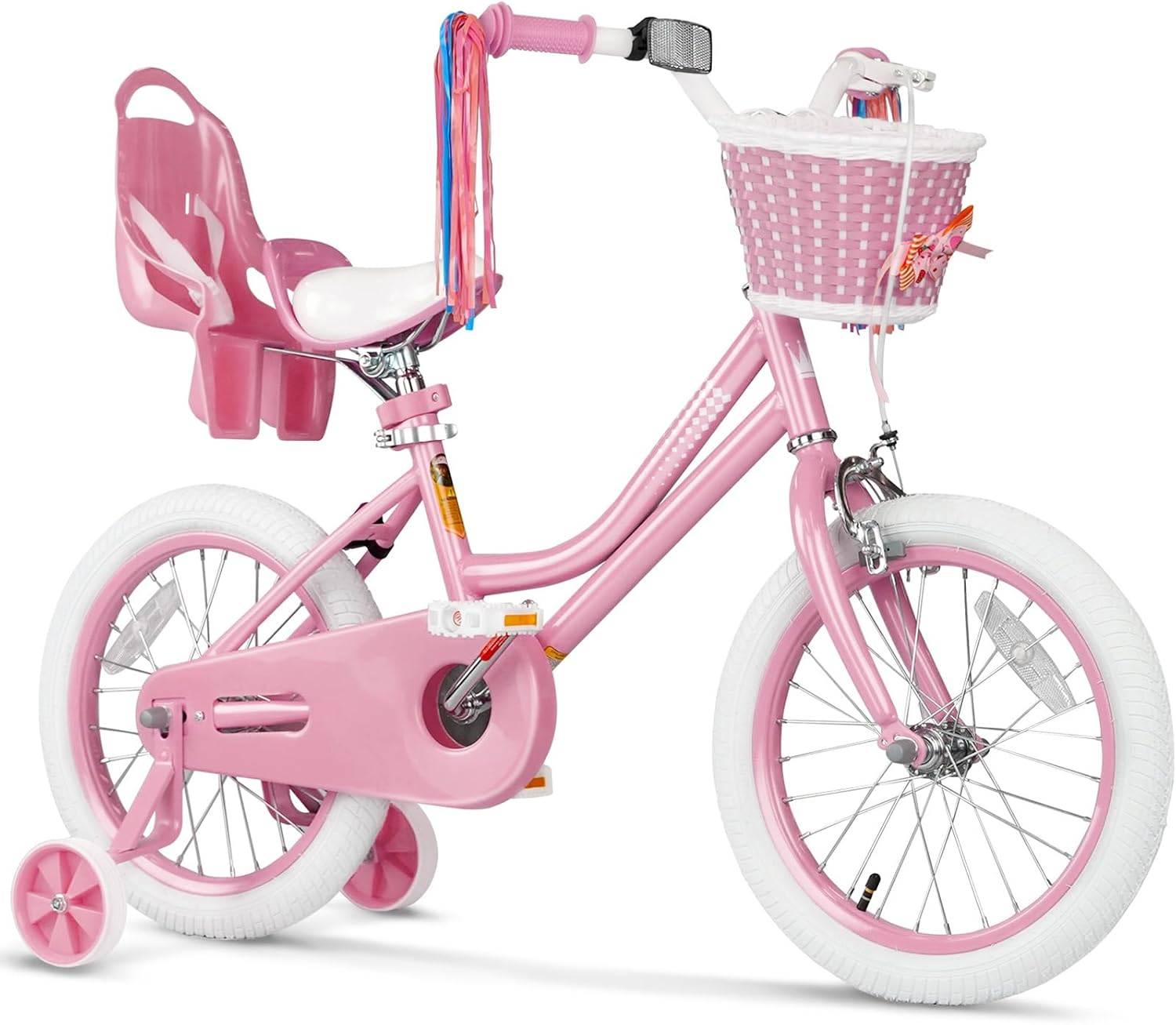 XJD Pink Girls' Bike – Kids 12/14/16 Inch Training Wheel Bicycle
A Training Wheel Bike offered with 12 Inch, 14 Inch and 16 Inch SKU labels. Compare the appropriate label with the rider’s measured height, then confirm stand-over, reach, brake control and confidence on the exact bicycle.
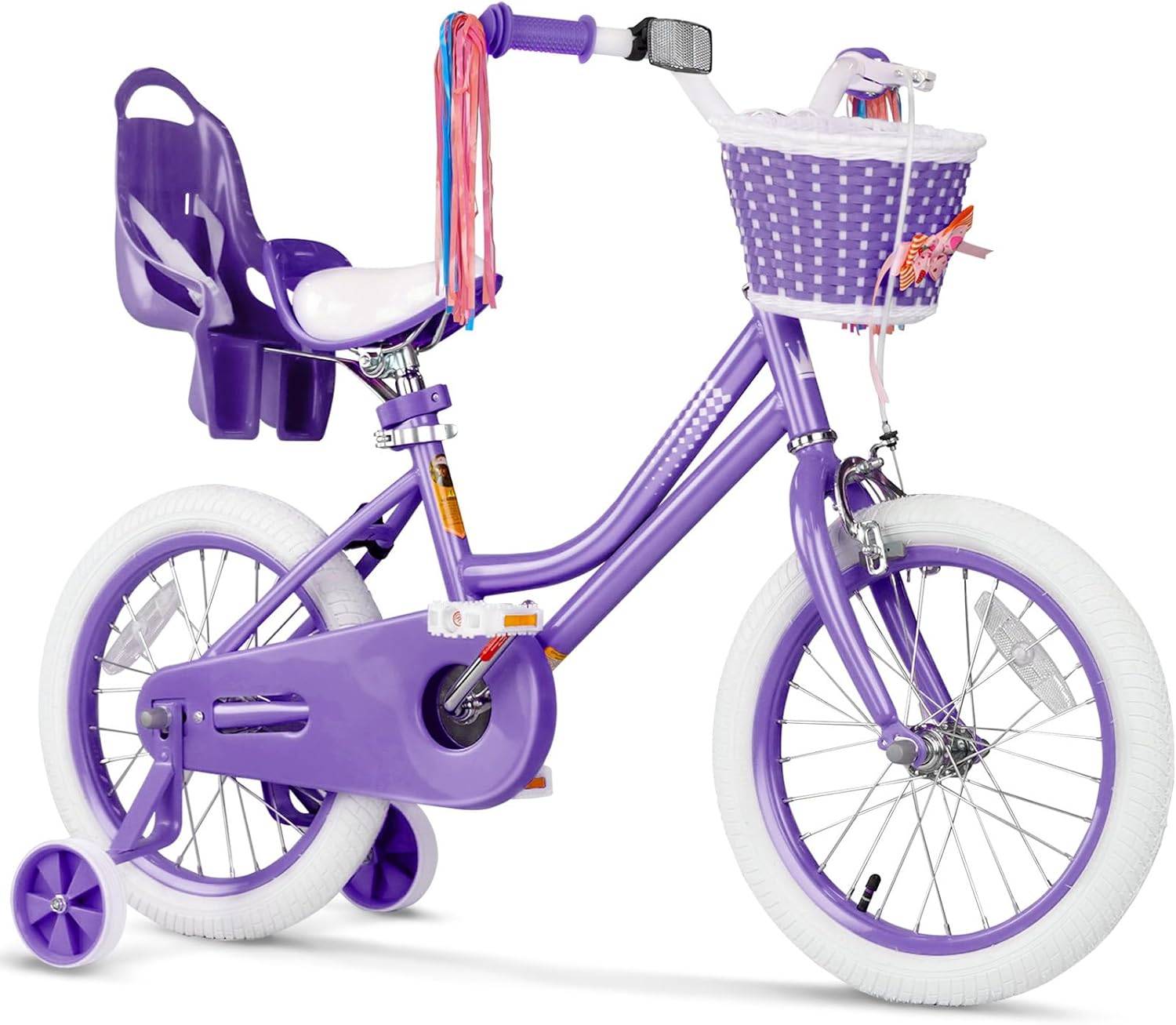 XJD Girls Bike for Kids Ages 3-8, 12/14/16 Inch with Training Wheels – Purple
This Training Wheel Bike has 12 Inch, 14 Inch and 16 Inch SKU labels. The age wording in its title is a catalog label, so determine relevance from the XBikes height ranges and an individual fit check.
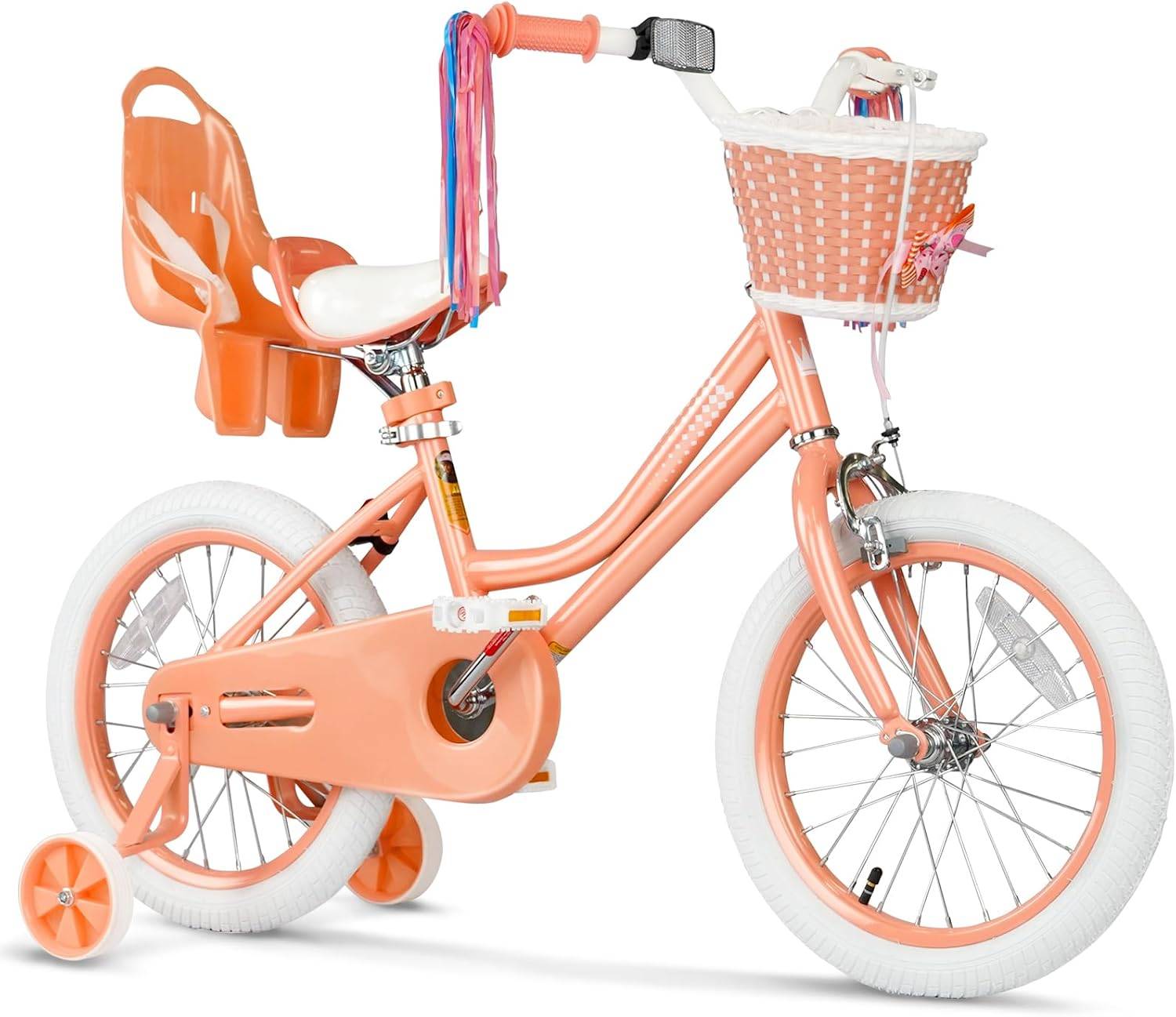 Girls 12/14/16 Inch Kids Bike by XJD with Training Wheels – Peach
A Training Wheel Bike available under 12 Inch, 14 Inch and 16 Inch SKU labels. It is relevant only when measurements indicate one of those starting sizes and the child can comfortably control the exact bicycle.
XJD Pink Girls' Bike – Kids 12/14/16 Inch Training Wheel Bicycle is listed in the Training Wheel Bikes category with 12 Inch, 14 Inch and 16 Inch SKU labels.
XJD Girls Bike for Kids Ages 3-8, 12/14/16 Inch with Training Wheels – Purple has the same three available size labels and is also categorized as a Training Wheel Bike. “Ages 3-8” is part of its catalog title, not proof that it fits every child in that span; use the XBikes height ranges and an individual try-out.
Girls 12/14/16 Inch Kids Bike by XJD with Training Wheels – Peach likewise offers 12 Inch, 14 Inch and 16 Inch labels in the Training Wheel Bikes category. No supplied fact establishes a performance or safety advantage among these products, so compare fit rather than assuming the title or color determines suitability.
If the measured rider needs an 18, 20, 24 or 26 Inch bicycle, none of these products has that wheel-size label. They are comparison points for smaller sizes, not substitutes for the required size.
Prepare the child to ride
Fit a bicycle helmet before practice. It should be the correct size, sit level on the head and use its straps according to the helmet manufacturer’s instructions. Replace guesswork with the manufacturer’s fitting directions each time the helmet or child’s fit changes.
Choose a flat, open practice area away from traffic, driveways, obstacles and crowds. An adult should supervise, explain where to look and keep the first sessions short enough that fatigue does not undermine control. Training wheels may provide support, but they do not replace correct sizing, braking ability, supervision or learning to steer.
Decide what to do next
- Record the child’s standing height and inseam.
- Use the table to identify one or two candidate wheel sizes.
- Have the child try the exact bicycle and check stand-over clearance, reach, brake operation and confidence.
- Reject a bike that is oversized or cannot be controlled comfortably.
- Fit the helmet and begin supervised practice in a suitable area.
For a kid riding a bicycle now, choose the size they can confidently mount, steer, brake and stop today—not the size you hope they will grow into later.
Bikes for your next adventure
-
XJD Pink Girls' Bike – Kids 12/14/16 Inch Training Wheel Bicycle
The XJD Pink Girls' Bike is a training-wheel bicycle for girls ages 3 to 8 (ride…$149
$169 -

XJD Kids Bike for Girls – Pink, 12/14/16/20 Inch with Training Wheels
The XJD Kids Bike for Girls in Pink is a training-wheel bike built to carry your…$139
$159 -

Blue XJD Girls Bike with Training Wheels – 12/14/16 Inch
If you're shopping for a first pedal bike for a daughter roughly 3 to 8 years ol…$149
$169