

Are front child bike seats safe
Front child bike seats can be safe only when the seat, bicycle and child are compatible, every restraint is used correctly, and the adult can control the loaded bike. If any fit, load or installation requirement is uncertain, do not ride.
What makes a front seat suitable
Start with the exact seat and bicycle manuals. Confirm that the bicycle permits a front child seat and that the mounting system matches its frame or steering area without obstructing cables, controls or normal steering. Use the manufacturer’s stated child-development, size and load limits; these vary, so a general age guess is not enough.
The child must meet every requirement in the seat manual, including any requirement to sit upright and maintain head control. The harness, foot supports and foot retention must fit securely. Check that hands and feet cannot reach a wheel, brake, cable or other moving part.
Use every supplied fastener and safety retention feature exactly as directed. For compatibility, torque, assembly, replacement parts and maintenance intervals not stated here, consult the exact product manual or a qualified bicycle mechanic.
Measure and compare before riding
Record the child’s current height and weight, then compare both with the seat manual rather than relying on age. Also compare the bicycle model, frame dimensions, mounting location and available clearance with the seat manufacturer’s compatibility instructions.
With the seat correctly installed, check the adult rider’s position. There must be enough room to pedal and steer normally without knees, arms or chest striking the seat. The adult must still reach the handlebars and operate both brakes comfortably. A front seat changes the bicycle’s balance and steering feel, so a setup that technically mounts may still be unsuitable for a particular rider.
Run a controlled safety check
- Inspect the mount, restraints and foot retention before each ride. Stop if anything is loose, damaged or incorrectly routed.
- Fit a bicycle helmet to the child properly. It should sit level, and its straps must be adjusted according to the helmet manufacturer’s instructions.
- Load and unload away from traffic while the bicycle is securely held. Never depend on a kickstand alone to prevent a loaded bicycle from tipping.
- Before carrying the child, practise with the installed seat in a quiet, level area. Confirm that you can start, steer, brake and stop with full control.
- For the first occupied check, keep the route short and calm. Avoid situations that demand abrupt steering or braking.
Do not leave a child unattended in the seat. End the ride if the child can escape the harness, falls asleep in a position the seat does not safely support, interferes with control, or no longer meets the manual’s limits.
When a front seat is not the right choice
Do not use the setup when either manufacturer prohibits it, compatibility cannot be verified, a required part is missing, the mount moves, or the adult cannot ride and stop confidently. An oversized helmet, improvised restraint or altered mounting hardware is not an acceptable workaround.
Conditions matter too. Postpone the ride when traffic, surface, visibility or weather exceeds the adult’s ability to maintain smooth control. Because a carried child cannot independently avoid hazards, choose a conservative route and riding pace.
How the supplied kids’ bikes relate
The supplied catalog items are child-ridden bicycles, not front child seats or verified carrier bicycles. They become relevant when a child is ready to ride independently; their 12, 14 and 16 Inch options also provide useful fit comparisons. They do not establish front-seat compatibility or replace a seat manual.
These particular catalog options help answer the next-step decision because all three offer the same listed wheel sizes, while their supplied categories distinguish two Training Wheel Bikes from one Kids’ BMX Bike.
 Flower Pink XJD Girls Bike with Doll Seat & Basket
A Training Wheel Bike offered in 12 Inch, 14 Inch and 16 Inch sizes. It is relevant as an independent-riding comparison, not as a front child seat; its doll seat must not carry a child.
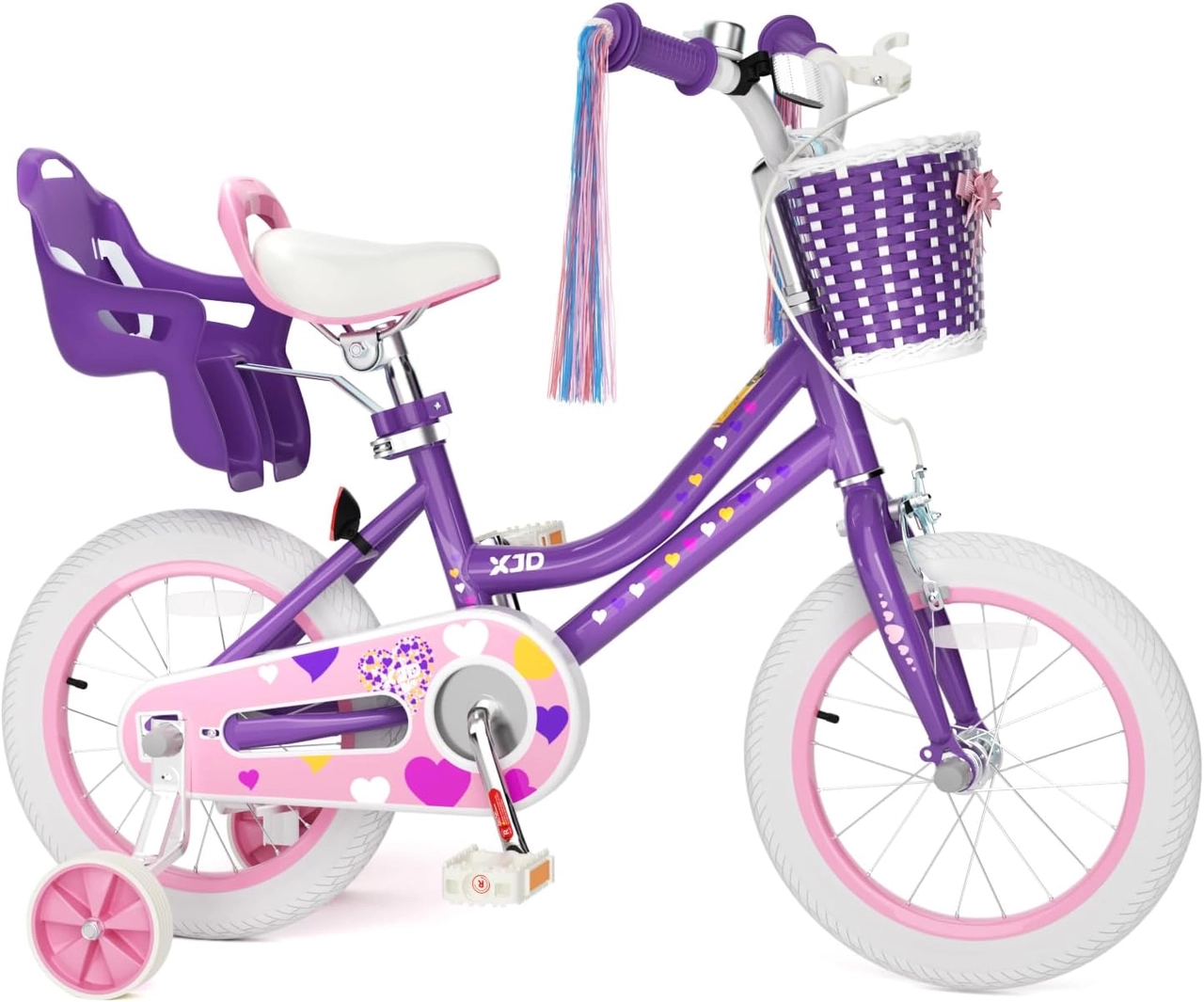 Purple XJD Girls' Bike with Doll Seat & Basket
This Training Wheel Bike has listed 12 Inch, 14 Inch and 16 Inch options. Compare the child’s measured fit if transitioning to independent riding; the catalog does not establish it as a passenger-carrying bicycle.
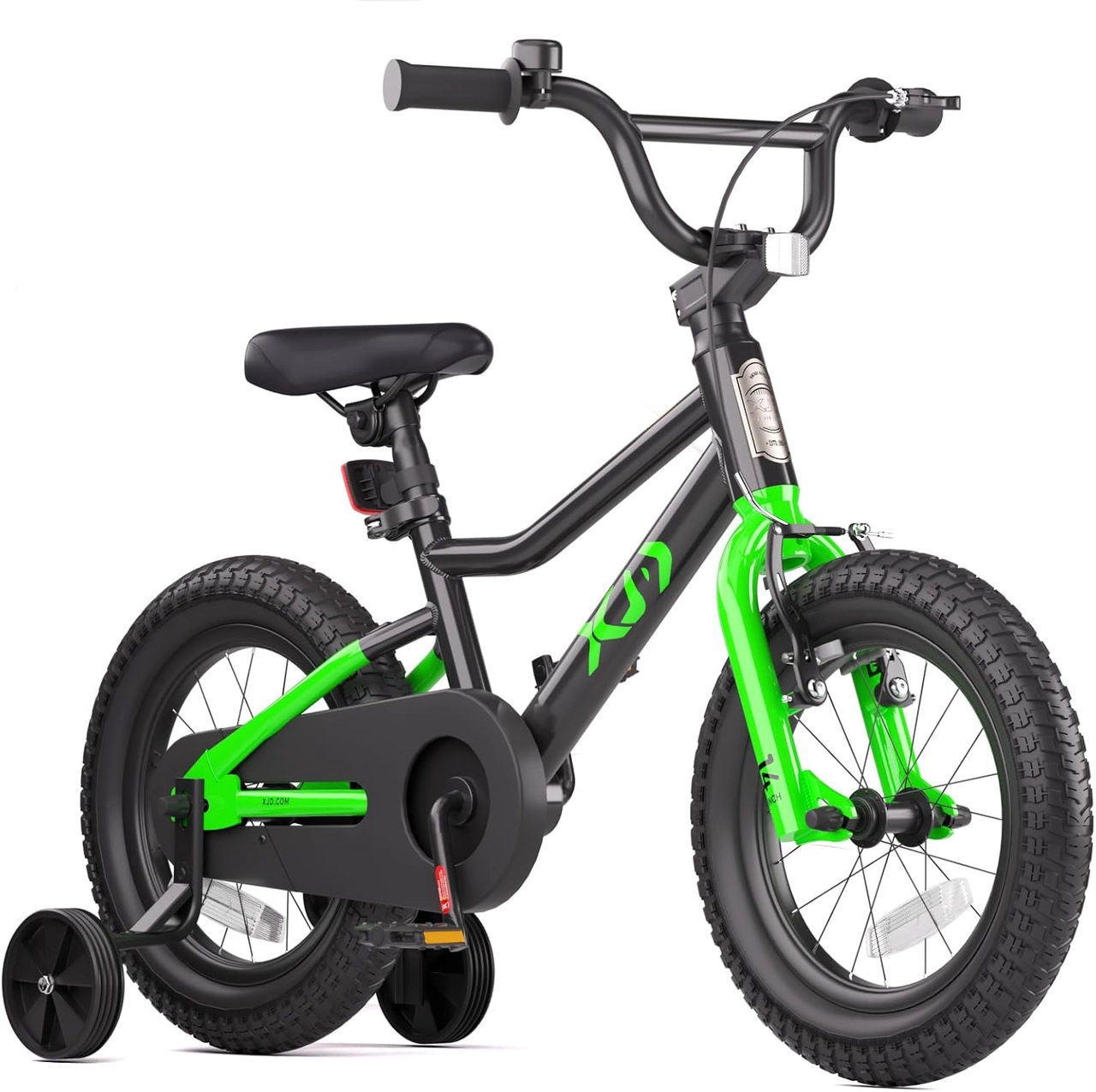 Black XJD Kids' BMX Bicycle with Training Wheels
A Kids’ BMX Bike with Training Wheels offered in 12 Inch, 14 Inch and 16 Inch sizes. It can inform an independent-bike fit comparison but provides no supplied evidence of front-seat compatibility.
The Flower Pink XJD Girls Bike with Doll Seat & Basket and Purple XJD Girls' Bike with Doll Seat & Basket are cataloged as Training Wheel Bikes, each in 12 Inch, 14 Inch and 16 Inch sizes. The Black XJD Kids' BMX Bicycle with Training Wheels is cataloged under Kids' BMX Bikes and has the same three size labels. A doll seat is not a child-passenger seat and must never be treated as one.
If the child is moving to an independent bike
| Wheel size | XBikes starting point |
|---|---|
| 12 Inch | Ages 3–4; 34–40 in / 86–102 cm |
| 14 Inch | Ages 3–6; 37–45 in / 94–114 cm |
| 16 Inch | Ages 4–7; 40–48 in / 102–122 cm |
These ranges are starting points, not proof of fit. Measure the rider’s height and inseam, then have the child try the bicycle. Check stand-over clearance, reach, brake control and current confidence. Do not buy an oversized bicycle merely for growth, and prioritize the individual fit over age.
Decision: use a front child seat only after its manual confirms the child, bicycle and installation are compatible and a controlled check shows that the adult retains confident steering and braking. Otherwise, stop and have a qualified bicycle mechanic assess the exact setup.
Bikes for your next adventure
-

Flower Pink XJD Girls Bike with Doll Seat & Basket
The XJD Flower Pink girls' bike is made for riders 71–122 cm tall (roughly ages …$69.99
-
Purple XJD Girls' Bike with Doll Seat & Basket
For girls 71–122 cm tall (about ages 3–7), this XJD girls' bike in Purple pairs …$75.99
$99.99 -

Pink Girls' 12/14/16" Bike by XJD – Basket & Doll Seat
The XJD Pink Girls' Bike with Basket & Doll Seat is made for riders 71–122 cm ta…$75.99
$99.99