

Are hand brakes removable from kids bikes
Hand brakes may be physically removable from some kids’ bikes, but they should be removed only if the exact bike manual permits it and the bike retains an effective, child-usable braking system. If the manual is unclear, have a qualified bicycle mechanic inspect the bike before changing or removing any brake.
Why the answer depends on the bike
A hand lever, cable or other brake component being detachable does not mean the bicycle was designed to be ridden without it. The hand brake may be the bike’s only brake, one part of a front-and-rear system, or a required part of its original configuration. Removing it can also leave loose cables, exposed fittings or unused mounting points.
Identify the bicycle’s exact model and size, then read its product manual. Check which braking equipment must remain installed and whether the manufacturer provides a removal or adjustment procedure. Follow the manual’s compatibility and torque instructions; those details cannot safely be inferred from wheel size or appearance.
Measure the child’s ability to use the brake
Before deciding that a hand brake should come off, determine whether poor fit or adjustment is the real problem. With the child seated in a normal riding position and hands on the grips, check the following:
- Rider height: measure without shoes and compare it with the wheel-size starting points below.
- Inseam and stand-over: confirm that the child can straddle and control the actual bicycle comfortably.
- Reach: observe whether the child can hold the grip normally while placing fingers on the lever, without twisting the wrist or sliding the hand inward.
- Brake control: check whether the child can pull the lever deliberately and repeatedly while maintaining steering control.
- Confidence: consider whether the child can start, slow and stop predictably on the bicycle they will actually ride.
Do not buy or keep an oversized bike merely to allow room for growth. Age is only a starting point; measured height, inseam, reach, brake control and current confidence should decide whether the bicycle fits.
Compare wheel size without treating it as proof of fit
| Wheel size | Starting age | Rider height |
|---|---|---|
| 12 Inch | 3–4 | 34–40 in / 86–102 cm |
| 14 Inch | 3–6 | 37–45 in / 94–114 cm |
| 16 Inch | 4–7 | 40–48 in / 102–122 cm |
| 18 Inch | 5–9 | 43–52 in / 109–132 cm |
| 20 Inch | 7–12 | 48–60 in / 122–152 cm |
| 24 Inch | 10–14 | 54–64 in / 137–163 cm |
| 26 Inch | Youth and adults | Over 60 in / 153 cm |
These ranges narrow the search, but they do not establish that a brake lever fits a particular hand. Have the child try the complete bicycle. A nominally suitable wheel size can still have a reach or stand-over that does not suit that rider.
When adjustment may be the better next step
If the child cannot comfortably reach or pull the lever, stop riding and consult the manual. The bike may have a manufacturer-approved adjustment, but do not guess at lever settings, cable changes, replacement parts or tightening values. A qualified bicycle mechanic can determine whether adjustment is allowed, whether the existing brake functions correctly and whether a compatible component is available.
After any approved work, check the brake’s operation in a controlled, traffic-free area before normal riding. The child should be able to steer while applying the brake and stop predictably. A properly fitting bicycle helmet should sit level and use its straps according to the helmet manufacturer’s instructions.
How the supplied catalog option is relevant
The XJD Light Purple Girls Bike with Basket, Training Wheels, 12/14/16/20 Inch is listed in the Training Wheel Bikes category, with available SKU labels of 12 Inch, 14 Inch and 16 Inch. Those three labeled sizes provide useful starting points for comparing the child’s measured height with XBikes sizing guidance. The supplied catalog facts do not identify its brake type or say that a hand brake can be removed, so use its exact manual or a qualified mechanic for that decision. The 20 Inch wording is part of the exact catalog title, but 20 Inch is not included among the supplied available SKU labels.
This particular catalog option helps answer the sizing part of the question: it lets a parent compare 12-, 14- and 16-inch starting points before checking the child’s actual stand-over, reach and control. It does not establish brake removability or replace an individual fit check.

Make the remove-or-retain decision
- Record the bike’s exact model and wheel size.
- Measure the child’s height and inseam, then observe stand-over and lever reach on the actual bike.
- Confirm in the exact manual whether brake removal or adjustment is permitted and what braking system must remain.
- If anything is uncertain, leave the brake in place and ask a qualified bicycle mechanic to inspect it.
Remove a kids’ bike hand brake only when the manufacturer’s instructions support the change, the remaining configuration is complete and effective, and the child can demonstrate controlled stopping. Otherwise, retain the brake and solve the reach or fit problem before the next ride.
Bikes for your next adventure
-

Black XJD Kids Bike for Boys – 12, 14 & 16 Inch Sizes
For a son between roughly 3 and 8 years old, the XJD Kids Bike in Black covers t…$169
$199 -
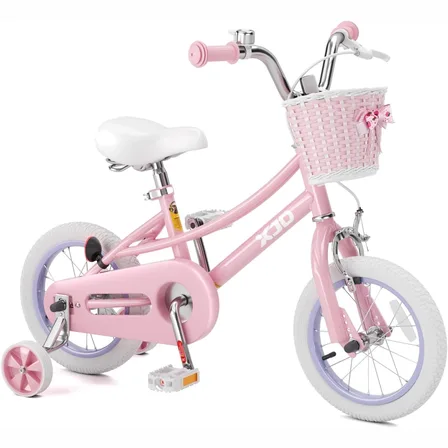
Pink 12/14/16/20" XJD Girls Bike with Training Wheels & Basket
The Pink XJD Girls Bike with Training Wheels & Basket is a first-bike pick f…$65.99
$75.99 -
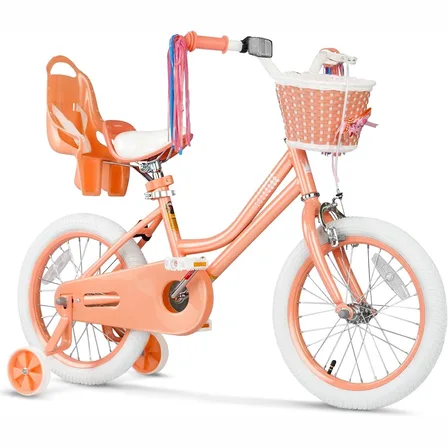
Girls 12/14/16 Inch Kids Bike by XJD with Training Wheels – Peach
The XJD Girls Bike in Peach is a training-wheel bike built for girls roughly 3 t…$149
$169