

Can a 5 year old go in a bike seat
A 5-year-old can ride in a child bike seat only if both child and seat remain within every stated fit and load limit. Age alone does not establish that the seat is suitable.
Check the passenger seat before deciding
Find the exact model manual and compare its permitted child size with your child’s current measurements. Record the child’s weight and standing height rather than relying on an old measurement or an age label. Confirm that the bicycle itself is approved for that seat and installation method.
Follow the seat and bicycle manuals for compatibility, assembly, load limits, fastener settings and maintenance. If either manual is missing, unclear or contradictory, do not guess; ask the manufacturer or a qualified bicycle mechanic to inspect the combination.
Test the complete fit
Even when the published limits allow a 5-year-old, perform a physical fit check. The child must sit in the intended position without being cramped, and every supplied restraint must close and adjust as its manufacturer directs. Feet must remain secured in the intended supports and away from the wheel and other moving parts.
- Check that the child has not exceeded any stated height or weight limit.
- Confirm that restraints fit in their proper positions and cannot be slipped off.
- Look for contact between the child, seat, wheel, rack, frame or controls.
- Verify that the adult rider can mount, steer, brake and balance the loaded bicycle confidently.
If any part of that check fails, the answer is no for that particular child-seat-bicycle combination, even if the child is exactly five.
Make a careful trial before riding normally
Inspect the installation according to the manual before every ride. With another adult supervising the child, check the loaded bicycle in a controlled, traffic-free area. Added passenger weight can change balance, starting, stopping and low-speed handling. Stop if the bicycle feels difficult to control or if the seat shifts, restraints loosen, or the child cannot remain correctly positioned.
The child should wear a bicycle helmet that fits properly. U.S. Consumer Product Safety Commission guidance says the helmet should sit level and its straps should be adjusted according to the manufacturer’s instructions. A helmet does not make an incompatible or outgrown passenger seat acceptable.
Consider whether an independently ridden bike now fits better
If the passenger seat no longer fits, the next comparison is a child-sized bicycle—not a larger passenger seat chosen without verified limits. Measure standing height and inseam, then have the child try the bicycle. Check stand-over clearance, reach, brake access, steering control and the confidence to start and stop. Consistent with American Academy of Pediatrics guidance, do not buy an oversized bicycle merely to allow room for growth.
| Wheel size | XBikes age starting point | Rider-height starting point |
|---|---|---|
| 12 Inch | Ages 3–4 | 34–40 in / 86–102 cm |
| 14 Inch | Ages 3–6 | 37–45 in / 94–114 cm |
| 16 Inch | Ages 4–7 | 40–48 in / 102–122 cm |
| 18 Inch | Ages 5–9 | 43–52 in / 109–132 cm |
These ranges are starting points, not proof of fit. For a 5-year-old, measured height may point toward 14, 16 or 18 inches, while the 12-inch age starting point does not include age five. In every case, the child’s inseam, reach, brake control and present confidence decide whether a particular bicycle works.
How the supplied bike helps with the comparison
The Blue XJD Girls Bike with Training Wheels – 12/14/16 Inch is available with 12 Inch, 14 Inch and 16 Inch SKU labels. Those options let you compare three nearby wheel sizes against the measured-height starting points above when considering a move from passenger to rider. It is a training-wheel bicycle, not a child passenger seat, and it does not answer whether an existing passenger seat can carry your child. It also has no supplied 18-inch option, so the listed sizes are comparison points rather than substitutes if the fit check indicates 18 inches.

Decide from the two separate checks
Keep using the passenger seat only when its exact manual, the bicycle manual and the physical fit check all agree—and the adult can control the loaded bicycle. If any limit, compatibility detail or restraint fit is uncertain, pause passenger rides and obtain manufacturer guidance or a mechanic’s inspection.
If the seat is outgrown, measure the child and compare 14-, 16- and 18-inch starting points before arranging test rides. Choose only the bicycle the child can stand over, reach, brake and control now; for this 5-year-old, neither age nor extra growing room should override the actual fit.
Bikes for your next adventure
-
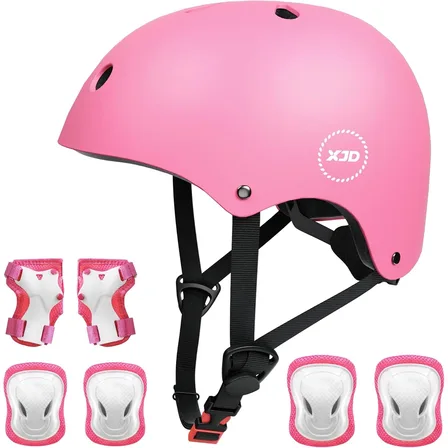
XJD Kids Helmet & Protective Gear Set for Girls, Pink
The XJD Kids Helmet & Protective Gear Set in Pink is a complete safety kit for g…$24.64
-
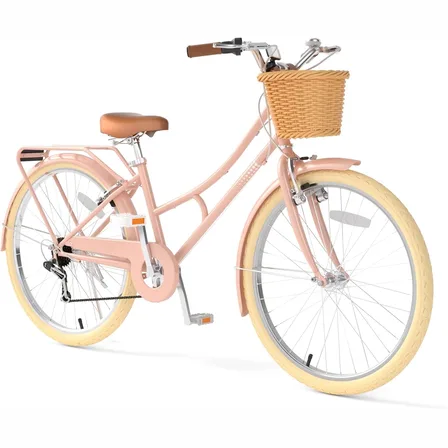
Pink XJD Beach Cruiser Bike, 24"/26", U-Brake
The XJD Pink Beach Cruiser Bike is a single-speed cruiser built for older kids a…$159.99
-

Flower Pink XJD Girls Bike with Doll Seat & Basket
The XJD Flower Pink girls' bike is made for riders 71–122 cm tall (roughly ages …$69.99