

Can a baby go in a bike trailer
A baby should ride in a bike trailer only when they can sit unsupported, control their head and neck while helmeted, and meet the trailer manual’s requirements.
Make the decision from readiness, not age alone
Before riding, confirm that the child can remain upright without being propped up and can keep their head stable when wearing a correctly fitted bicycle helmet. A helmet adds weight, so head control without one is not a complete check.
Then read the exact trailer and child-seat manual. Its minimum passenger requirements, restraint instructions, load limit and compatibility rules control the decision. If the manual excludes your child’s developmental stage, or you cannot verify its requirements, do not use the trailer. Ask the child’s pediatrician about readiness if the baby was premature, has low muscle tone, or has any head, neck or developmental concern.
What to measure and compare
Do not rely on a broad label such as “baby trailer.” Record the child’s current measurements and compare them with the limits printed by the trailer and helmet manufacturers.
- Body weight and seated height: compare both with the trailer manual, including any limits for a particular seating position.
- Helmet fit: the helmet should sit level and fit properly, with straps adjusted according to its manufacturer’s instructions.
- Harness fit: confirm that the built-in restraint adjusts to the child without slack or improvised padding.
- Head clearance: check the manual’s required clearance while the child is seated and helmeted.
- Bicycle compatibility: verify that the hitch and bicycle combination is explicitly permitted.
Do not guess at load limits, hitch compatibility, assembly steps or fastener torque. Follow the manuals for the exact bicycle and trailer, or have a qualified bicycle mechanic inspect the setup.
Do a stationary check before any ride
- Attach the trailer exactly as its manual directs, including every supplied retention device.
- Seat and secure the child while the bicycle remains stationary and supported by another adult.
- Check that the helmet stays level and that the child’s head does not slump forward or sideways.
- Confirm that straps lie as the manufacturer shows and cannot contact the wheels or moving parts.
- Test the bicycle’s steering and brakes without the passenger, then perform a brief controlled check in a traffic-free area only if every requirement is satisfied.
Stop if the child cannot maintain posture, the harness cannot be adjusted correctly, the helmet shifts, or the trailer changes bicycle control beyond the rider’s confidence. A reclined insert or accessory is not permission to carry a younger child unless the exact trailer manufacturer approves it for that use.
When these XBikes products are relevant
The supplied catalog products are children’s training-wheel bicycles, not bike trailers. They do not answer whether a baby can safely ride as a trailer passenger. They become relevant later, when a child is ready to ride a bicycle and you need wheel-size comparison points. The catalog offers 12, 14 and 16 Inch SKU labels for each option.
The Girls 12/14/16 Inch Kids Bike by XJD with Training Wheels – Peach is categorized as a Training Wheel Bike and is available in 12 Inch, 14 Inch and 16 Inch labels. The XJD Light Purple Girls Bike with Basket, Training Wheels, 12/14/16/20 Inch is also categorized as a Training Wheel Bike; despite “20 Inch” appearing in its exact catalog title, the supplied available SKU labels are 12 Inch, 14 Inch and 16 Inch.
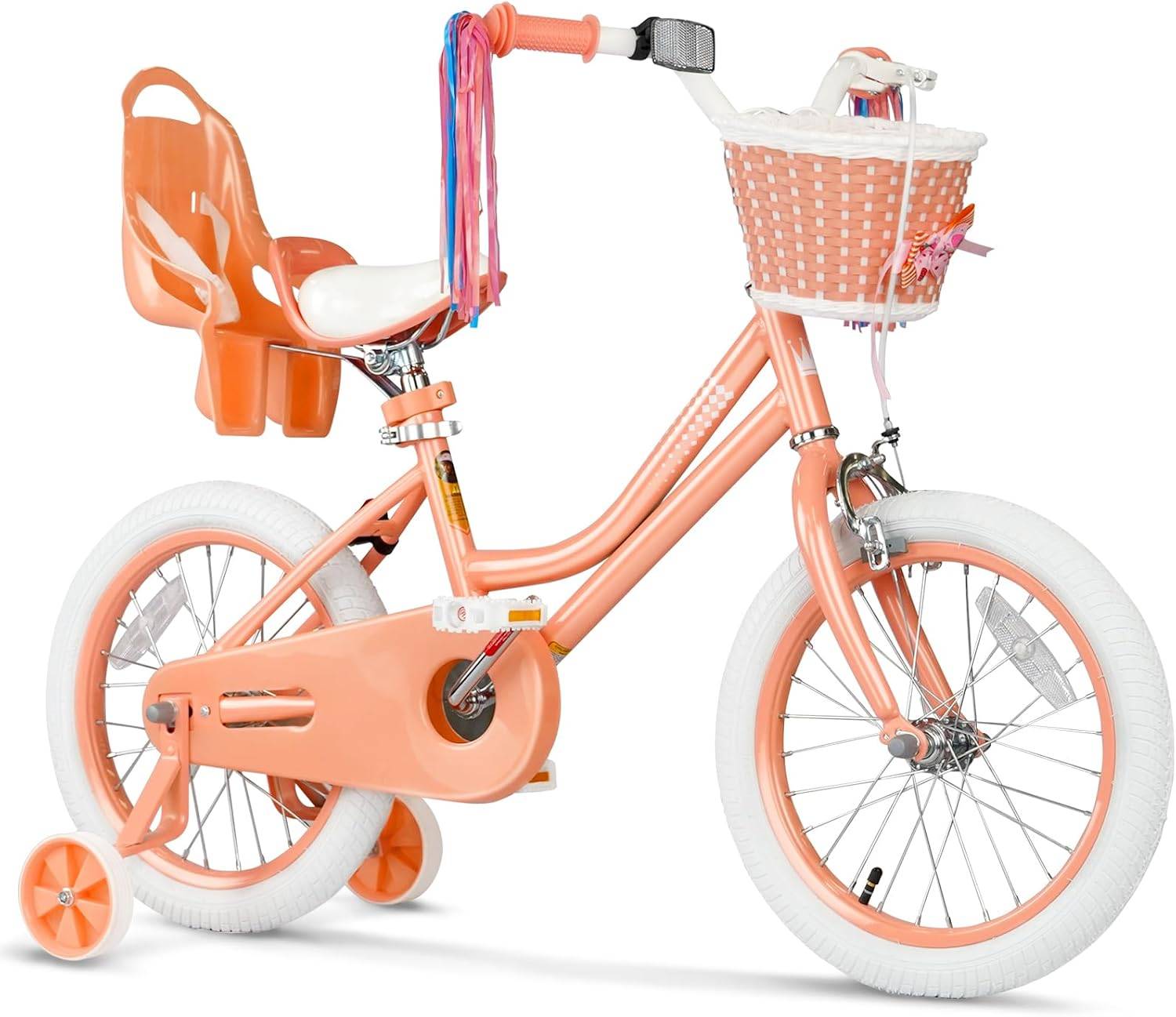 Girls 12/14/16 Inch Kids Bike by XJD with Training Wheels – Peach
A later-stage comparison option, not a baby trailer. This Training Wheel Bike has supplied 12 Inch, 14 Inch and 16 Inch SKU labels and requires an individual bicycle fit check.
 XJD Light Purple Girls Bike with Basket, Training Wheels, 12/14/16/20 Inch
This Training Wheel Bike is relevant only when the child is ready to ride independently. Supplied available labels are 12 Inch, 14 Inch and 16 Inch; the 20 Inch wording in its title is not a supplied available SKU.
How to assess a bicycle when the child is older
XBikes uses these starting points: 12 Inch for 34–40 in (86–102 cm), commonly ages 3–4; 14 Inch for 37–45 in (94–114 cm), commonly ages 3–6; and 16 Inch for 40–48 in (102–122 cm), commonly ages 4–7. Overlapping ranges are a reason to try the bicycle, not to choose by age.
Measure the child’s standing height and inseam, then check stand-over clearance, reach, brake control and current confidence on the actual bicycle. Do not buy an oversized bicycle merely for growth. Any age-like wording in a product name is only a catalog label and is not evidence that an individual child fits.
What to do next
Find the exact trailer manual and compare its passenger rules with your child’s weight, seated height, helmeted head control and harness fit. If any requirement is unmet or uncertain, postpone the trailer ride. The two XBikes training-wheel models are later-stage bicycle comparisons only; they are not substitutes for a trailer or evidence that a baby is ready to ride in one.
Bikes for your next adventure
-

Kids Bike Helmet by XJD for Girls – Pink
The XJD Kids Bike Helmet in Pink is a lightweight multi-sport helmet for girls r…$59.99
$99 -
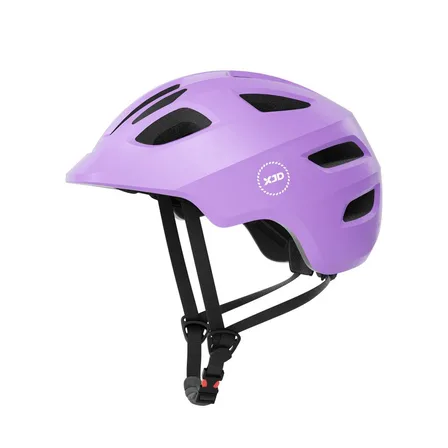
Girls' Bike Helmet from XJD – Purple
The XJD kids bike helmet in purple is a multi-sport helmet built for toddlers an…$59.99
$49 -
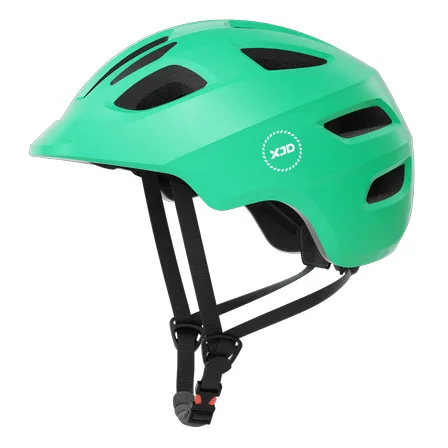
Green XJD Kids Bike Helmet for Boys & Girls
The Green XJD Kids Bike Helmet is a lightweight multi-sport helmet for toddlers …$59.99
$99