

Can a child seat fit on any bike
No. A child seat does not fit every bike. The seat’s mounting system, the bicycle’s frame and components, and both manuals must all agree.
Check the type of child seat first
Begin with the seat, not the bicycle’s wheel size. Child passenger seats commonly use different mounting locations, such as the rear rack area, the bicycle frame, or the front of the bike. A mount made for one location should not be assumed to work in another.
Find the exact seat model and read its compatibility instructions. Identify every required attachment point, any prohibited frame or bicycle types, the permitted load, and the specified hardware. Those details are not interchangeable between seats. If the manual is missing or the compatibility language is unclear, contact the manufacturer or ask a qualified bicycle mechanic before riding.
What to measure and compare
Inspect the actual bike and compare it directly with the child-seat manual. Record the bicycle make, model and size, then check the following:
- Mounting area: Confirm that the required frame section or rack area exists and is unobstructed.
- Tube shape and dimensions: Measure the exact tube or mounting surface named by the seat maker. Compare its shape and measurement with the seat’s stated range.
- Rack compatibility: A rear rack is not automatically suitable for carrying a child. Verify the rack, seat and bicycle as a complete system, including the relevant load limits.
- Clearance: Check for conflicts with the saddle, pedals, rider’s legs, wheel, brakes, cables, basket or other accessories.
- Bicycle condition: The frame, wheels, brakes and mounting area must be sound. Damage, looseness or uncertain assembly needs professional inspection.
Do not improvise clamps, drill the frame, substitute hardware or guess at torque. Follow the exact bicycle and seat manuals; where instructions differ or information is absent, use a qualified bicycle mechanic.
Wheel size does not prove compatibility
A 24-inch or 26-inch label describes a wheel-size option, not whether a passenger seat can be installed. Likewise, a small children’s bicycle is not made suitable for carrying another child merely because it has a rear accessory or a seat-shaped feature.
The supplied catalog options help clarify this distinction: they provide wheel-size comparison points and show why a product title or pictured accessory cannot replace a passenger-seat compatibility check.
 Pink XJD Beach Cruiser Bike, 24"/26", U-Brake
Available in 24 Inch and 26 Inch sizes, this cruiser is a wheel-size comparison point. Supplied facts do not confirm child-passenger-seat mounts, load limits or compatibility.
 Flower Pink XJD Girls Bike with Doll Seat & Basket
Offered in 12 Inch, 14 Inch and 16 Inch sizes. Its catalog title identifies a doll seat, which must not be interpreted as a child passenger seat.
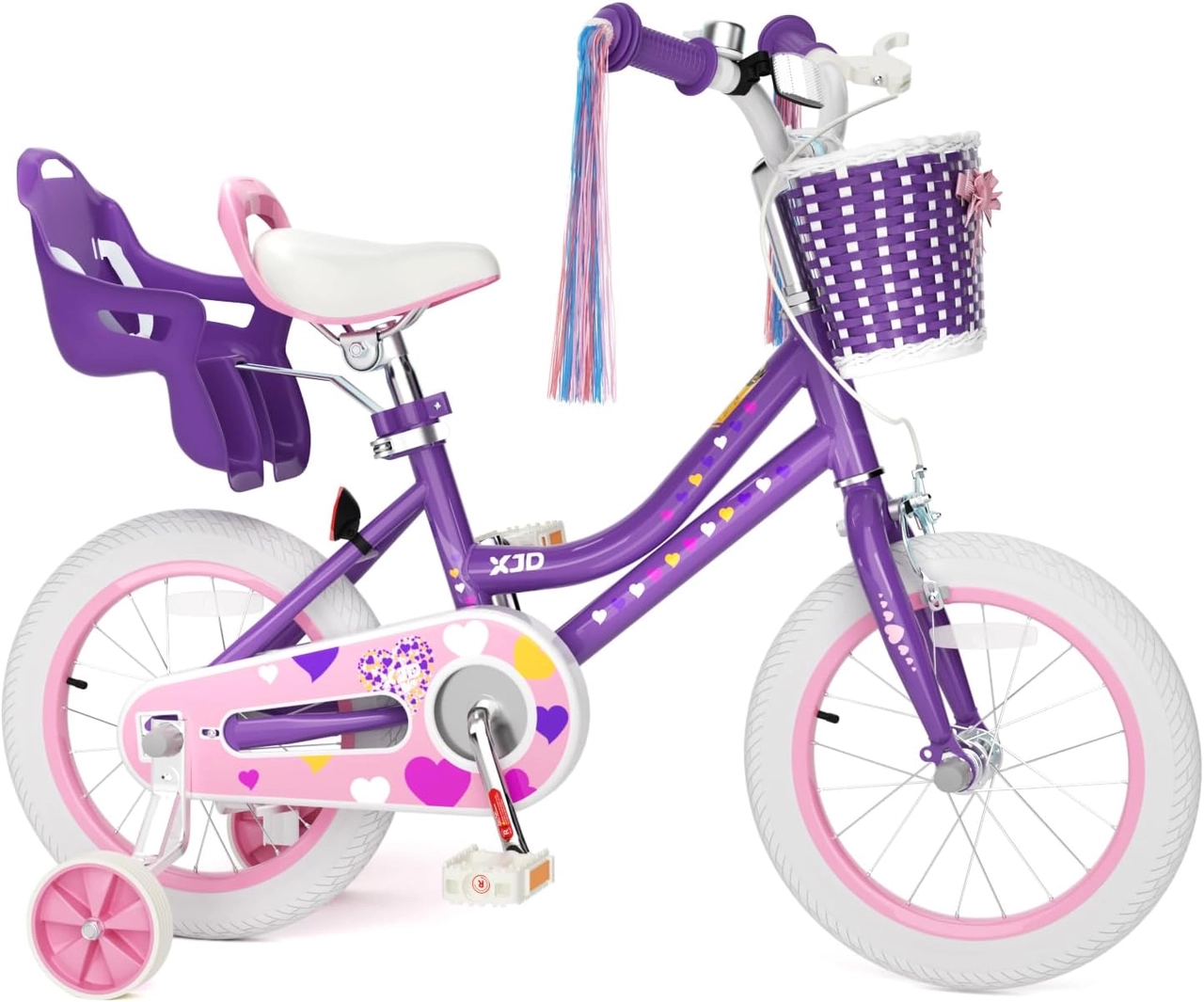 Purple XJD Girls' Bike with Doll Seat & Basket
This bike is available in 12 Inch, 14 Inch and 16 Inch sizes. The named doll seat is not evidence that the bicycle can carry a child passenger.
The Pink XJD Beach Cruiser Bike, 24"/26", U-Brake is offered in 24 Inch and 26 Inch sizes. Those facts can help identify its size category, but the catalog information supplied here does not establish child-seat mounts, load limits or passenger-seat compatibility.
The Flower Pink XJD Girls Bike with Doll Seat & Basket and the Purple XJD Girls' Bike with Doll Seat & Basket are each offered in 12 Inch, 14 Inch and 16 Inch sizes. Their titles specify a doll seat; that is not evidence of a seat designed to carry a child. Neither should be treated as a passenger-seat solution without separate, explicit manufacturer documentation.
Make sure the rider’s bicycle fits too
Even when a child seat is technically compatible, the adult or youth operating the bicycle must fit and control it confidently. Added passenger weight can change balance, starting, stopping and handling. Have the rider try the bicycle and confirm comfortable stand-over clearance, reach and brake control rather than buying an oversized bicycle for growth.
| Wheel size | XBikes starting point |
|---|---|
| 12 Inch | Ages 3–4; 34–40 in / 86–102 cm |
| 14 Inch | Ages 3–6; 37–45 in / 94–114 cm |
| 16 Inch | Ages 4–7; 40–48 in / 102–122 cm |
| 18 Inch | Ages 5–9; 43–52 in / 109–132 cm |
| 20 Inch | Ages 7–12; 48–60 in / 122–152 cm |
| 24 Inch | Ages 10–14; 54–64 in / 137–163 cm |
| 26 Inch | Youth and adults over 60 in / 153 cm |
These are starting points only. Prioritize measured height, inseam, reach, brake control and current confidence over age. They help assess the person riding the bike; they do not certify the bike for a child passenger seat.
Do a complete pre-ride check
- Match the exact seat model to the bicycle using both manufacturers’ instructions.
- Verify the mount, hardware, clearances and all applicable load limits.
- Have the complete installation checked by a qualified bicycle mechanic if any requirement is uncertain.
- Confirm that the operating rider can mount, balance, steer and brake with the installed seat before carrying a child.
- Fit the child with a properly sized bicycle helmet. It should sit level, with straps adjusted according to the helmet manufacturer’s instructions.
If the manuals do not explicitly support the combination, the answer for that bicycle and seat is no. Choose a documented compatible setup or have a qualified mechanic identify one before carrying a child.
Bikes for your next adventure
-
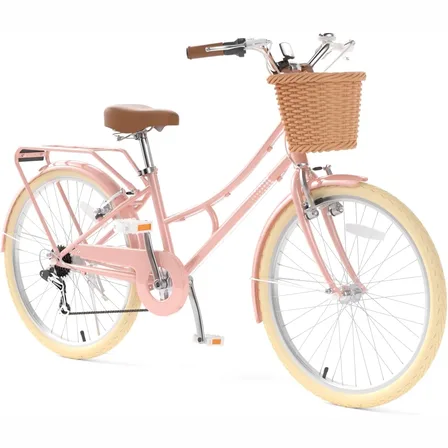
XJD Pink Beach Cruiser for Girls – Rear Rack & V-Brake
The XJD Pink Beach Cruiser for girls is the step-up bike for riders who've outgr…$179.99
$209.99 -

Flower Pink XJD Girls Bike with Doll Seat & Basket
The XJD Flower Pink girls' bike is made for riders 71–122 cm tall (roughly ages …$69.99
-

XJD Boys 12/14/16" Training Wheel Bike – Blue
The XJD Boys Bike in Blue is a training wheel bike for riders 71–122 cm tall—rou…$169
$199