

Can an 8 year old ride a 20 inch bike
Yes, many 8-year-olds can ride a 20-inch bike, but age alone does not confirm the fit. Measure the child and check control before deciding.
Start with the rider’s height
XBikes lists a 20-inch bike as a starting point for ages 7–12 and rider heights of 48–60 inches (122–152 cm). An 8-year-old falls within that age range, but the child’s measured height is the more useful first comparison.
If the rider is shorter than 48 inches (122 cm), do not assume a 20-inch bike will work simply because they are eight. The nearby XBikes starting points are 18-inch wheels for heights of 43–52 inches (109–132 cm) and 16-inch wheels for heights of 40–48 inches (102–122 cm). These ranges overlap because body proportions, reach and confidence differ.
| Wheel size | XBikes age starting point | XBikes height starting point |
|---|---|---|
| 16 Inch | Ages 4–7 | 40–48 in / 102–122 cm |
| 18 Inch | Ages 5–9 | 43–52 in / 109–132 cm |
| 20 Inch | Ages 7–12 | 48–60 in / 122–152 cm |
| 24 Inch | Ages 10–14 | 54–64 in / 137–163 cm |
Measure height and inseam before shopping
Measure height with the child standing straight, without shoes, against a wall. Then measure inseam from the floor to the crotch while the child stands naturally. Use height to identify the likely wheel-size range and inseam to assess the actual bicycle’s stand-over clearance.
Because frame shapes and saddle positions can vary, an inseam measurement does not automatically select a wheel size. Have the child try the complete bicycle. They should be able to stand over it comfortably rather than being pressed against the frame. Do not choose an oversized bike merely to allow room for growth.
Check reach, brakes and balance on the actual bike
Place the child on the bicycle in a controlled, traffic-free area with an adult holding it steady. A suitable fit lets the rider sit without stretching excessively, hold the grips securely and steer through a comfortable range. Their knees should not interfere with steering.
Ask the child to operate the brakes while maintaining a stable grip. They need to reach and control the brake system fitted to that particular bicycle. Also check whether they can start, stop, turn and put a foot down predictably. If they appear tense, cannot control the brakes, or struggle to stop and dismount, the bike is not a good fit yet—even if their age and height fall within the 20-inch starting range.
When the supplied catalog option is relevant
The supplied catalog includes Girls' Training Wheel Bike by XJD with Basket – Purple in 14 Inch, 16 Inch and 20 Inch SKU labels. The 20 Inch option directly matches the wheel size in the question, while the smaller labels provide catalog comparison points when measurements suggest that 20 inches may be too large. Its training-wheel category may also make it relevant when a parent is specifically comparing training-wheel bikes, but the catalog facts do not establish whether that setup suits an individual rider.

Use the size labels only to narrow the choice, then repeat the stand-over, reach, brake-control and confidence checks on the exact bicycle. The 14 Inch and 16 Inch versions are different wheel sizes, not equivalents to the requested 20 Inch size. No supplied 18-inch option is available for comparison here.
Do a short supervised fit check
- Confirm the child’s barefoot height and compare it with the 48–60 inch (122–152 cm) starting range for a 20-inch bike.
- Use the inseam measurement to check comfortable stand-over clearance on the actual frame.
- Check that the rider can reach the grips and operate the brakes without losing hand control.
- In a clear practice area, observe starting, straight riding, turning, stopping and putting a foot down.
- If adjustment, assembly, compatibility or maintenance is uncertain, follow the exact product manual or ask a qualified bicycle mechanic.
Fit a bicycle helmet before every ride. It should fit properly, sit level and have its straps used according to the helmet manufacturer’s instructions.
The decision for an 8-year-old
Choose a 20-inch bike only if the child is within the height starting range and can comfortably stand over, reach, steer, brake and stop the actual bicycle. If any of those checks fail, compare a smaller size instead of expecting the child to grow into the bike. If every check succeeds and the child rides with current confidence under supervision, a 20-inch bike is a reasonable size to consider.
Bikes for your next adventure
-
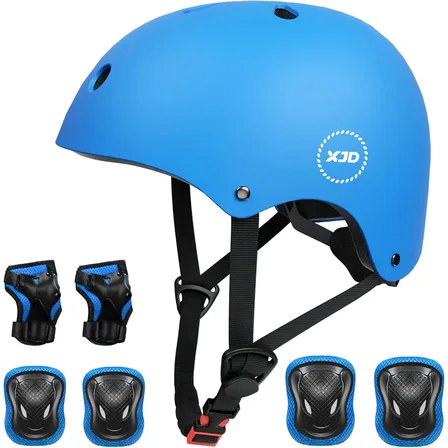
Blue XJD Helmet & Protective Gear Set for Kids, Sizes S/M
The Blue XJD Helmet & Protective Gear Set is made for kids roughly 3 to 8 years …$23.79
-
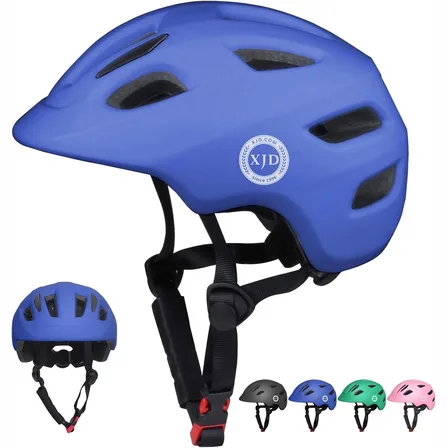
Blue XJD Kids' Bike Helmet, Adjustable Fit – Sizes XS & S
The Blue XJD Kids' Bike Helmet is a lightweight, adjustable helmet for toddlers …$20.39
-
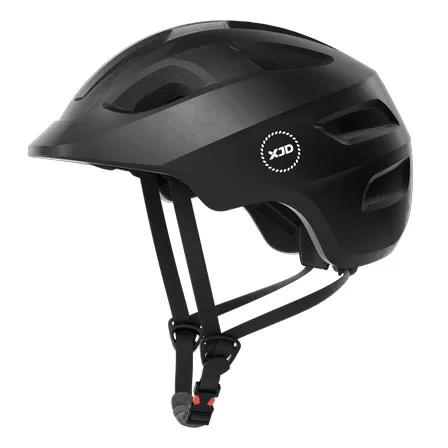
Kids Multi-Sport Bike Helmet by XJD – Black
7 reviews
The XJD Kids Multi-Sport Bike Helmet in Black is a lightweight, adjustable helme…$59.99
$49