

Can i ride a bike with a baby carrier
Yes, you can ride a bike with a baby carrier—but only when the bicycle, carrier, mounting point and rider are compatible, and the child meets the carrier maker’s requirements.
Check the child and carrier first
Do not decide by the child’s age alone. Read the exact carrier manual and confirm its minimum and maximum child requirements, required posture, harness setup and helmet guidance. If you are uncertain whether your baby has the developmental readiness specified by the carrier maker, ask your pediatrician before riding.
Inspect the carrier before every trip. The harness should be adjusted exactly as its instructions describe, with no loose clothing, straps or objects near the wheel. A child’s bicycle helmet must fit properly, sit level and have its straps secured according to the helmet manufacturer’s directions.
Measure and compare before mounting anything
Record the carrier’s mounting method, permitted bicycle types and stated load limit. Then identify the bicycle’s exact model, wheel size, frame size and mounting points. For a rear carrier, determine whether it attaches to the frame, to a rack, or by another system; these methods are not interchangeable.
- Carrier requirements: approved mounting method, child limits, bicycle restrictions and hardware.
- Bicycle details: frame and wheel size, mounting points, rack model if present, and the bicycle or rack load limit.
- Rider fit: measured height and inseam, comfortable reach, reliable brake control and confidence while starting and stopping.
All limits must agree. A visible rear rack does not by itself prove that a child carrier can attach to it or that the rack can support the required load. If a manual omits compatibility, load or torque information, have the exact bicycle and carrier checked by a qualified bicycle mechanic.
Choose a bicycle that fits the rider now
The adult operating the bicycle needs stable control before adding a child and carrier. Do not buy an oversized bicycle for growth. The rider should try it, confirm suitable stand-over clearance, reach the controls naturally and operate the brakes confidently. Adding a carrier raises and shifts the load, so a bicycle that already feels awkward is not an appropriate starting point.
XBikes uses these wheel-size starting points, but they do not replace an individual fit check:
| Wheel size | Starting age | Rider height |
|---|---|---|
| 12 Inch | 3–4 | 34–40 in / 86–102 cm |
| 14 Inch | 3–6 | 37–45 in / 94–114 cm |
| 16 Inch | 4–7 | 40–48 in / 102–122 cm |
| 18 Inch | 5–9 | 43–52 in / 109–132 cm |
| 20 Inch | 7–12 | 48–60 in / 122–152 cm |
| 24 Inch | 10–14 | 54–64 in / 137–163 cm |
| 26 Inch | Youth and adults | Over 60 in / 153 cm |
Prioritize measured height, inseam, reach, brake control and present confidence over the age column. These figures size the rider; they do not approve a bicycle for carrying a baby.
How the supplied XBikes option helps
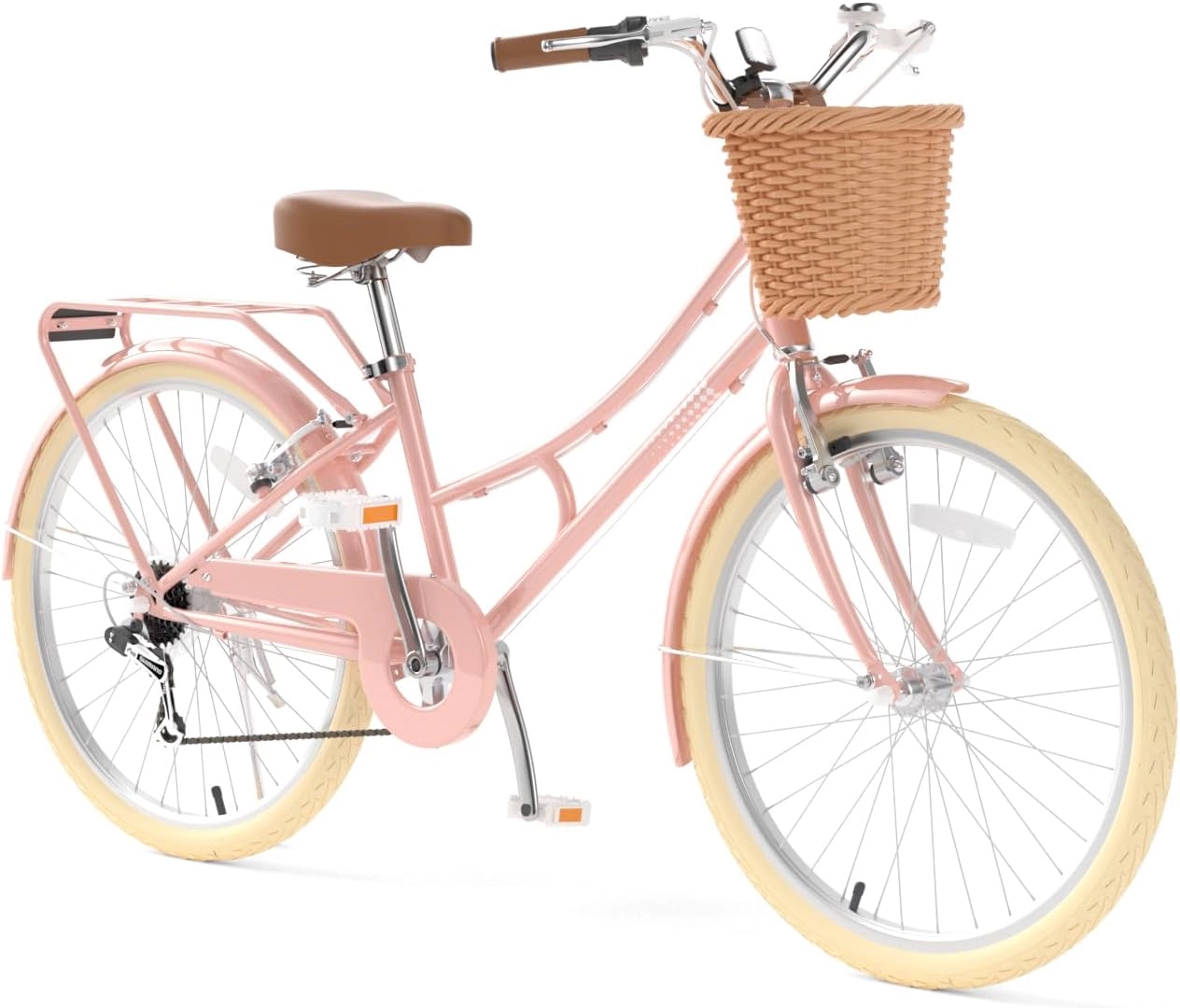
The XJD Pink Beach Cruiser for Girls – Rear Rack & V-Brake is available with 20 Inch, 24 Inch and 26 Inch SKU labels. Those sizes let you compare rider fit, while the title identifies a rear rack and V-brake. Neither detail confirms child-carrier compatibility, rack capacity, mounting hardware or braking performance under an added load.
This catalog option therefore helps as a concrete size and configuration comparison, not as an automatic baby-carrier recommendation. Check the manual for the exact SKU and carrier, or ask a qualified mechanic to verify the complete combination.
Set up and test the complete combination
Follow both manufacturers’ assembly instructions, including all supplied hardware and specified torque values. Do not improvise clamps, substitute fasteners or guess at tightening. Confirm that the carrier cannot contact the tire, brakes, pedals or steering, and that the bicycle’s limits cover the carrier, child and anything else being carried.
Before placing the child in the carrier, practice mounting, walking, starting, braking and parking the bicycle with an equivalent permitted load secured as the carrier instructions allow. Use a quiet, flat area away from traffic. Stop if the bicycle wobbles excessively, the stand is unstable, steering is restricted or braking does not feel controlled.
Make the ride-or-wait decision
Ride only after four checks all pass: the child meets the carrier manual’s requirements; the carrier explicitly fits the exact bicycle or approved rack; every stated load limit is respected; and the rider can start, steer and stop the loaded bicycle confidently. Also follow applicable local rules about child passengers and helmets.
If any specification is missing, do not treat the rear rack or wheel size as proof. Take the bicycle, carrier and manuals to a qualified mechanic. If the child, equipment or rider is not ready, wait rather than forcing the setup.
Bikes for your next adventure
-
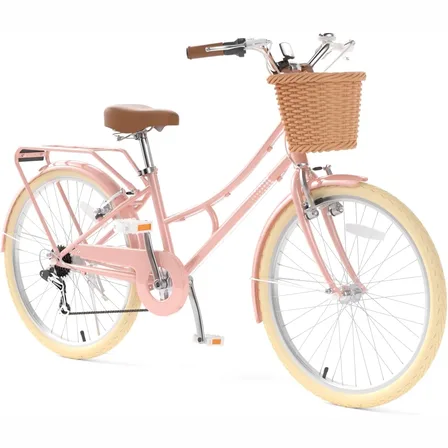
XJD Pink Beach Cruiser for Girls – Rear Rack & V-Brake
The XJD Pink Beach Cruiser for girls is the step-up bike for riders who've outgr…$179.99
$209.99 -
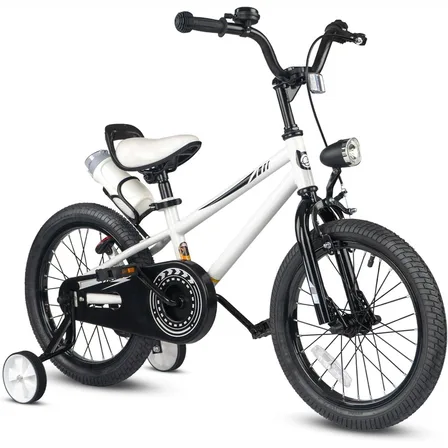
XJD Kids' Training Wheel Bike for Boys & Girls, 12/14/16 Inch – White
The XJD kids' training wheel bike in White is made for riders ages 3–8 (roughly …$169
$199 -

Kids Bike Helmet by XJD for Boys & Girls – Black, Blue, Green, Pink, Purple
The XJD Kids Bike Helmet covers a wide 2-to-8-year age range thanks to two head-…$59.99