

Can you put a kid on a bike
Yes—you can put a child on a bike when the bike fits their body, they can control it confidently, and they wear a properly fitted bicycle helmet.
Check readiness before the first ride
Start with the child, not the age printed on a box or product name. Measure the rider’s standing height and inseam, then have them try the actual bicycle. Age ranges are only starting points because children of the same age can differ substantially in leg length, reach and confidence.
With the child standing over the bike, check that they can manage the bicycle without being trapped or forced onto tiptoe. Once seated, they should be able to reach the handlebar comfortably, steer without overextending, and operate the brakes with control. If they cannot do those things, choose a different size or setup rather than expecting them to grow into it.
Compare the measurements with wheel size
Use the measured height to identify likely wheel sizes, then confirm the fit in person. Overlapping ranges are intentional: a child near a boundary may fit either size differently depending on inseam, reach, brake control and current riding confidence.
| Wheel size | Starting age | Rider height |
|---|---|---|
| 12 Inch | 3–4 | 34–40 in / 86–102 cm |
| 14 Inch | 3–6 | 37–45 in / 94–114 cm |
| 16 Inch | 4–7 | 40–48 in / 102–122 cm |
| 18 Inch | 5–9 | 43–52 in / 109–132 cm |
| 20 Inch | 7–12 | 48–60 in / 122–152 cm |
| 24 Inch | 10–14 | 54–64 in / 137–163 cm |
| 26 Inch | Youth and adults | Over 60 in / 153 cm |
Do not move up merely to leave room for growth. An oversized bicycle can make standing over, steering, stopping and getting on or off harder. If two wheel sizes match the height range, compare both with the child aboard and select according to actual control rather than the larger number.
What the child should demonstrate
Before riding away, ask the child to show that they can perform a few simple actions while an adult stays close:
- Mount and dismount without losing control of the bicycle.
- Stand over it comfortably and keep it balanced.
- Reach the handlebar without stretching or locking their arms.
- Turn the handlebar while maintaining a stable position.
- Reach and operate the brakes reliably.
- Start, slow and stop on a flat, traffic-free practice area.
A child who matches a height range but cannot yet complete these actions may need a different fit, more support or more practice. Confidence matters, but it should be demonstrated through control rather than assumed from enthusiasm.
Where the supplied bikes are relevant
The three catalog options help when the child’s measurements point to a 12 Inch, 14 Inch or 16 Inch bike and a training-wheel model is being considered. They let you compare available wheel-size labels within those ranges; they do not replace the individual stand-over, reach and brake checks.
The Flower Pink XJD Girls Bike with Doll Seat & Basket and the Purple XJD Girls' Bike with Doll Seat & Basket are both categorized as Training Wheel Bikes, with 12 Inch, 14 Inch and 16 Inch options. The Black XJD Kids' BMX Bicycle with Training Wheels is categorized as a Kids' BMX Bike and likewise has 12 Inch, 14 Inch and 16 Inch options.
These products are relevant only when one of those three sizes survives the fit check. If measurements indicate an 18 Inch, 20 Inch, 24 Inch or 26 Inch bicycle, the supplied products are nearest-size comparison points only—not substitutes for the required size. A 16 Inch bicycle is not equivalent to an 18 Inch bicycle.
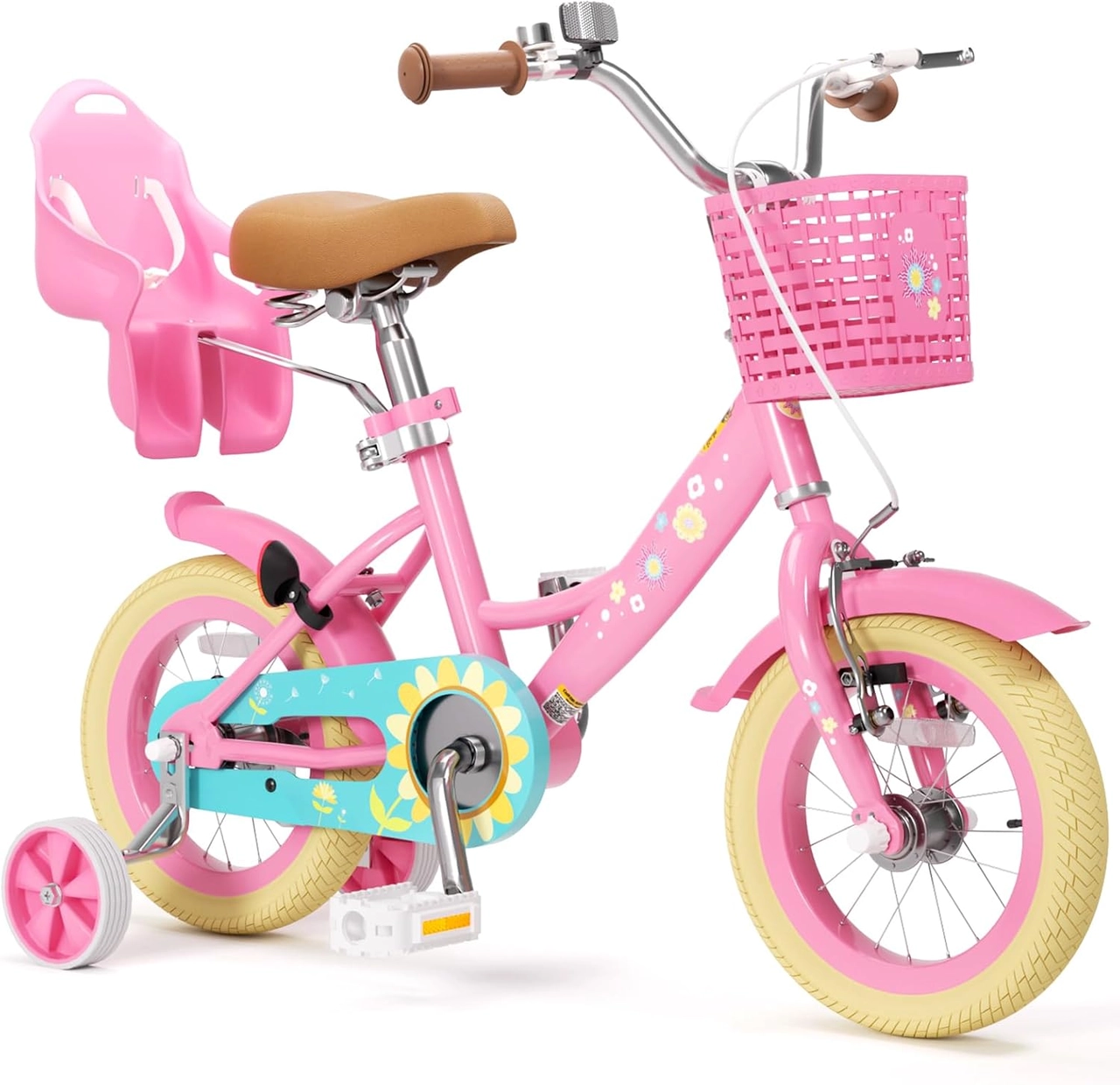 Flower Pink XJD Girls Bike with Doll Seat & Basket
A Training Wheel Bike offered in 12 Inch, 14 Inch and 16 Inch labels. Compare the child’s measured height, inseam, reach and control with the relevant size before choosing.
 Purple XJD Girls' Bike with Doll Seat & Basket
This Training Wheel Bike is available in 12 Inch, 14 Inch and 16 Inch labels, making it relevant only when one of those sizes is supported by an individual fit check.
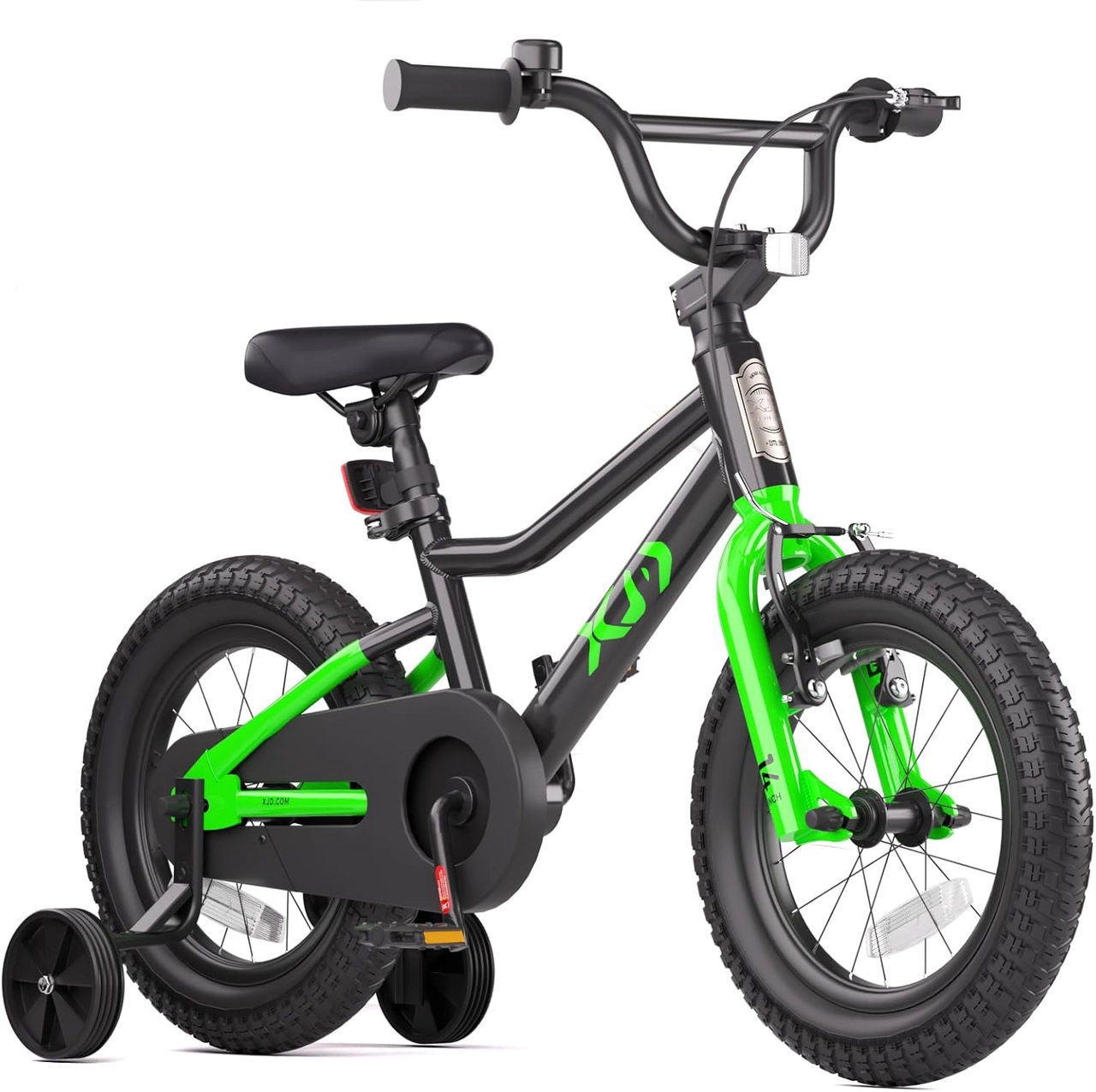 Black XJD Kids' BMX Bicycle with Training Wheels
A Kids' BMX Bike with training wheels offered in 12 Inch, 14 Inch and 16 Inch labels. Use it as a comparison option when the rider’s measurements indicate one of those sizes.
Prepare the bike and helmet correctly
Before use, follow the exact product manual for assembly, adjustments, maintenance, load limits, compatibility and torque requirements. Those details are not established by the catalog information supplied here. If anything is unclear, loose, damaged or difficult to adjust, use a qualified bicycle mechanic.
The child should wear a bicycle helmet that fits properly, sits level on the head and has straps adjusted according to the helmet manufacturer’s instructions. Recheck the fit rather than relying on the helmet’s labeled size alone.
Make the decision
Measure the child’s height and inseam now, shortlist the matching wheel size from the table, and have the child try that bicycle. Put the child on it only if they can stand over it, reach the controls, steer and brake confidently; otherwise, change the size or postpone the ride.
Bikes for your next adventure
-

Kids Bike Helmet by XJD for Boys & Girls – Black, Blue, Green, Pink, Purple
The XJD Kids Bike Helmet covers a wide 2-to-8-year age range thanks to two head-…$59.99
-
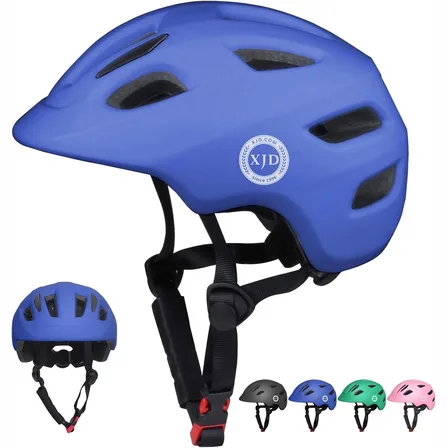
Blue XJD Kids' Bike Helmet, Adjustable Fit – Sizes XS & S
The Blue XJD Kids' Bike Helmet is a lightweight, adjustable helmet for toddlers …$20.39
-

Kids Bike Helmet by XJD for Girls – Pink
The XJD Kids Bike Helmet in Pink is a lightweight multi-sport helmet for girls r…$59.99
$99