

Can you ride a bike with a baby carrier
Yes, but only with a purpose-built child bicycle seat or trailer that is compatible with your bike and approved for your baby; never ride while wearing the baby in a body carrier.
What “baby carrier” needs to mean
A wearable sling, wrap or backpack is not bicycle passenger equipment. It does not attach the child to the bicycle, and it can expose the baby to crushing or impact if you fall. If that is the carrier you meant, the answer is no.
A bicycle-mounted child seat or child trailer is a different product. Riding may be possible only when its manufacturer says your child and bicycle meet every stated requirement. Because readiness, load limits and compatibility are not supplied here, check the exact carrier manual, bicycle manual and your child’s pediatrician before riding. Do not guess from age alone.
Measure and compare before buying
Record the child’s current weight and height, then compare both with the carrier manufacturer’s stated minimums and maximums. Confirm any developmental requirements in the manual as well. A baby who fits a stated age label may still not meet the product’s physical or developmental conditions.
Next, identify your bicycle’s exact model, frame size and wheel size. Compare them with the carrier’s compatibility list. Check whether the required mounting area is present and unobstructed by cables, accessories or unusual frame shapes. For a trailer, confirm the hitch is explicitly compatible with the bicycle and axle. For a mounted seat, verify the specified rack or frame-mount requirements.
Also consider the adult rider’s fit and control. The combined setup changes balance, starting, stopping, turning and mounting the bicycle. If any fit, attachment, load or torque instruction is unclear, take the bicycle and carrier to a qualified bicycle mechanic.
Do these checks before the first ride
- Read both manuals: Follow the bicycle and carrier manufacturers’ assembly, compatibility, load and torque instructions exactly.
- Inspect the attachment: Confirm every fastener, restraint and hitch is installed and secured as directed. Ensure nothing can contact a wheel, brake or moving part.
- Check the helmet: Use an appropriate bicycle helmet that fits properly, sits level and has straps adjusted according to its manufacturer’s instructions. Confirm the carrier permits correct helmet positioning.
- Test without the child: Add comparable non-living weight within the carrier’s limits and practice mounting, starting, braking and turning in a traffic-free area.
- Choose a conservative route: Avoid traffic, steep grades, rough surfaces and tight turns while learning how the loaded bicycle responds.
Stop if the bicycle feels unstable, braking or steering is compromised, the carrier shifts, or the child cannot remain positioned as the manual requires.
How the supplied XBikes product is relevant
The supplied catalog item is not a baby carrier and should not be presented as equipment for carrying a baby. The XJD Girls' Bike with Training Wheels, 12/14/16/20 Inch – Purple is a training-wheel bicycle offered in 12, 14, 16 and 20 Inch labels. It is relevant only as a later independent-riding comparison: its size choices help explain how to measure a growing child rather than relying on age or buying oversized equipment. It does not replace a compatible adult bicycle, child seat or trailer for the question on this page.

Fit the child’s later bicycle individually
If you are comparing that training-wheel bicycle for an older child, use these XBikes starting points, then perform an individual fit check:
| Wheel label | Starting age | Rider height |
|---|---|---|
| 12 Inch | 3–4 | 34–40 in / 86–102 cm |
| 14 Inch | 3–6 | 37–45 in / 94–114 cm |
| 16 Inch | 4–7 | 40–48 in / 102–122 cm |
| 20 Inch | 7–12 | 48–60 in / 122–152 cm |
Measure the rider’s standing height and inseam. Have the child try the bicycle and check stand-over clearance, reach, brake control and present confidence. Do not choose a larger size merely to allow room for growth. Height is a stronger starting point than age, and neither replaces an actual fit check.
Make the go-or-no-go decision
Ride with your baby only if the carrier is purpose-built for cycling, the exact manuals confirm child and bicycle compatibility, the installation passes inspection, the helmet fits correctly, and you can control the loaded bicycle confidently. If any requirement is missing or uncertain, do not ride yet: ask the carrier manufacturer, your pediatrician or a qualified bicycle mechanic to resolve it first.
Bikes for your next adventure
-
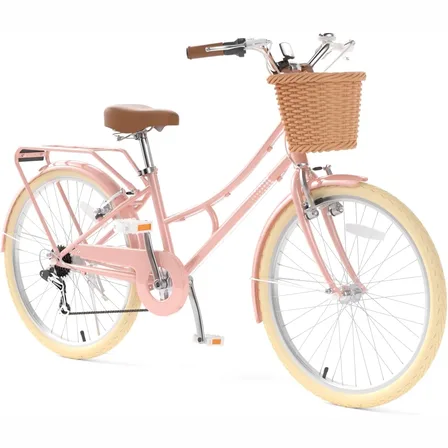
XJD Pink Beach Cruiser for Girls – Rear Rack & V-Brake
The XJD Pink Beach Cruiser for girls is the step-up bike for riders who've outgr…$179.99
$209.99 -
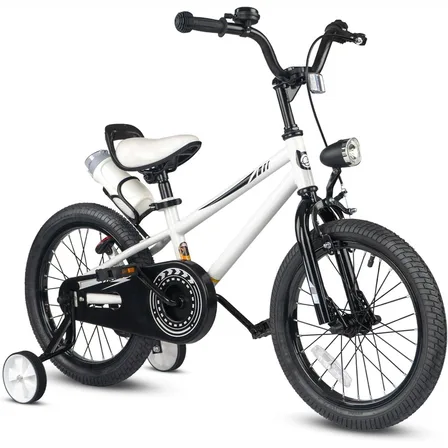
XJD Kids' Training Wheel Bike for Boys & Girls, 12/14/16 Inch – White
The XJD kids' training wheel bike in White is made for riders ages 3–8 (roughly …$169
$199 -

Kids Bike Helmet by XJD for Boys & Girls – Black, Blue, Green, Pink, Purple
The XJD Kids Bike Helmet covers a wide 2-to-8-year age range thanks to two head-…$59.99