

Can you ride a bike with an infant
Do not ride with an infant unless the child can sit unsupported, control their head, wear a properly fitted helmet, and meet every rule for an approved child carrier or trailer. A doll seat, basket, handlebar, rack, or ordinary bicycle seat is not a safe place for an infant.
What must be true before you ride
An infant passenger needs stable head and neck control throughout the trip, including over bumps and during braking. The child must also fit the restraint system and helmet correctly. If any of those conditions is unmet, wait.
Check local passenger and helmet laws, which may impose additional requirements. Then read the exact carrier or trailer manual for its minimum passenger requirements, load limit, harness adjustment, bicycle compatibility, installation, and maintenance. Those details vary, so do not estimate them. Ask the child’s pediatrician if you are uncertain about developmental readiness.
Measure and compare before choosing equipment
Start with the child rather than a calendar age. Confirm that the child can remain sitting upright without support and maintain head control while wearing a helmet. Check the carrier or trailer manual for every required measurement and limit; these may include passenger size and the permitted combined load.
Next, compare those requirements with your bicycle. Verify the specified attachment points, bicycle type, wheel or frame restrictions, and any required hardware. Follow the manual’s assembly and torque instructions exactly. If compatibility is unclear or the mount cannot be secured as directed, use a qualified bicycle mechanic.
A properly fitted bicycle helmet should sit level and remain secure with its straps adjusted according to the helmet manufacturer’s instructions. A helmet that tips backward, shifts easily, or cannot be adjusted correctly is not an acceptable fit.
Choose an infant-carrying system, not a children’s bike
The supplied XBikes products are small bicycles for children learning to ride; none is described as an infant carrier or trailer. They therefore do not answer the immediate equipment need for carrying an infant. Their 12 Inch, 14 Inch, and 16 Inch options are relevant only as future comparison points when the child is ready to operate a bicycle independently.
These particular catalog options help clarify the distinction: each is a child-sized bicycle offered in the same three wheel sizes, while no supplied fact says that any one can carry an infant. A title mentioning a doll seat describes a play feature, not a passenger seat.
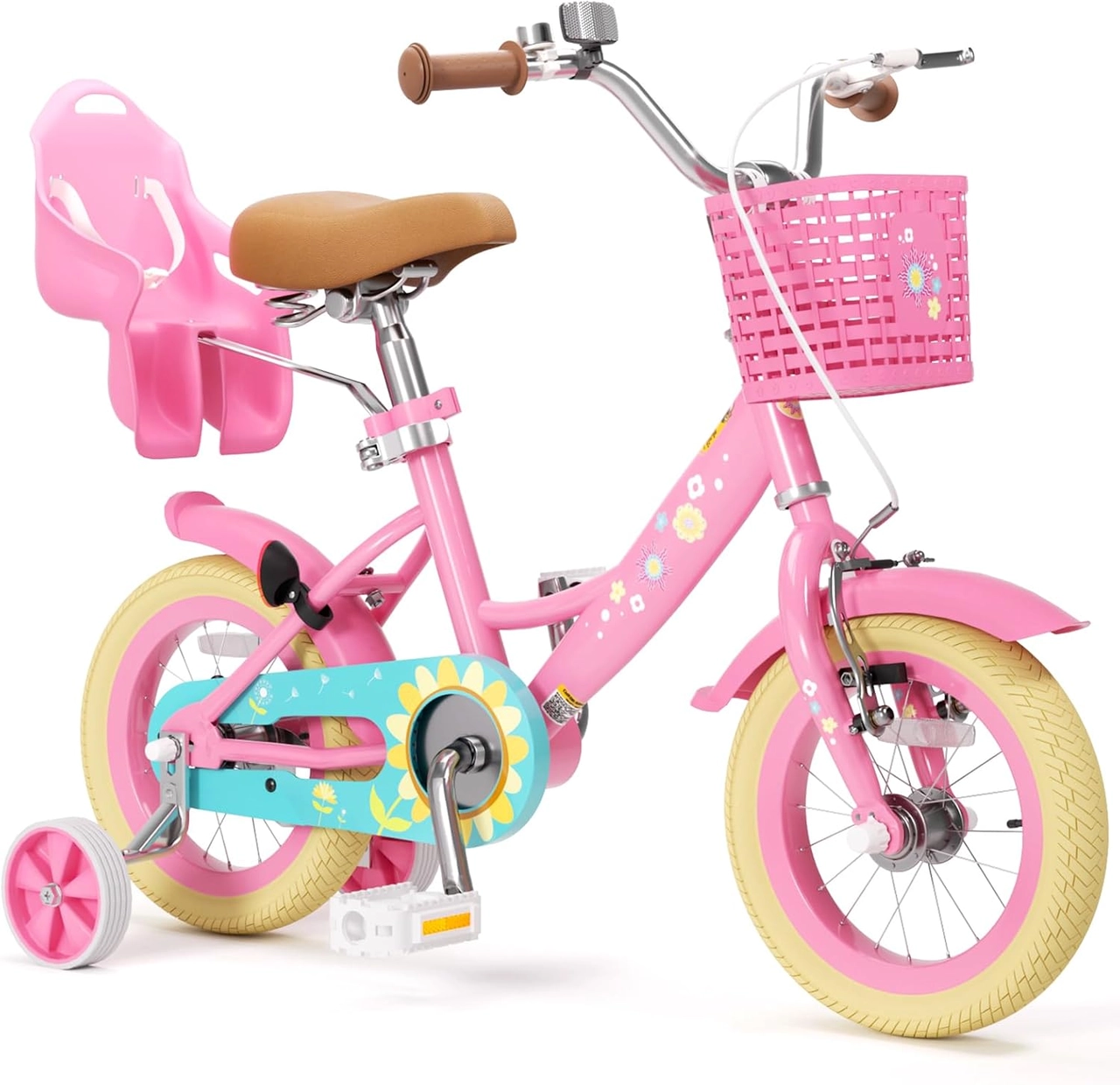 Flower Pink XJD Girls Bike with Doll Seat & Basket
A training-wheel bicycle offered in 12 Inch, 14 Inch, and 16 Inch sizes for later independent riding. Its doll seat and basket are not supplied as infant-passenger equipment.
 Purple XJD Girls' Bike with Doll Seat & Basket
This training-wheel bike offers 12 Inch, 14 Inch, and 16 Inch choices for a future rider. The catalog’s doll-seat wording does not establish infant-carrying compatibility.
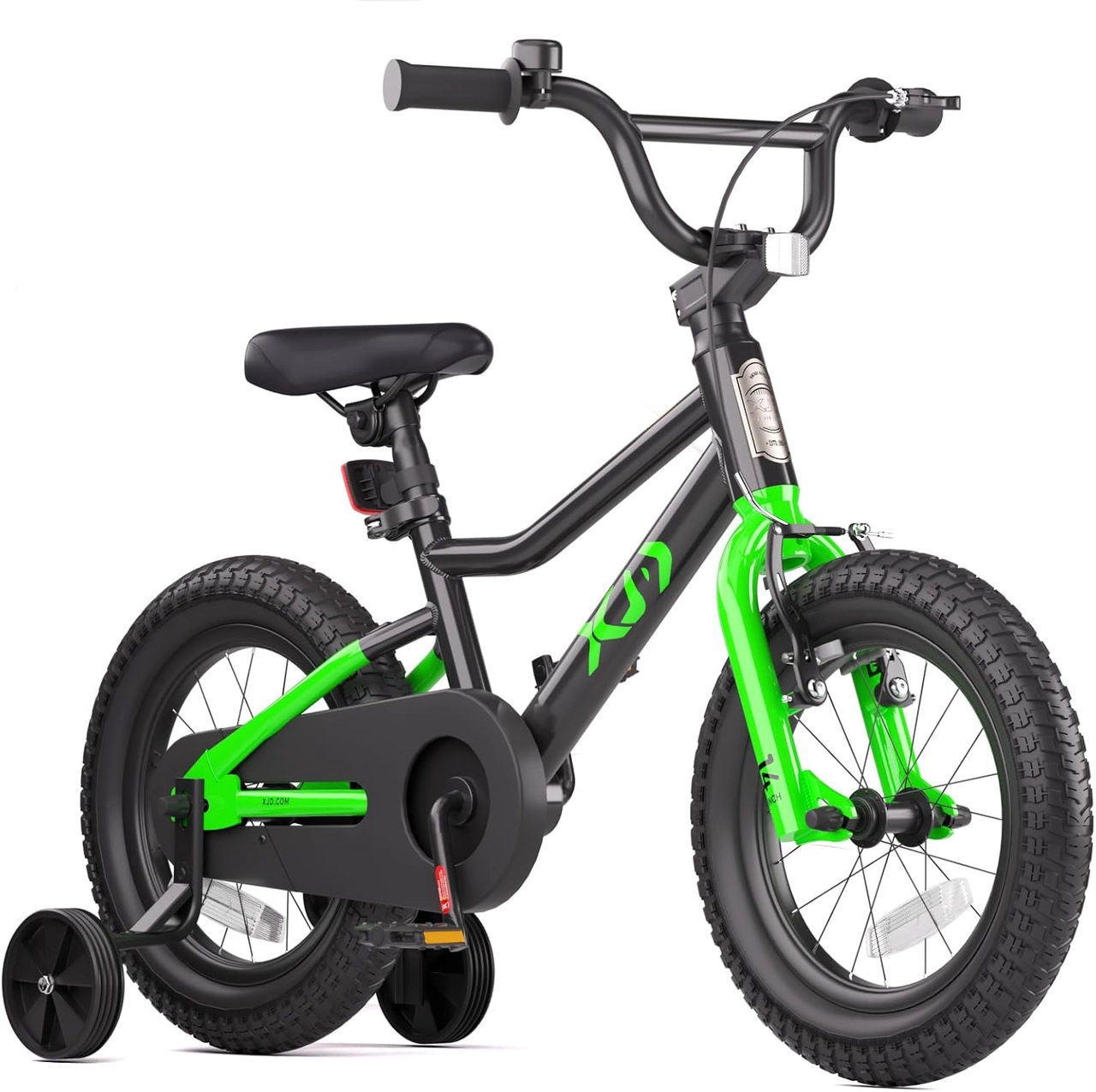 Black XJD Kids' BMX Bicycle with Training Wheels
A kids’ BMX bicycle with training wheels in 12 Inch, 14 Inch, and 16 Inch sizes. It is relevant to later independent riding, not as an infant carrier.
How the three bicycles compare for later use
| Catalog option | Supplied sizes | Relevance |
|---|---|---|
| Flower Pink XJD Girls Bike with Doll Seat & Basket | 12 Inch, 14 Inch, 16 Inch | A training-wheel bike for a future independent rider. The doll seat and basket must not be treated as infant-carrying equipment. |
| Purple XJD Girls' Bike with Doll Seat & Basket | 12 Inch, 14 Inch, 16 Inch | Another training-wheel comparison with the same supplied wheel-size choices. Its doll seat is not evidence of passenger compatibility. |
| Black XJD Kids' BMX Bicycle with Training Wheels | 12 Inch, 14 Inch, 16 Inch | A kids’ BMX bicycle with training wheels, intended for comparison when a child is ready to ride rather than travel as an infant passenger. |
Fit the child’s own bicycle when that time comes
Age is only a starting point. XBikes lists 12 Inch for ages 3–4 and heights 34–40 in (86–102 cm), 14 Inch for ages 3–6 and heights 37–45 in (94–114 cm), and 16 Inch for ages 4–7 and heights 40–48 in (102–122 cm). These ranges do not make any size appropriate for an infant.
When the child is developmentally ready to ride, measure standing height and inseam, then have the child try the bicycle. Check stand-over clearance, reach to the controls, ability to operate the brakes, and current confidence. Do not buy an oversized bicycle solely for growth. If two age bands overlap, use the child’s measurements and actual control rather than age to decide.
Your next decision
- If the infant cannot sit unsupported, control their head, and wear a correctly fitted helmet, postpone the ride.
- If the child appears ready, select only a purpose-built carrier or trailer whose manual explicitly accepts the child and your bicycle.
- Verify the restraint, mounting, load, maintenance, and assembly requirements from that exact manual; consult a qualified mechanic when installation or compatibility is uncertain.
- Treat the three supplied XBikes bicycles only as later independent-riding options, after measuring the child and completing an individual fit check.
For today’s ride, the deciding evidence is not an age guess or a bicycle accessory: it is the infant’s demonstrated readiness plus explicit approval in the exact passenger system’s instructions.
Bikes for your next adventure
-

Kids Bike Helmet by XJD for Boys & Girls – Black, Blue, Green, Pink, Purple
The XJD Kids Bike Helmet covers a wide 2-to-8-year age range thanks to two head-…$59.99
-

Kids Bike Helmet by XJD for Girls – Pink
The XJD Kids Bike Helmet in Pink is a lightweight multi-sport helmet for girls r…$59.99
$99 -

XJD Kids Bike for Girls – Pink, 12/14/16/20 Inch with Training Wheels
The XJD Kids Bike for Girls in Pink is a training-wheel bike built to carry your…$139
$159