

Do i get a 26 or 27 inch bike
Choose a 26-inch bike only if the rider is over 60 in (153 cm) and passes an in-person fit check. Do not choose a 27-inch bike by name alone: XBikes has no supplied 27-inch height standard, so compare the actual bike’s stand-over clearance, reach and brake control.
The short answer: 26 inches has a clear starting point
For a youth or adult taller than 60 in (153 cm), a 26-inch wheel bike is the relevant XBikes starting point. Height is only the first filter, however. The rider still needs to try the exact bicycle rather than assuming every frame built around that wheel size will fit alike.
A “27-inch” description is not interchangeable with 26 inches. Because no verified 27-inch age or height range is supplied here, do not estimate its fit by adding an inch to the 26-inch threshold. Check the exact model’s sizing information, then test the individual bicycle. If that cannot be done confidently, ask a qualified bicycle mechanic to assess it.
Measure the rider before comparing bikes
Measure standing height without shoes, with the rider upright against a wall. Then measure inseam from the floor to the crotch while the rider stands naturally. Use height to find the initial wheel-size range and inseam to evaluate clearance over the actual frame.
Age should not settle a close decision. The XBikes standard places 24-inch bikes at ages 10–14 and heights of 54–64 in (137–163 cm), while 26-inch bikes are for youth and adults over 60 in (153 cm). Those ranges overlap in height around the transition, which makes an individual fit check essential.
| Question | What to compare |
|---|---|
| Is the rider over 60 in (153 cm)? | A 26-inch bike is an appropriate starting point. |
| Is the rider 54–64 in (137–163 cm)? | Compare the exact 24- and 26-inch bicycles rather than deciding by age. |
| Is the bike described as 27 inches? | Use its model-specific sizing information and an actual fit test; no XBikes numerical fit standard is supplied for that size. |
Make the fit check decisive
Have the rider straddle the bicycle and confirm suitable stand-over clearance instead of merely being able to touch the floor from the saddle. Next, seat the rider and check whether the handlebar can be reached without an uncomfortable stretch, twisting or locked arms.
The rider must also be able to operate the brakes comfortably and maintain steering control. Ask for a slow start, stop and turn in a controlled area. Hesitation caused by excessive reach, difficulty braking or an unwieldy frame is evidence that the bike is too large or otherwise unsuitable, even when the height chart appears to match.
Current confidence matters. Do not buy an oversized bicycle for future growth. A rider who cannot start, stop and steer with control needs a better-fitting option now, not practice on a bike that is presently too large.
What the supplied products can and cannot show
The Light Pink XJD Girls' Bicycle with Basket & Training Wheels is offered in 12 Inch, 14 Inch, 16 Inch and 20 Inch labels. The Blue XJD Girls Bike with Training Wheels – 12/14/16 Inch is offered in 12 Inch, 14 Inch and 16 Inch labels. These particular catalog options help show how clearly smaller wheel choices should be matched to a rider, but neither includes 26- or 27-inch sizing. They are nearest-size catalog comparison points rather than substitutes for either requested size.
 Light Pink XJD Girls' Bicycle with Basket & Training Wheels
Available in 12, 14, 16 and 20 Inch labels, this model provides smaller-size comparison points only; it is not a substitute for a requested 26- or 27-inch bicycle.
 Blue XJD Girls Bike with Training Wheels – 12/14/16 Inch
Its supplied 12, 14 and 16 Inch options are relevant only to riders who fit those smaller ranges, not as equivalents to either 26- or 27-inch sizing.
These training-wheel bikes are relevant only if the intended rider actually belongs in one of their listed sizes after measurement and a fit check. For reference, XBikes starts 12 inches at 34–40 in (86–102 cm), 14 inches at 37–45 in (94–114 cm), 16 inches at 40–48 in (102–122 cm), and 20 inches at 48–60 in (122–152 cm). The supplied product titles and labels do not establish fit by themselves.
Before choosing between 26 and 27 inches
- Record the rider’s standing height and inseam.
- If height is over 60 in (153 cm), put the exact 26-inch bike on the trial list.
- Obtain the exact 27-inch model’s sizing guidance; do not infer it from the wheel label.
- On both bicycles, compare stand-over clearance, handlebar reach, brake access and controlled starting, stopping and turning.
- Choose only the bicycle the rider can control confidently now.
Fit a bicycle helmet so it sits level, fits properly and uses its straps according to the helmet manufacturer’s instructions. Follow the exact bicycle manual for assembly, maintenance, compatibility, load limits and torque; when instructions are missing or uncertain, use a qualified bicycle mechanic.
The decision is therefore specific: start with 26 inches only for a rider over 60 in (153 cm), and select 27 inches only when that exact bike’s guidance and hands-on fit are demonstrably better for the measured rider.
Bikes for your next adventure
-
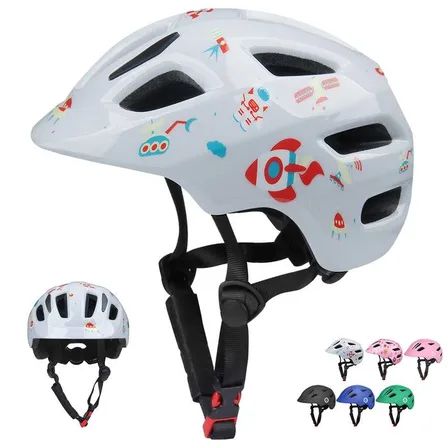
White Astronaut Bike Helmet for Kids by XJD – Toddler to Youth Sizes
4 reviews
The XJD White Astronaut kids' bike helmet is made for toddlers through younger e…$59.99
-
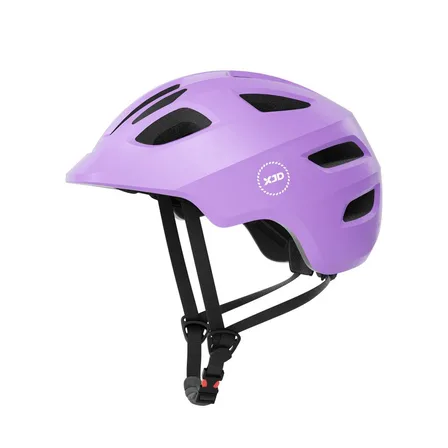
Girls' Bike Helmet from XJD – Purple
The XJD kids bike helmet in purple is a multi-sport helmet built for toddlers an…$59.99
$49 -

XJD Boys 12/14/16" Training Wheel Bike – Blue
The XJD Boys Bike in Blue is a training wheel bike for riders 71–122 cm tall—rou…$169
$199