

Do kids need lightweight bikes
Kids do not need the lightest bike available, but they do need one they can balance, steer, stop and move confidently. Fit and control matter more than a “lightweight” label.
When bike weight matters
A lighter bike can be easier for a child to start, turn, recover from a wobble and push up a slope. It may also be simpler to pick up after setting it down. Weight becomes especially noticeable for a small or hesitant rider, or when the bicycle must be carried regularly.
However, low weight cannot rescue poor fit. A light bicycle that is too tall, too long or difficult to brake may be harder to control than a somewhat heavier bicycle that fits correctly. Treat weight as one comparison point after confirming wheel-size range, stand-over space, reach and brake operation.
Measure the rider before comparing bikes
Measure the child without shoes against a wall for current height. Then measure inseam from the floor to the crotch while the child stands naturally. Age can provide a starting point, but it should not decide the purchase.
Use these XBikes ranges only to identify sizes worth trying:
| Wheel size | Starting age | Rider height |
|---|---|---|
| 12 Inch | 3–4 | 34–40 in / 86–102 cm |
| 14 Inch | 3–6 | 37–45 in / 94–114 cm |
| 16 Inch | 4–7 | 40–48 in / 102–122 cm |
| 18 Inch | 5–9 | 43–52 in / 109–132 cm |
| 20 Inch | 7–12 | 48–60 in / 122–152 cm |
| 24 Inch | 10–14 | 54–64 in / 137–163 cm |
| 26 Inch | Youth and adults | Over 60 in / 153 cm |
Overlapping ranges are normal. Prioritize measured height, inseam, reach, brake control and present confidence over age alone. Do not move up merely because a child is near a range boundary.
Use a hands-on control check
Have the child try the bicycle rather than buying an oversized model for future growth. During the check, look for all of the following:
- The child can straddle the bicycle with usable clearance instead of being pressed against the frame.
- The seated riding position does not force an uncomfortable stretch to the handlebar.
- The child can steer through gentle turns without fighting the bicycle or losing posture.
- Each brake control can be reached and operated reliably with the child’s normal hand position.
- The child can start, stop, dismount and walk the bicycle without needing an adult to manage it.
If those tasks are difficult, reassess fit before blaming weight. If two correctly fitted bicycles feel equally controllable, then the easier one for the child to maneuver, push and pick up is the more useful lightweight choice.
Compare weight without relying on a label
No universal weight cutoff determines whether a kids’ bike is light enough. Ask for the complete bicycle weight when it is documented, and make sure compared figures include equivalent equipment. A bare-frame figure and a ride-ready figure are not meaningful equivalents.
When verified weights are unavailable, do not guess from appearance, wheel size or product photographs. Let the child perform the same short sequence with each correctly fitted option: walk it, turn it around, lift it just enough to reposition it, start, brake and dismount. The relevant result is controlled effort, not which bicycle an adult can lift most easily.
How the supplied cruiser options relate
The XJD 24-Inch Green Beach Cruiser Bike with U-Brake is offered in Green / 24 Inch, Pink / 24 Inch and Pink / 26 Inch variants. The Pink XJD Beach Cruiser Bike, 24"/26", U-Brake is offered in 24 Inch and 26 Inch variants. These options help compare two relevant wheel-size starting points and confirm that brake reach must be checked, but the supplied catalog facts include no bicycle weights. Neither product can therefore be described as lightweight from the available information.
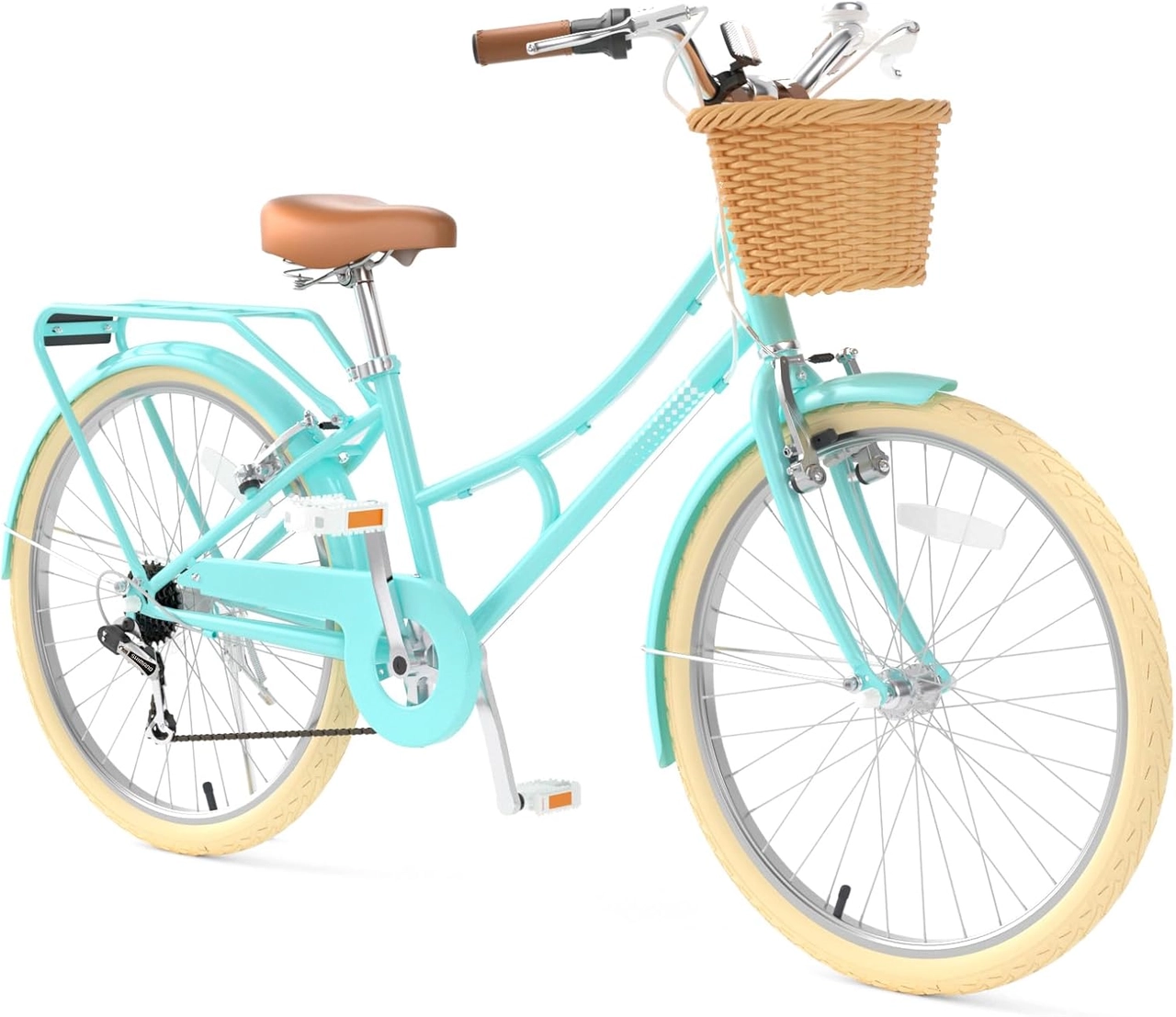 XJD 24-Inch Green Beach Cruiser Bike with U-Brake
A 24- or 26-inch beach cruiser comparison point with a U-brake. Available facts do not include weight, so assess the exact variant’s fit, brake reach and handling before considering it relevant.
 Pink XJD Beach Cruiser Bike, 24"/26", U-Brake
This pink XJD beach cruiser offers 24-inch and 26-inch variants with a U-brake. It is relevant only when the rider matches the appropriate size starting point and passes an individual fit check; no weight is supplied.
For a rider measuring 54–64 in / 137–163 cm, a 24 Inch variant is a starting point for an individual fit check. A 26 Inch variant is a starting point for youth or adults over 60 in / 153 cm. The sizes are not interchangeable, and color or title wording does not establish fit. Compare only the exact selected variant, because each product has more than one available size label.
Make the decision in the right order
- Record the child’s current height and inseam.
- Use the XBikes ranges to choose the wheel size or sizes to try.
- Reject any bike with unsuitable stand-over clearance, reach or brake control.
- Among the bikes that fit, compare documented complete weights or repeat the same handling trial.
- Choose the option the child controls confidently now, rather than an oversized bicycle intended for growth.
A properly fitting helmet is still essential: it should sit level, fit correctly and use its straps according to the manufacturer’s instructions. Follow the exact bicycle manual or consult a qualified bicycle mechanic for assembly, maintenance, load limits, compatibility and torque information.
The practical answer is simple: pursue lower weight only among bikes that already fit. Measure the child, test control and brake reach, then choose the correctly sized bicycle that takes less effort to handle.
Bikes for your next adventure
-
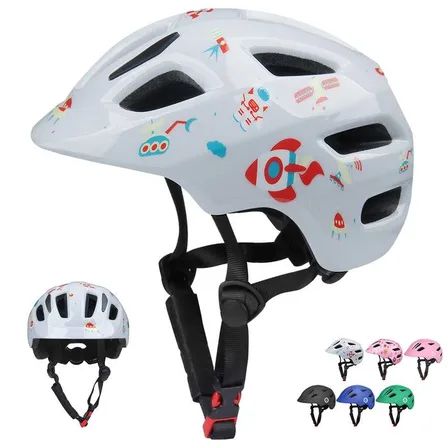
White Astronaut Bike Helmet for Kids by XJD – Toddler to Youth Sizes
4 reviews
The XJD White Astronaut kids' bike helmet is made for toddlers through younger e…$59.99
-
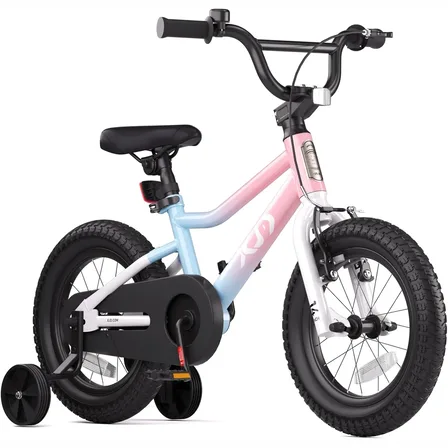
XJD Girls BMX Bike 12/14/16 Inch with Training Wheels – Pink Blue
The XJD Girls BMX Bike in Pink/Blue is built as a first pedal bike for kids roug…$99.99
$119.99 -
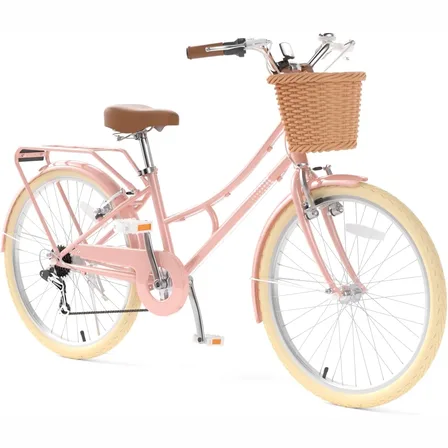
XJD Pink Beach Cruiser for Girls – Rear Rack & V-Brake
The XJD Pink Beach Cruiser for girls is the step-up bike for riders who've outgr…$179.99
$209.99