

Do little kids bike seat
Little kids should sit on a bike seat only when the bicycle fits: measure height and inseam, then confirm stand-over, reach, braking and control in person.
What “seat” should mean for a little rider
If the question is whether a little child should be able to sit on the saddle, the answer is yes—but saddle contact alone does not prove that the bike fits. The child must also be able to get on and off, stand over the bicycle, reach the handlebar comfortably, operate the brakes and steer without struggling.
Do not choose an oversized bicycle simply so the child can grow into it. A seat lowered on a frame that is too large does not correct excessive reach, difficult stand-over or poor control.
Measure the child before comparing bicycles
- Measure standing height: Have the child stand straight without shoes against a wall. Record the measurement from the floor to the top of the head.
- Measure inseam: With feet slightly apart, measure from the floor to the crotch. This helps assess whether the child can stand over the bike and manage the saddle position.
- Note current ability: Record whether the child can start, stop, steer and use a brake confidently. A nervous beginner may need a more manageable fit than a confident rider of the same height.
Use the measurements to select a starting wheel size, then have the child try the actual bicycle. Frame shape, saddle adjustment and handlebar reach can differ even when wheel labels match.
Use wheel size as a starting point
| Wheel size | Age starting point | Rider-height starting point |
|---|---|---|
| 12 Inch | 3–4 | 34–40 in / 86–102 cm |
| 14 Inch | 3–6 | 37–45 in / 94–114 cm |
| 16 Inch | 4–7 | 40–48 in / 102–122 cm |
| 18 Inch | 5–9 | 43–52 in / 109–132 cm |
| 20 Inch | 7–12 | 48–60 in / 122–152 cm |
| 24 Inch | 10–14 | 54–64 in / 137–163 cm |
| 26 Inch | Youth and adults | Over 60 in / 153 cm |
Age overlaps are intentional and should never override the child’s measured height or an individual fit check. For many children described as “little kids,” 12-, 14-, 16- or 18-inch wheels will be the relevant starting points, depending on the measurements. A child near a boundary should try the candidate sizes rather than automatically moving up.
Check the seat and controls on the actual bike
Ask the child to mount and dismount while an adult stabilizes the bicycle. Check that the child can stand over it without being trapped by the frame, sit in a balanced position and reach the handlebar without stretching or locking the arms.
Next, confirm that each brake control can be reached and operated while the child maintains a secure grip. The child should demonstrate controlled starting, steering and stopping in a suitable traffic-free area. If the child looks tense, cannot control the brakes or loses balance because of the bike’s dimensions, the fit is not acceptable even if the age label appears suitable.
Adjust the saddle only within the limits and procedure in the exact bicycle manual. For assembly, fastener torque, maintenance, load limits or component compatibility, follow that manual or use a qualified bicycle mechanic.
How the supplied catalog bicycles relate
The supplied products begin at 24 inches, so they help show when a bicycle has moved beyond the usual little-kid starting sizes. They are comparison points for an older or taller rider, not substitutes for a correctly fitted 12-, 14-, 16- or 18-inch bicycle.
 XJD 24-Inch Green Beach Cruiser Bike with U-Brake
A 24- or 26-inch cruiser comparison point for riders who meet those larger size starting points; it does not provide a typical little-kid wheel size.
 Pink XJD Beach Cruiser Bike, 24"/26", U-Brake
Available only in 24 Inch and 26 Inch, this cruiser helps distinguish larger youth sizing from the smaller wheel sizes commonly considered for little kids.
XJD 24-Inch Green Beach Cruiser Bike with U-Brake is listed with Green / 24 Inch, Pink / 24 Inch and Pink / 26 Inch options. Pink XJD Beach Cruiser Bike, 24"/26", U-Brake is listed in 24 Inch and 26 Inch. Those labels allow a direct size comparison, but neither product supplies a little-kid wheel size.
Under the XBikes starting points, 24-inch bicycles correspond to ages 10–14 and heights 54–64 in / 137–163 cm; 26-inch bicycles are for youth and adults over 60 in / 153 cm. The rider’s measurements and actual control still decide fit. Do not choose either catalog bicycle for a smaller child merely by lowering its seat.
Make the final seat-and-size decision
- Choose the wheel-size starting point from measured height, using age only as secondary guidance.
- Compare inseam with the actual frame and available saddle adjustment.
- Require comfortable stand-over, handlebar reach and brake operation.
- Reject a bike the child cannot mount, steer or stop confidently.
- Fit a bicycle helmet so it sits level and its straps are used according to the helmet manufacturer’s instructions.
For a little kid, the next step is therefore to measure height and inseam, shortlist the matching small-wheel sizes, and arrange an in-person fit check. Consider either supplied 24- or 26-inch cruiser only if the rider’s measurements fall into those larger starting points and the child can fully control the actual bicycle.
Bikes for your next adventure
-
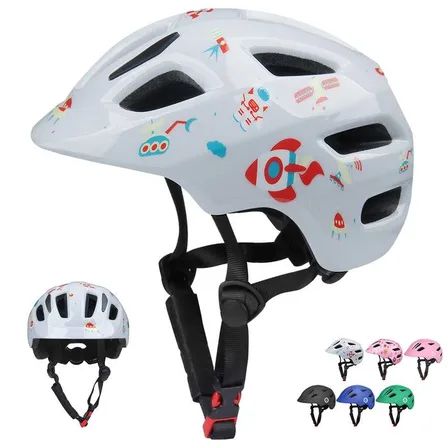
White Astronaut Bike Helmet for Kids by XJD – Toddler to Youth Sizes
4 reviews
The XJD White Astronaut kids' bike helmet is made for toddlers through younger e…$59.99
-
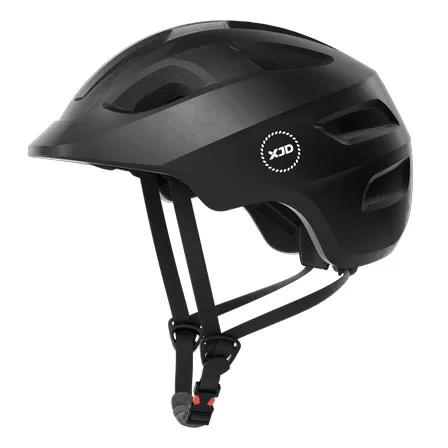
Kids Multi-Sport Bike Helmet by XJD – Black
7 reviews
The XJD Kids Multi-Sport Bike Helmet in Black is a lightweight, adjustable helme…$59.99
$49 -

Light Pink XJD Girls' Bicycle with Basket & Training Wheels
The Light Pink XJD Girls' Bicycle with Basket & Training Wheels is a retro-style…$109.99
$129.99