

Does a 26 inch bicycle refer to the wheel size
Yes. On a bicycle, “26 inch” normally refers to the nominal wheel size, not the frame size or the child’s inseam. Confirm it on the tire marking, then check the rider’s fit and control before choosing the bike.
What “26 inch bicycle” means
The label describes the wheel-size class. It does not mean that every part of the bicycle measures 26 inches, and it does not identify one universal frame size. Two bicycles with 26-inch wheels can have different frame shapes, saddle positions and reach.
“26 inch” is also a nominal label rather than a promise that a tape measure will show exactly 26 inches across every mounted tire. Tire width, tread and inflation can affect the outside measurement. For identifying the wheel size, the size printed or molded on the tire sidewall is more useful than measuring the tire’s outer edge.
What to inspect and measure
Begin with the bicycle, then measure the rider. These checks answer different questions: the tire marking identifies the wheel class, while the rider checks show whether that particular bicycle fits.
- Read the tire sidewall: Look for the size designation on an existing tire. Check both sides if it is difficult to find. When replacing a tire, tube or wheel part, use the exact markings and the product manual, or ask a qualified bicycle mechanic to confirm compatibility.
- Measure rider height: Have the rider stand straight without shoes against a wall and measure from the floor to the top of the head.
- Measure inseam: With feet slightly apart, measure from the floor to the crotch. This helps assess clearance but does not replace trying the complete bicycle.
- Try the bike: Check that the rider can stand over it with practical clearance, mount and dismount comfortably, steer without stretching, and reach and operate the brakes reliably.
Do not use the wheel label alone to decide fit. A child who cannot comfortably start, stop, turn or use the brakes is not ready for that bicycle, even if a chart appears to place them in the right range.
How 26 inches compares with nearby sizes
XBikes uses the following starting points. Height is more useful than age, but neither replaces an individual fit check.
| Wheel size | Starting age guidance | Rider height |
|---|---|---|
| 20 Inch | Ages 7–12 | 48–60 in / 122–152 cm |
| 24 Inch | Ages 10–14 | 54–64 in / 137–163 cm |
| 26 Inch | Youth and adults | Over 60 in / 153 cm |
The ranges overlap because children with the same age or height can differ in leg length, reach and confidence. For a rider near a boundary, compare the complete bicycles rather than automatically moving up. The American Academy of Pediatrics’ guidance supports having the child try the bicycle and avoiding an oversized bike bought simply for future growth.
How the supplied XBikes option is relevant
The 26-Inch XJD Beach Cruiser Bike for Girls – Purple, V-Brake is directly relevant because its catalog options include 20 Inch, 24 Inch and 26 Inch sizes, including Purple / 26 Inch. Those labels make it useful for understanding that 26 Inch is a selectable wheel-size designation and for comparing the adjacent catalog size choices. They do not, by themselves, establish that any version fits a particular rider.
The product display below helps connect the 26-inch wording in the title with the supplied size options. Use it to identify the intended option, then confirm rider measurements, stand-over clearance, reach and brake control on the actual bicycle.

Do not treat the 20 Inch or 24 Inch options as equivalent to 26 Inch. They are smaller comparison points with their own height and age starting ranges. Likewise, the wording “for Girls” is part of the exact catalog title, not evidence of fit; the rider’s body dimensions and ability to control the bicycle remain decisive.
What to do before riding
Once the size appears suitable, have the rider perform a practical check in a controlled area. The rider should be able to get on and off without struggling, remain balanced, turn the handlebar comfortably, stop under control and operate the brakes without an awkward reach. Current confidence matters: a technically reachable bicycle can still be too demanding if the rider cannot manage it predictably.
Follow the exact product manual for assembly, adjustment, maintenance, load limits and component compatibility. If the instructions are unavailable or any adjustment is uncertain, use a qualified bicycle mechanic rather than guessing at a procedure or setting.
A properly fitting bicycle helmet is also essential. Following U.S. Consumer Product Safety Commission guidance, choose a helmet that fits properly, sits level and has straps adjusted according to its manufacturer’s instructions.
The 26-inch decision
Read “26 inch bicycle” as a wheel-size label. Next, verify the tire marking, measure the rider’s height and inseam, and compare the rider with the over-60-inch / 153-centimeter starting point. Choose a 26-inch option only if the actual bicycle also provides comfortable clearance, reach, braking and control; otherwise, compare the distinct 24-inch or 20-inch options rather than buying extra size for growth.
Bikes for your next adventure
-

26-Inch XJD Beach Cruiser Bike for Girls – Purple, V-Brake
This XJD 26-inch purple beach cruiser is sized for big kids and teens — suggeste…$218.49
$229.99 -
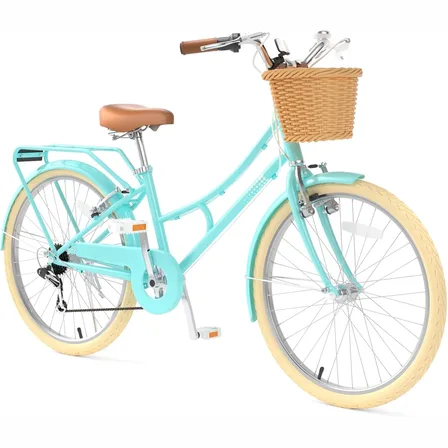
XJD 24-Inch Green Beach Cruiser Bike with U-Brake
This XJD 24-inch beach cruiser in green is made for riders about 4'8" to 5'4" ta…$159.99
$199.99 -
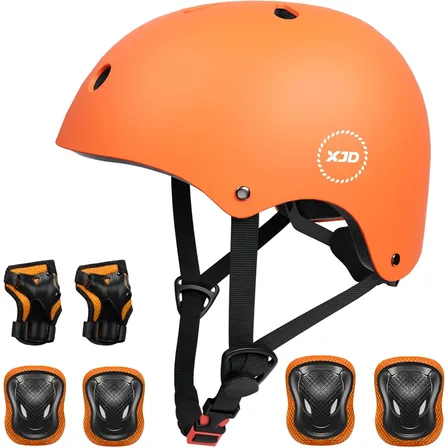
Orange Kids Helmet & Pad Set by XJD – Sizes S & M
The Orange XJD Kids Helmet & Pad Set is built for children around 3 to 8 years o…$24.64