

How big is a 20inch bike
A 20-inch bike has wheels about 20 inches in diameter. At XBikes, it is a starting point for riders 48–60 inches (122–152 cm) tall, usually ages 7–12, but the child must try it for fit and control.
What “20-inch” actually measures
The 20-inch label describes the bicycle’s nominal wheel size, not its overall length, frame height or seat height. Two 20-inch bikes can therefore feel different because their frames, handlebars and riding positions may differ.
Do not measure the bicycle from the floor to the seat and expect 20 inches. For shopping, compare the stated wheel-size label. For fit, measure the rider and have them try the complete bicycle instead of relying on wheel diameter alone.
Measure the rider before comparing bikes
Start with the child’s height, without shoes, standing straight against a wall. Then measure inseam from the floor to the crotch while the child stands naturally. Height places the rider in the XBikes starting range; inseam helps you check whether the child can stand over the bike comfortably.
Use these neighboring sizes to interpret the result:
| Wheel size | Rider height | Starting age |
|---|---|---|
| 16 Inch | 40–48 in / 102–122 cm | 4–7 |
| 20 Inch | 48–60 in / 122–152 cm | 7–12 |
| 24 Inch | 54–64 in / 137–163 cm | 10–14 |
The overlapping ages and heights are deliberate starting points, not automatic prescriptions. Prioritize measured height, inseam, reach, brake control and current confidence. A child should not be moved to an oversized bicycle merely to leave room for growth.
How a 20-inch bike should fit in person
Have the child try the bicycle in ordinary riding clothes and closed-toe shoes. Check these points before deciding:
- Stand-over: The child can straddle the bicycle with stable footing and without the frame preventing comfortable control.
- Starting and stopping: They can get onto the seat, set off and stop without the bicycle pulling them off balance.
- Reach: They can hold the handlebars without stretching, locking their elbows or losing a comfortable posture.
- Brakes: They can reach and operate the controls confidently while maintaining their grip and steering.
- Confidence: The size does not make turning, balancing or putting a foot down feel intimidating.
If any of these checks fail, do not assume that lowering the seat solves the problem. Compare another model or wheel size. Follow the exact product manual for adjustments and assembly, or ask a qualified bicycle mechanic when the correct setup is uncertain.
How the supplied 20-inch options help
The catalog includes three products with a 20 Inch SKU label, so they are directly relevant comparison options rather than substitute sizes. Their other listed sizes also help a family compare a child near a size boundary; however, a shared wheel-size label does not prove identical geometry or fit.
 26-Inch XJD Beach Cruiser Bike for Girls – Purple, V-Brake
This model includes Mint Green and Pink 20 Inch SKU labels for direct size comparison. It also offers 24 Inch and 26 Inch labels, while Purple is listed only in 26 Inch.
 Light Pink XJD Girls' Bicycle with Basket & Training Wheels
Available in 12 Inch, 14 Inch, 16 Inch and 20 Inch labels, this product provides a directly relevant 20-inch option plus smaller catalog sizes to compare when fit is uncertain.
 Girls' Training Wheel Bike by XJD, 12–20 Inch Wheels – Blue
This training-wheel bike has 12 Inch, 14 Inch, 16 Inch and 20 Inch labels. Its 20 Inch option is relevant, but the rider still needs stand-over, reach, braking and confidence checks.
Light Pink XJD Girls' Bicycle with Basket & Training Wheels is listed in 12 Inch, 14 Inch, 16 Inch and 20 Inch options. Its 20 Inch option matches the wheel size in the title, while the smaller labels provide catalog comparisons for a rider who does not pass the 20-inch fit check.
Girls' Training Wheel Bike by XJD, 12–20 Inch Wheels – Blue likewise has 12 Inch, 14 Inch, 16 Inch and 20 Inch labels. Compare its 20 Inch version through an individual stand-over, reach, braking and confidence check rather than assuming that the title’s size range establishes fit.
26-Inch XJD Beach Cruiser Bike for Girls – Purple, V-Brake includes Mint Green and Pink 20 Inch SKU labels, as well as 24 Inch and 26 Inch labels; Purple is supplied only as 26 Inch. Select the exact SKU carefully: the product title’s 26-inch wording does not make every listed variant 26 inches, and a 24- or 26-inch option is not equivalent to a 20-inch bike.
Make the final size decision
If the rider measures 48–60 inches (122–152 cm), put a correctly identified 20-inch bike on the try list. If the child is near an overlap with 16 or 24 inches, compare actual control rather than choosing from age alone. Reject any option the child cannot straddle, steer, stop or brake confidently.
Complete the decision with a properly fitting bicycle helmet that sits level and has its straps used according to the helmet manufacturer’s instructions. Then verify the exact SKU label and follow that bicycle’s manual for assembly and adjustments. Choose 20 inches only when both the measured range and the hands-on fit check agree.
Bikes for your next adventure
-
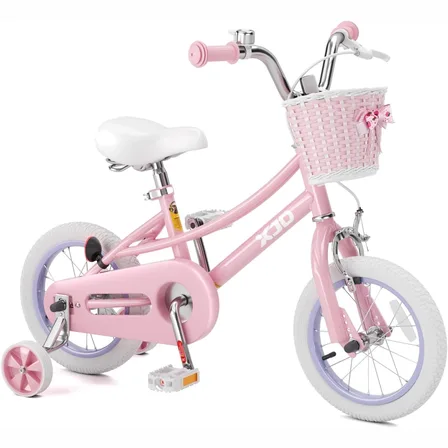
Pink 12/14/16/20" XJD Girls Bike with Training Wheels & Basket
The Pink XJD Girls Bike with Training Wheels & Basket is a first-bike pick f…$65.99
$75.99 -

26-Inch XJD Beach Cruiser Bike for Girls – Purple, V-Brake
This XJD 26-inch purple beach cruiser is sized for big kids and teens — suggeste…$218.49
$229.99 -
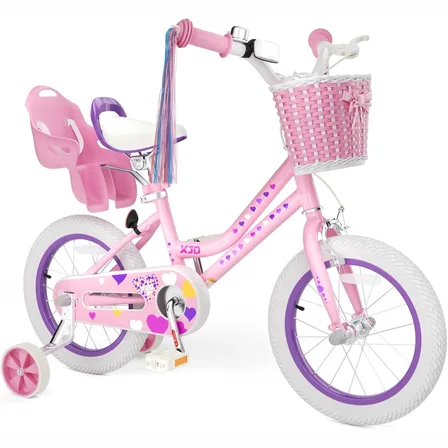
Light Pink XJD Girls' Bicycle with Basket & Training Wheels
The Light Pink XJD Girls' Bicycle with Basket & Training Wheels is a retro-style…$109.99
$129.99