

How fast does a child ride a bike
A child’s cycling speed has no single normal number: measure a comfortable ride over a known distance, then compare the result with that child’s own rides.
How to find the child’s actual speed
Choose a familiar, flat, low-traffic route with a clear start and finish. Record the distance and the child’s moving time, excluding snack breaks and long stops. Calculate average speed by dividing distance by moving time. A cycle computer or location-tracking device can do this automatically, but a measured route and timer are enough.
Repeat the same ride on more than one day. One result can be distorted by wind, tiredness, traffic, hills or frequent junctions. A small set of comparable rides gives a more useful baseline than comparing the child with friends or adults.
What the result does and does not tell you
Average speed describes the whole ride; it does not show how fast the child can briefly sprint. More importantly, a higher number is not automatically a better result. Smooth steering, controlled stopping, awareness of surroundings and enough energy to finish matter more than chasing a target speed.
Compare like with like: the same route, similar conditions and roughly the same amount of stopping. If the child is riding farther, climbing more or handling busier surroundings, a lower average can still represent progress. Note the route, moving time, weather, stops and how the child felt.
Check whether bicycle fit is affecting pace
An awkwardly sized bicycle can make starting, pedalling, steering and stopping harder. Measure the child’s standing height and inseam, then have them try the bicycle. Confirm comfortable stand-over clearance, an easy reach to the controls and the ability to operate the brakes confidently. Do not choose an oversized bicycle merely to allow room for growth.
| Wheel size | XBikes starting point |
|---|---|
| 12 Inch | Ages 3–4; 34–40 in / 86–102 cm |
| 14 Inch | Ages 3–6; 37–45 in / 94–114 cm |
| 16 Inch | Ages 4–7; 40–48 in / 102–122 cm |
| 18 Inch | Ages 5–9; 43–52 in / 109–132 cm |
| 20 Inch | Ages 7–12; 48–60 in / 122–152 cm |
| 24 Inch | Ages 10–14; 54–64 in / 137–163 cm |
| 26 Inch | Youth and adults over 60 in / 153 cm |
These ranges are starting points, not proof of fit or expected speed. Prioritize measured height, inseam, reach, brake control and present confidence over age alone.
How the supplied bicycle options are relevant
The 26-Inch XJD Beach Cruiser Bike for Girls – Purple, V-Brake is relevant when comparing wheel-size starting points for a taller child. Its supplied choices include 20-inch and 24-inch options in Mint Green or Pink, plus 26-inch options in Mint Green, Pink or Purple. This makes the catalog listing useful for narrowing the size category before an individual fit check; it does not establish how fast a child will ride.
These particular options help answer the question because poor size selection can interfere with control and comfortable pacing, while the three represented wheel sizes cover different XBikes height starting points. They should be compared by fit, not treated as speed ratings or interchangeable sizes.

Before timing a ride
Inspect the bicycle for anything that feels loose, damaged or abnormal, and make sure the child can start, steer and stop under control. For assembly, adjustment, maintenance, compatibility, load limits or torque, follow the exact product manual or use a qualified bicycle mechanic; those details cannot be inferred from a product name.
A bicycle helmet should fit properly, sit level and have its straps used according to the helmet manufacturer’s instructions. Choose a route appropriate to the child’s current confidence, with adult supervision suited to the setting. Stop the measurement if conditions or control become uncertain.
What to do next
- Measure height and inseam, then verify stand-over, reach and brake operation on the actual bicycle.
- Select one repeatable route and record distance plus moving time.
- Repeat under similar conditions and compare the child only with their earlier results.
- If pace suddenly falls, ask about discomfort or fatigue and check bicycle condition rather than pushing for speed.
The useful answer is the child’s repeatable, controlled pace on a properly fitting bicycle. Measure that baseline now, then use future rides to judge comfort and progress—not whether the child matches somebody else’s number.
Bikes for your next adventure
-

XJD Girls Bike for Kids Ages 3-8, 12/14/16 Inch with Training Wheels – Purple
The XJD Girls Bike in Purple is a training-wheel bicycle for kids ages 3 to 8, f…$149
$169 -
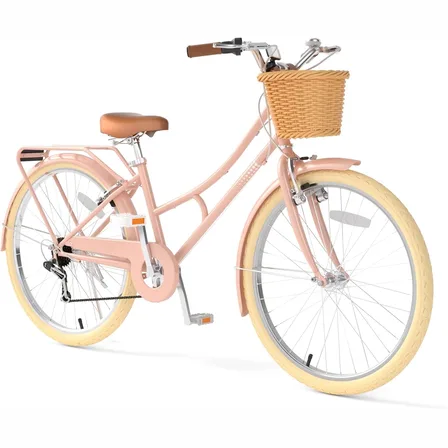
Pink XJD Beach Cruiser Bike, 24"/26", U-Brake
The XJD Pink Beach Cruiser Bike is a single-speed cruiser built for older kids a…$159.99
-

Kids Bike Helmet by XJD for Boys & Girls – Black, Blue, Green, Pink, Purple
The XJD Kids Bike Helmet covers a wide 2-to-8-year age range thanks to two head-…$59.99