

How heavy isa kids bicycle
A kids bicycle has no single standard weight: weigh the complete, ready-to-ride bike and compare it with similar correctly fitted models. The useful question is whether your child can control, stop, start and handle it confidently.
How to find the bicycle’s actual weight
Use the manufacturer’s stated weight only if it clearly applies to the exact wheel size and complete specification you are considering. A model offered in several sizes may not weigh the same in every size. Check whether the stated figure includes fitted items such as training wheels and a basket.
If no verified figure is available, weigh the bicycle at home. Place the complete bike on a suitable scale. If it will not balance securely, weigh yourself while holding it, then weigh yourself without it and subtract the second reading from the first. Repeat the measurement to catch a poor reading.
Prepare every comparison bicycle in the same way. Include the equipment the child will actually ride with, and use the same scale. Otherwise, differences in accessories or measurement methods can make the comparison misleading.
What “too heavy” means for a child
A number alone does not decide whether a kids bicycle is too heavy. Rider size, strength, coordination and confidence differ, while bicycle geometry and fit affect how manageable that weight feels. Compare only bicycles that fit the child now; a lighter but badly fitted bicycle is not the better choice.
During a supervised fit check, ask the child to perform the ordinary movements riding requires:
- Stand over the bicycle with adequate clearance.
- Hold the bicycle upright without it repeatedly tipping away.
- Reach the handlebar without stretching or locking the arms.
- Operate the brakes comfortably and with control.
- Start, steer, stop and get off without struggling against the bicycle.
- Push the bike and recover it from a gentle lean.
If its weight prevents these actions, compare a lighter correctly fitted option or consult a qualified bicycle shop. Do not buy an oversized bicycle merely to allow room for growth.
Choose the comparison size by measured fit
Wheel size is not bicycle weight, but it narrows the group you should compare. Measure the child’s standing height and inseam, then check stand-over clearance, reach, brake control and present confidence. Age is only a starting point.
| Wheel size | Starting age | Rider height |
|---|---|---|
| 12 Inch | 3–4 | 34–40 in / 86–102 cm |
| 14 Inch | 3–6 | 37–45 in / 94–114 cm |
| 16 Inch | 4–7 | 40–48 in / 102–122 cm |
| 18 Inch | 5–9 | 43–52 in / 109–132 cm |
| 20 Inch | 7–12 | 48–60 in / 122–152 cm |
| 24 Inch | 10–14 | 54–64 in / 137–163 cm |
| 26 Inch | Youth and adults | Over 60 in / 153 cm |
These ranges are XBikes starting points, not proof of fit. When age and measured fit suggest different choices, prioritize measured height, inseam, reach, brake control and the child’s current confidence.
How the supplied bicycle helps your comparison
The Light Pink XJD Girls' Bicycle with Basket & Training Wheels is offered under Training Wheel Bikes with 12 Inch, 14 Inch, 16 Inch and 20 Inch SKU labels. Those choices provide relevant wheel-size comparison points for riders whose measurements fall near the corresponding XBikes ranges. The supplied catalog information does not state the bicycle’s weight, so the title cannot be answered for this model without checking its exact product information or weighing the selected size.

Compare the chosen SKU only with bicycles of the same correctly fitted wheel size and in their actual riding configuration. The basket and training wheels are identified in the product title, but their separate weights, removability and compatibility are not supplied. Follow the exact product manual or ask a qualified bicycle mechanic rather than assuming how changes affect assembly or use.
Make weight one part of the decision
Once fit is confirmed, record each candidate’s ready-to-ride weight and let the child try it under close supervision. Notice whether the child can balance, steer, brake and recover from a lean consistently. A modest difference on a scale matters only when it produces a meaningful difference in control.
Also check that the bicycle is assembled and maintained according to its exact manual. For fastener torque, load limits, accessory compatibility and any procedure not documented in the supplied information, use the manual or a qualified bicycle mechanic.
What to do next
- Measure the child’s height and inseam.
- Select a wheel-size starting point from the table, then verify stand-over, reach and brake operation in person.
- Weigh each correctly fitted bicycle complete and ready to ride.
- Have the child demonstrate controlled starting, steering, stopping and dismounting.
- Choose based on manageable weight and successful fit, never age or room for growth alone.
Before riding, provide a bicycle helmet that fits properly, sits level and has its straps adjusted according to the helmet manufacturer’s instructions. The final answer to “how heavy is a kids bicycle?” is therefore the measured ready-to-ride weight of the exact fitted model—and it is acceptable only when your child can manage that weight with confident control.
Bikes for your next adventure
-
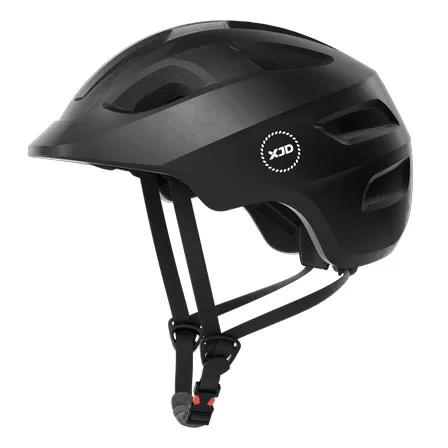
Kids Multi-Sport Bike Helmet by XJD – Black
7 reviews
The XJD Kids Multi-Sport Bike Helmet in Black is a lightweight, adjustable helme…$59.99
$49 -

Kids Bike Helmet by XJD for Girls – Pink
The XJD Kids Bike Helmet in Pink is a lightweight multi-sport helmet for girls r…$59.99
$99 -

Kids Bike Helmet by XJD for Boys & Girls – Black, Blue, Green, Pink, Purple
The XJD Kids Bike Helmet covers a wide 2-to-8-year age range thanks to two head-…$59.99