

How many kids are killed via bikes versus guns
In the United States, guns kill far more children than bicycles do. In 2022, 56 pedalcyclists age 14 or younger died in traffic crashes; firearm deaths among children and teens numbered in the thousands. Those figures show the scale, but they are not an exact like-for-like ratio because the published age ranges and definitions differ.
What the comparison actually measures
“Killed via bikes” can mean a death while riding any pedal cycle, whether or not a motor vehicle was involved. “Killed via guns” can include homicide, suicide, unintentional shootings, legal intervention and undetermined intent. Changing either definition changes the totals.
The 56-bike figure comes from the National Highway Traffic Safety Administration’s 2022 traffic-crash data and covers pedalcyclists age 14 or younger. It does not represent every cycling-related death away from public traffic. The Centers for Disease Control and Prevention reports that firearm injuries were the leading cause of death among ages 1–19 in 2022, but that wider group includes 15- to 19-year-olds. Therefore, dividing the broader firearm total by 56 would produce a misleading ratio.
How to make an honest like-for-like check
Use the CDC’s WISQARS fatal-injury database when you need a precise comparison. Select one year, one geography and exactly the same ages for both queries. Then compare “firearm” with “pedal cyclist,” keeping all injury intents selected unless the question is specifically about accidental deaths.
- Choose the United States and a final-data year.
- Set one identical age range, such as 1–14 or 1–19.
- Record deaths, population and rate per 100,000—not counts alone.
- Check whether the pedal-cyclist definition includes both traffic and nontraffic incidents.
- Separate firearm homicide, suicide and unintentional death if the reason for the risk matters.
Do not compare one year’s bicycle count with another year’s firearm count, or a traffic-only count with every firearm intent without labeling the difference.
What a parent should do next
The comparison does not mean bicycle risk can be ignored. It means the two hazards require different controls. For firearms, prevent unsupervised access: store every firearm locked and unloaded, with ammunition secured separately, and ask about unsecured firearms in homes your child visits. Immediate danger or a threat of self-harm requires emergency help, not a product decision.
For riding, choose routes and supervision appropriate to the child’s present control, visibility and traffic judgment. A bicycle helmet must fit properly, sit level and have its straps adjusted according to its manufacturer’s instructions. Replace guesswork about assembly, maintenance, compatibility, load limits or torque with the exact product manual or a qualified bicycle mechanic.
Fit matters more than an age label
Measure the rider’s standing height and inseam, then check stand-over clearance, reach, brake control and confidence on the actual bicycle. Do not buy an oversized bicycle merely for growth. XBikes’ starting points are 12 Inch at 34–40 in (86–102 cm), 14 Inch at 37–45 in (94–114 cm), 16 Inch at 40–48 in (102–122 cm), and 20 Inch at 48–60 in (122–152 cm). Age ranges are only starting points: 3–4, 3–6, 4–7 and 7–12 respectively.
When these catalog bicycles are relevant
The XJD Kids Bike for Girls – Pink, 12/14/16/20 Inch with Training Wheels offers cataloged 12, 14, 16 and 20 Inch choices. The XJD Pink Girls' Bike – Kids 12/14/16 Inch Training Wheel Bicycle offers cataloged 12, 14 and 16 Inch choices. These training-wheel bicycles do not explain or reduce the national firearm-death count; they are relevant only if your next decision is a properly fitted beginner bicycle in one of those listed sizes.
 XJD Kids Bike for Girls – Pink, 12/14/16/20 Inch with Training Wheels
Relevant only as a fit-based riding option, this training-wheel bicycle has cataloged 12, 14, 16 and 20 Inch choices. It does not inform or address firearm mortality statistics.
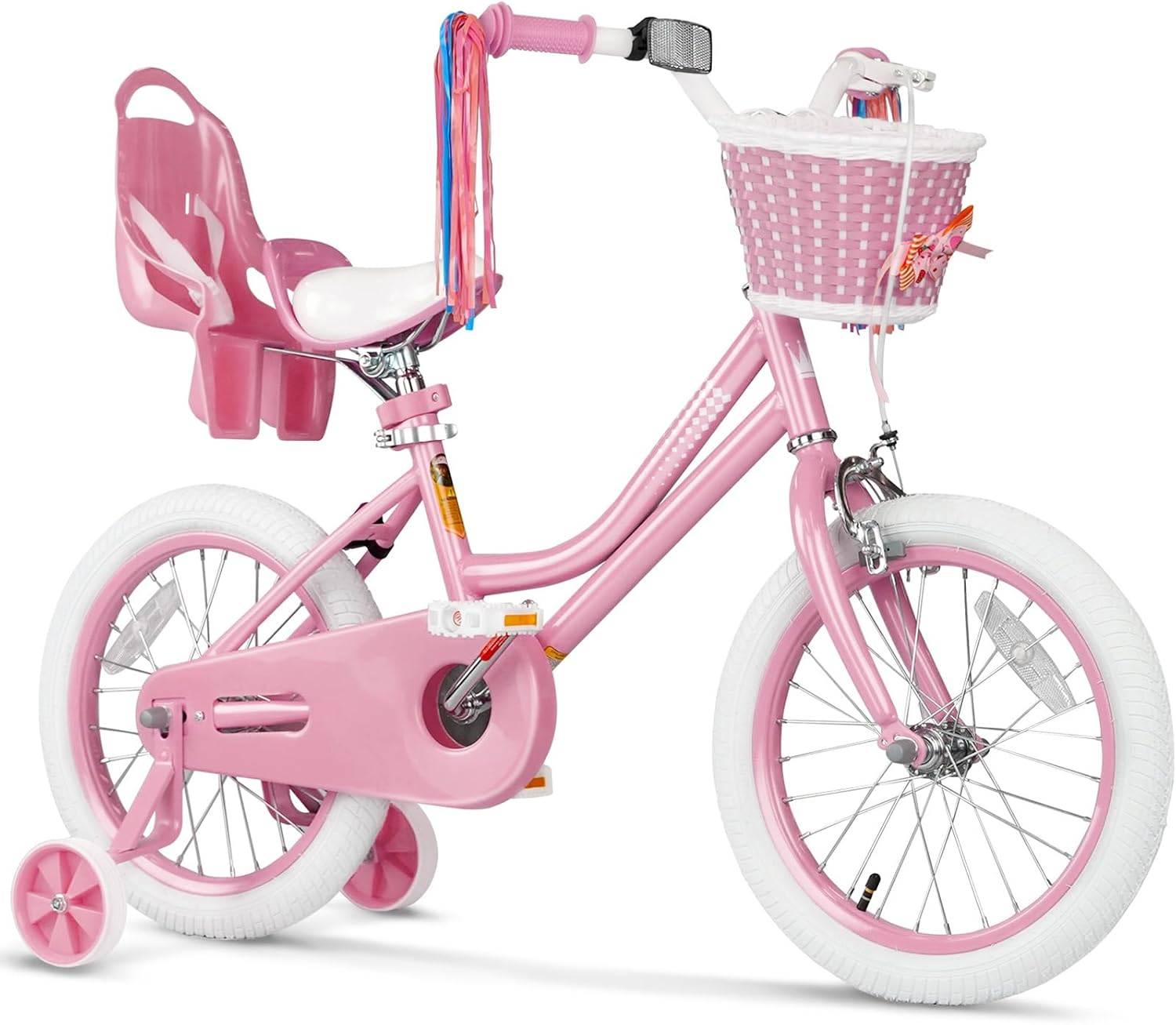 XJD Pink Girls' Bike – Kids 12/14/16 Inch Training Wheel Bicycle
This training-wheel bicycle provides cataloged 12, 14 and 16 Inch choices for an individually measured rider. Its Kids wording is a catalog label, not evidence of fit or safety.
Treat the word “Kids” in either title as a catalog label, not proof of fit. Compare the child’s measurements with the size starting points, then require a hands-on check of stand-over, reach, brake operation and control. Training wheels also do not substitute for a helmet, supervision or a suitable riding location.
The decision to take from the numbers
For a factual mortality comparison, rerun both causes in WISQARS with the same year, ages and scope; the headline answer remains that U.S. child firearm deaths greatly outnumber child bicycle deaths. At home, address firearm access separately and urgently. Buy either listed bicycle only when its available wheel size fits the measured rider now—not because the mortality comparison makes cycling automatically safe.
Bikes for your next adventure
-

Kids Bike Helmet by XJD for Boys & Girls – Black, Blue, Green, Pink, Purple
The XJD Kids Bike Helmet covers a wide 2-to-8-year age range thanks to two head-…$59.99
-

Kids Bike Helmet by XJD for Girls – Pink
The XJD Kids Bike Helmet in Pink is a lightweight multi-sport helmet for girls r…$59.99
$99 -

XJD Kids Bike for Girls – Pink, 12/14/16/20 Inch with Training Wheels
The XJD Kids Bike for Girls in Pink is a training-wheel bike built to carry your…$139
$159