

How many kids rode a bike in 2014
There is no single verified number for how many kids rode a bike in 2014. The answer depends on the country, age range, survey, and meaning of “rode.”
Why the title has no universal count
“Kids” could mean preschoolers, school-age children, teenagers, or several of those groups. “Rode a bike” might mean riding once during the year, riding regularly, commuting, or participating in a survey’s recent reference period. A national estimate would also be very different from a worldwide total.
No participation dataset or geographic scope was supplied for this page, so presenting a precise 2014 total would be misleading. To evaluate a statistic found elsewhere, check four things: the population covered, the children’s ages, the definition of riding, and whether the result is a surveyed estimate or an actual count. Compare figures only when all four match.
If “2014” means the child’s birth year
Parents sometimes use this question while shopping for a child born in 2014. A birth year still does not determine bicycle size. Measure the rider’s current standing height and inseam, then assess stand-over clearance, reach, brake control, and confidence on the actual bicycle.
The American Academy of Pediatrics’ HealthyChildren guidance supports having the child try the bicycle and avoiding an oversized bike bought merely for growth. The child should be able to stand over and control it, reach the controls comfortably, and use the brakes confidently. Age is only a starting point.
Wheel-size starting points to compare
| Wheel size | Age starting point | Rider-height starting point |
|---|---|---|
| 12 Inch | 3–4 | 34–40 in / 86–102 cm |
| 14 Inch | 3–6 | 37–45 in / 94–114 cm |
| 16 Inch | 4–7 | 40–48 in / 102–122 cm |
| 18 Inch | 5–9 | 43–52 in / 109–132 cm |
| 20 Inch | 7–12 | 48–60 in / 122–152 cm |
| 24 Inch | 10–14 | 54–64 in / 137–163 cm |
| 26 Inch | Youth and adults | Over 60 in / 153 cm |
These ranges are comparison points, not guarantees. When age and measured height suggest different sizes, prioritize measured height and the individual fit check. Inseam, reach, brake operation, and present riding confidence can rule out a bicycle even when the table appears to match.
How the supplied bikes help with the comparison
The catalog options span 12, 14, 16, 20, 24, and 26 Inch labels, so they help compare several points in the XBikes sizing sequence. They do not establish how many children rode in 2014, and their size labels do not replace an in-person fit assessment.
 Pink 12/14/16/20" XJD Girls Bike with Training Wheels & Basket
Available in 12, 14, 16, and 20 Inch labels, this training-wheel bike provides several wheel-size comparison points; the rider’s measurements and individual control should determine which, if any, is relevant.
 26-Inch XJD Beach Cruiser Bike for Girls – Purple, V-Brake
Its supplied 20, 24, and 26 Inch variants let parents compare three distinct XBikes height starting points. Each size still requires checks of inseam, reach, braking, and rider confidence.
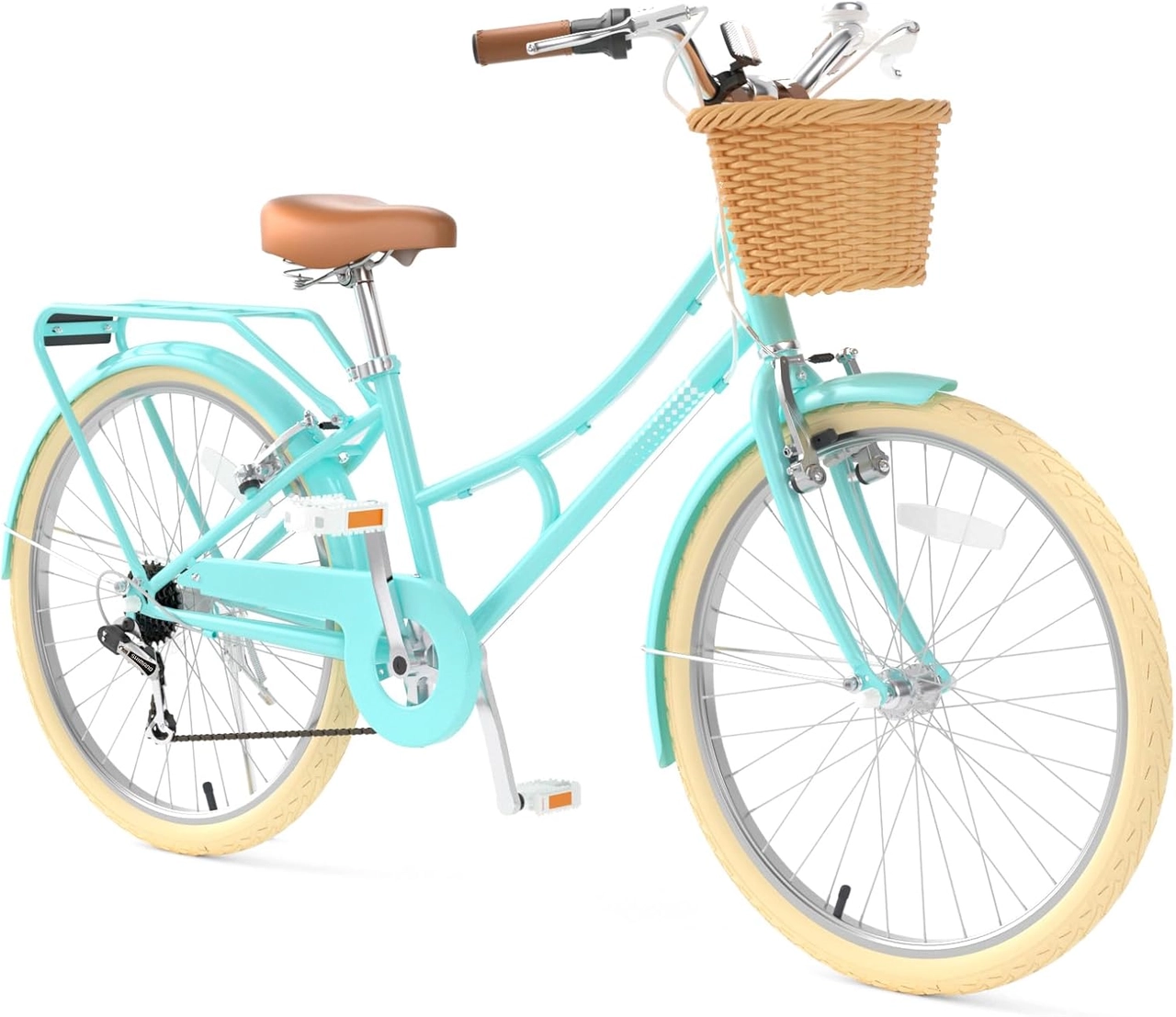 XJD 24-Inch Green Beach Cruiser Bike with U-Brake
This beach cruiser has supplied 24 and 26 Inch size labels. It is relevant only when the rider’s measured height and individual fit support one of those distinct starting points.
The Pink 12/14/16/20" XJD Girls Bike with Training Wheels & Basket is listed in 12 Inch, 14 Inch, 16 Inch, and 20 Inch versions. Those labels cover several distinct height bands, so select among them from the rider’s measurements and control rather than assuming the versions are interchangeable.
The 26-Inch XJD Beach Cruiser Bike for Girls – Purple, V-Brake has catalog variants labeled 20, 24, and 26 Inch in the supplied colors. Compare each wheel label separately: 20 Inch starts at 48–60 inches of rider height, 24 Inch at 54–64 inches, and 26 Inch only over 60 inches.
The XJD 24-Inch Green Beach Cruiser Bike with U-Brake is offered in Green / 24 Inch, Pink / 24 Inch, and Pink / 26 Inch labels. Its 24 Inch versions are starting points for riders 54–64 inches tall; the 26 Inch version is for youth and adults over 60 inches, subject to fit.
None of these products supplies an 18 Inch option. If the rider measures in the 18 Inch starting range, the shown products are nearest-size comparison points, not substitutes for an 18 Inch bicycle.
What to do before deciding
- Measure standing height and inseam now; do not rely on birth year or an old measurement.
- Use the table to identify a starting wheel size, then have the child try that exact size.
- Check stand-over clearance, comfortable reach, steering control, brake reach and operation, and the child’s current confidence.
- Do not move up solely to allow room for growth.
- Fit a bicycle helmet so it sits level and use its straps according to the manufacturer’s instructions, following U.S. Consumer Product Safety Commission guidance.
For assembly, maintenance, load limits, compatibility, or torque, follow the exact product manual or ask a qualified bicycle mechanic; those details are not established by the catalog facts supplied here.
The title-specific decision
If you need a 2014 participation figure, first choose a country, child age range, and definition of riding, then use a source reporting that same population and year. If you meant a child born in 2014, measure the child today and accept only a bicycle they can stand over, reach, brake, and control confidently.
Bikes for your next adventure
-
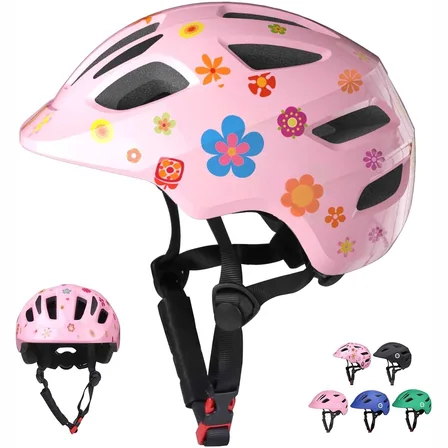
XJD Kids Bike Helmet for Girls, Pink Flowers, Adjustable (XS–S)
The XJD Kids Bike Helmet in Pink Flowers is an adjustable toddler-and-kids helme…$21.24
$24.99 -

Kids Bike Helmet by XJD for Boys & Girls – Black, Blue, Green, Pink, Purple
The XJD Kids Bike Helmet covers a wide 2-to-8-year age range thanks to two head-…$59.99
-

Kids Bike Helmet by XJD for Girls – Pink
The XJD Kids Bike Helmet in Pink is a lightweight multi-sport helmet for girls r…$59.99
$99