

How much did a kids bike cost in 1988
There was no single kids-bike price in 1988. The cost depended on wheel size, brand, equipment, seller and condition, so a dated advert or receipt is needed for an exact answer.
What “cost in 1988” should mean
Before comparing figures, decide whether you want the original shelf price, a sale price, the amount paid for a used bicycle, or the modern buying-power equivalent. Those are different answers. A remembered price is useful context, but it is not reliable evidence of what a particular model cost.
For a defensible figure, identify the country and currency, then find a source dated in 1988 that names the bicycle or clearly describes the same wheel size and equipment. Suitable evidence includes a retailer catalogue, newspaper advert, manufacturer price list or purchase receipt. Record whether tax, assembly or accessories were included rather than silently adding them to the bicycle price.
How to make a fair historical comparison
Compare like with like. A small beginner bicycle should not be compared with a larger youth model merely because both were sold for children. Note the wheel size, whether the bicycle was new or used, and every visible feature described by the historical source. If an advert does not identify those details, label the result as an approximate market example rather than the price of a specific bike.
- Verify the date: confirm that the advert, catalogue or receipt was issued in 1988.
- Capture the stated amount: preserve the original currency and distinguish regular price from a temporary sale price.
- Match the bicycle: compare wheel size and stated equipment, without assuming that visually similar bikes were equivalent.
- Convert separately: if desired, use an official inflation calculator for the relevant country and state its comparison year. Keep that result separate from the original 1988 amount.
This method answers the title more honestly than presenting one unsupported number. It also makes comparisons between a 1988 bicycle and a current option easier to interpret.
Measure the child before comparing a current bike
A historical price does not indicate whether a bicycle fits today’s rider. Measure the child’s standing height and inseam while wearing the shoes normally used for riding. During an in-person fit check, assess stand-over clearance, reach to the handlebar, ability to operate the brakes, balance and present confidence. Do not choose an oversized bicycle simply to allow room for growth.
| Wheel size | Starting age | Rider height |
|---|---|---|
| 12 Inch | 3–4 | 34–40 in / 86–102 cm |
| 14 Inch | 3–6 | 37–45 in / 94–114 cm |
| 16 Inch | 4–7 | 40–48 in / 102–122 cm |
| 18 Inch | 5–9 | 43–52 in / 109–132 cm |
| 20 Inch | 7–12 | 48–60 in / 122–152 cm |
| 24 Inch | 10–14 | 54–64 in / 137–163 cm |
| 26 Inch | Youth and adults | Over 60 in / 153 cm |
These are starting points, not a substitute for trying the bicycle. Height, inseam, reach, brake control and confidence take priority over age.
How the supplied catalog bikes help
The supplied options do not establish what a kids bike cost in 1988; they are current catalog comparison points for 12-, 14- and 16-inch wheel labels. They help narrow a modern size comparison after the rider has been measured, but they cannot replace a dated historical source or an individual fit check.
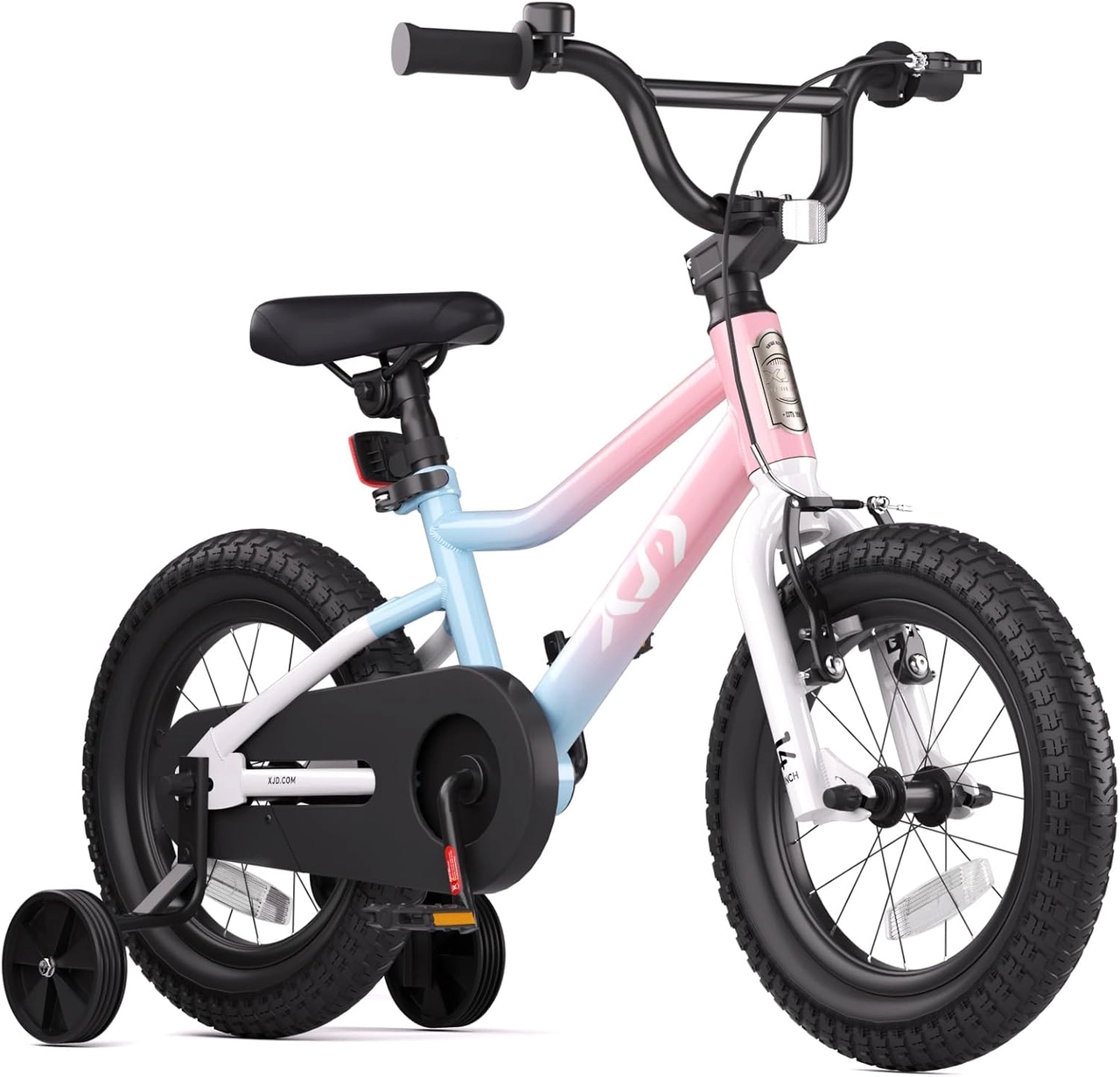 XJD Girls BMX Bike 12/14/16 Inch with Training Wheels – Pink Blue
A current Kids’ BMX Bikes comparison point with training wheels and 12 Inch, 14 Inch and 16 Inch size labels; it does not provide evidence of a 1988 price.
 XJD Boys & Girls BMX Bike with Training Wheels, 12/14/16" – Blue
A current blue Kids’ BMX Bikes option with training wheels and 12 Inch, 14 Inch and 16 Inch selections, relevant only after measurement and an individual fit check.
XJD Girls BMX Bike 12/14/16 Inch with Training Wheels – Pink Blue is listed in Kids’ BMX Bikes with 12 Inch, 14 Inch and 16 Inch selections. XJD Boys & Girls BMX Bike with Training Wheels, 12/14/16" – Blue is also listed in Kids’ BMX Bikes with the same three size selections. The supplied facts support comparing their catalog titles, color wording and available size labels only.
These products are relevant when the measured rider falls near the 12-, 14- or 16-inch starting points and can complete a proper fit check. They are not relevant as evidence of a 1988 price, and they are not substitutes when measurements and control indicate an 18-inch or larger bicycle.
Checks before making a present-day decision
Have the child try the exact bicycle rather than relying on a size label. Confirm comfortable stand-over, manageable reach and independent brake operation. A helmet should fit properly, sit level and have its straps adjusted according to the helmet manufacturer’s instructions.
For assembly, maintenance, load limits, component compatibility and torque settings, follow the exact product manual or ask a qualified bicycle mechanic. Do not transfer procedures from a 1988 bicycle or from another current model.
The next step for this specific question
Locate one dated 1988 advert, catalogue or receipt from the correct country, record the exact model or wheel size and original currency, and only then compare its stated amount with a properly fitted current size. If that evidence cannot be found, the accurate conclusion is that the 1988 cost remains unverified—not that every kids bike shared one price.
Bikes for your next adventure
-

Kids Bike Helmet by XJD for Boys & Girls – Black, Blue, Green, Pink, Purple
The XJD Kids Bike Helmet covers a wide 2-to-8-year age range thanks to two head-…$59.99
-

Kids Bike Helmet by XJD for Girls – Pink
The XJD Kids Bike Helmet in Pink is a lightweight multi-sport helmet for girls r…$59.99
$99 -

XJD Kids Bike for Girls – Pink, 12/14/16/20 Inch with Training Wheels
The XJD Kids Bike for Girls in Pink is a training-wheel bike built to carry your…$139
$159