

How much is a bike for kids
A kids’ bike has no single fixed price, and no verified current prices were supplied for this page. Check the live product price, then budget for the correctly fitted bicycle, a properly fitted helmet, and any assembly or service it needs.
What “how much” should include
The useful number is the complete amount needed to put your child on a bike that fits now—not merely the lowest displayed bicycle price. Compare the current selling price, what is included, and whether professional assembly or adjustment will be needed. Confirm those details on the exact product page because promotions, availability, shipping, and warranties are not established here.
Do not save money by buying an oversized bicycle for a child to grow into. A bike that is too large can make mounting, stopping, steering, and reaching the brakes harder. The correct next step is to establish the appropriate wheel-size range, perform an individual fit check, and only then compare current costs among suitable choices.
Measure before comparing prices
Measure the child’s height without shoes and check inseam, reach, brake control, and present riding confidence. Age can provide a starting point, but measured fit takes priority. Have the child try the bicycle whenever possible.
During the fit check, confirm that the rider can stand over the bicycle appropriately, get on and off with control, reach the handlebar comfortably, steer without overreaching, and operate the brakes confidently. A wheel-size label alone cannot prove that the frame and controls fit an individual child.
XBikes wheel-size starting points
| Wheel size | Starting age | Rider height |
|---|---|---|
| 12 Inch | 3–4 | 34–40 in / 86–102 cm |
| 14 Inch | 3–6 | 37–45 in / 94–114 cm |
| 16 Inch | 4–7 | 40–48 in / 102–122 cm |
| 18 Inch | 5–9 | 43–52 in / 109–132 cm |
| 20 Inch | 7–12 | 48–60 in / 122–152 cm |
| 24 Inch | 10–14 | 54–64 in / 137–163 cm |
| 26 Inch | Youth and adults | Over 60 in / 153 cm |
These ranges narrow the search; they do not replace trying the bike. If a child falls within overlapping ranges, compare both relevant sizes through stand-over clearance, reach, brake access, control, and confidence rather than choosing automatically by age.
How the supplied bikes help with the comparison
The catalog options cover 12, 14, 16, 20, 24, and 26 Inch labels, so they offer practical price-comparison points after measurement. They do not include an 18 Inch option. If measurement points to 18 Inch, the listed products are nearby size references only—not equal substitutes.
 Pink 12/14/16/20" XJD Girls Bike with Training Wheels & Basket
A Training Wheel Bike offered with 12, 14, 16, and 20 Inch SKU labels, making it relevant for comparing smaller fitted sizes and a 20 Inch option after measuring the rider.
 26-Inch XJD Beach Cruiser Bike for Girls – Purple, V-Brake
A Beach Cruiser Bike with supplied 20, 24, and 26 Inch variants in selected colors; useful for comparing larger sizes when height, reach, brake control, and confidence support the fit.
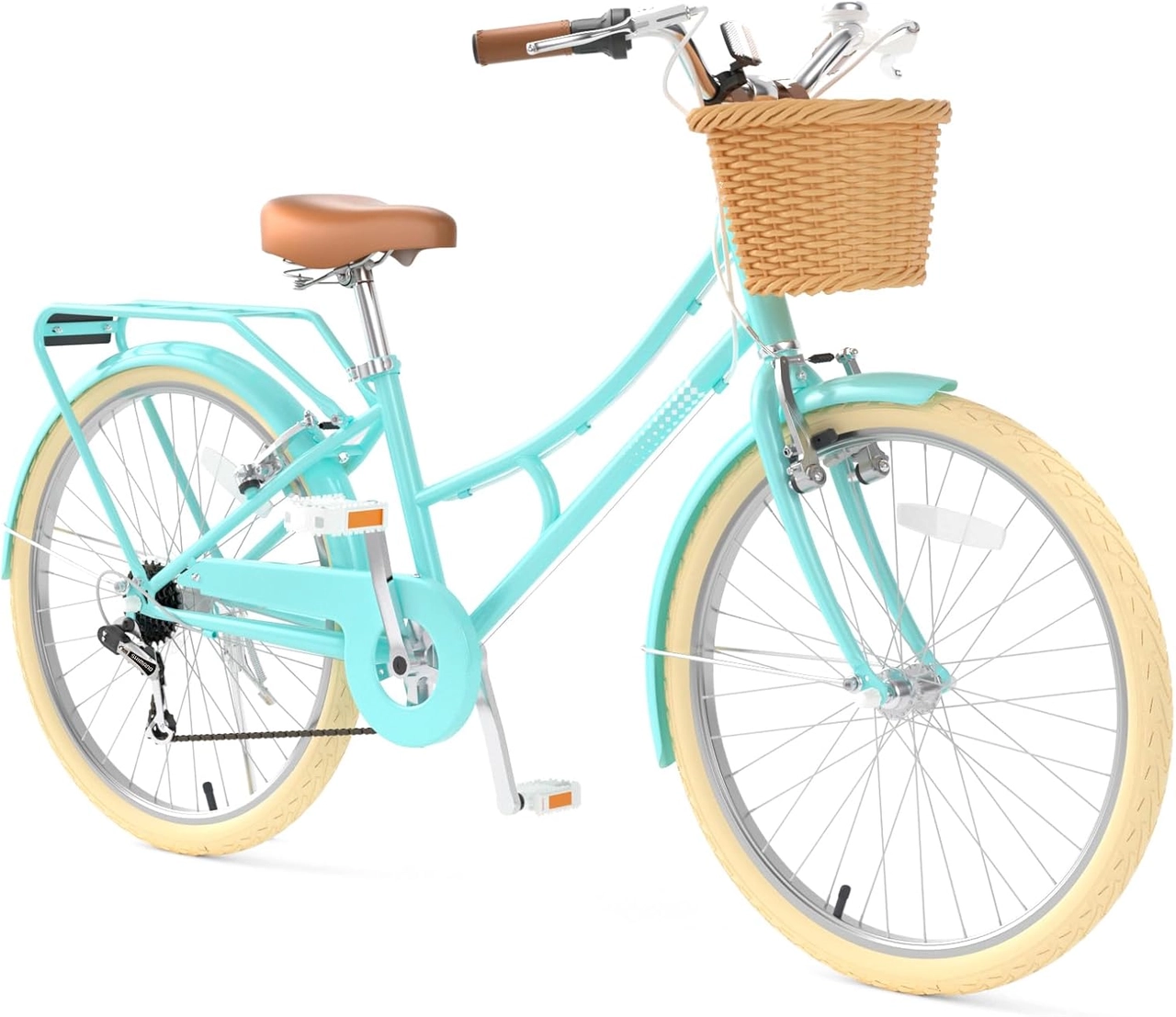 XJD 24-Inch Green Beach Cruiser Bike with U-Brake
A Beach Cruiser Bike offered in Green / 24 Inch, Pink / 24 Inch, and Pink / 26 Inch, providing 24- and 26-Inch comparison points after an individual fit check.
Smaller-wheel comparison
Pink 12/14/16/20" XJD Girls Bike with Training Wheels & Basket is categorized as a Training Wheel Bike and has 12 Inch, 14 Inch, 16 Inch, and 20 Inch SKU labels. It is relevant when the child’s measurements place them in one of those starting ranges and training wheels suit their current confidence. Compare only the correctly sized SKU; the shared product listing does not make its sizes interchangeable.
Larger-wheel comparison
26-Inch XJD Beach Cruiser Bike for Girls – Purple, V-Brake is categorized as a Beach Cruiser Bike. Its supplied variants include Mint Green in 20, 24, and 26 Inch; Pink in 20, 24, and 26 Inch; and Purple in 26 Inch. The 26 Inch label starts above 60 inches / 153 cm, subject to an individual fit check.
XJD 24-Inch Green Beach Cruiser Bike with U-Brake is also categorized as a Beach Cruiser Bike. Its supplied variants are Green / 24 Inch, Pink / 24 Inch, and Pink / 26 Inch. Use the 24 Inch options as comparison candidates for riders around 54–64 inches / 137–163 cm, then verify reach, stand-over, and brake control.
The brake descriptions above identify catalog configurations only; they do not establish which system a particular child can operate comfortably. The child must demonstrate reliable brake reach and control on the exact bicycle.
Turn the fit into a realistic budget
- Measure height and inseam, then identify the suitable starting wheel size.
- Remove any option the child cannot mount, steer, or stop confidently.
- Compare the current prices only among the remaining correctly fitted options.
- Add the cost of a properly fitting bicycle helmet and any needed qualified assembly or adjustment.
- Follow the exact product manual or use a qualified bicycle mechanic for assembly, maintenance, compatibility, load limits, and torque requirements.
A bicycle helmet should fit properly, sit level, and have its straps used according to the helmet manufacturer’s instructions. Helmet fit is part of the purchase decision, not an optional afterthought.
The decision to make now
Measure the rider today, shortlist only the matching wheel-size labels, and arrange a hands-on fit check. Then compare the live total cost of those suitable choices. If none permits comfortable stand-over, reach, steering, and braking, postpone the purchase or choose a different correctly fitting model rather than paying for room to grow.
Bikes for your next adventure
-

Kids Bike Helmet by XJD for Boys & Girls – Black, Blue, Green, Pink, Purple
The XJD Kids Bike Helmet covers a wide 2-to-8-year age range thanks to two head-…$59.99
-

Kids Bike Helmet by XJD for Girls – Pink
The XJD Kids Bike Helmet in Pink is a lightweight multi-sport helmet for girls r…$59.99
$99 -

XJD Kids Bike for Girls – Pink, 12/14/16/20 Inch with Training Wheels
The XJD Kids Bike for Girls in Pink is a training-wheel bike built to carry your…$139
$159