

How much should a kids bike cost
A kids bike should cost enough to provide the right fit, reliable control and a manageable total ownership cost—not simply the lowest price or the most room to grow.
Set the budget after checking fit
There is no single correct amount for every child. The sensible price depends first on which wheel size fits now, whether the rider can handle the bicycle confidently, and what must be included beyond the bike itself. Paying more does not correct poor fit, and buying an oversized bicycle to extend its useful life can make starting, stopping and steering harder.
Measure the child’s standing height and inseam, then have the child try the bicycle. Check that the rider can stand over it appropriately, reach the handlebar without stretching, turn it comfortably and operate the brakes with control. Age is only a starting point; measured fit and current confidence decide whether a candidate is worth buying.
Use wheel size to narrow the comparison
| Wheel size | Starting age | Rider height |
|---|---|---|
| 12 Inch | 3–4 | 34–40 in / 86–102 cm |
| 14 Inch | 3–6 | 37–45 in / 94–114 cm |
| 16 Inch | 4–7 | 40–48 in / 102–122 cm |
| 18 Inch | 5–9 | 43–52 in / 109–132 cm |
| 20 Inch | 7–12 | 48–60 in / 122–152 cm |
| 24 Inch | 10–14 | 54–64 in / 137–163 cm |
| 26 Inch | Youth and adults | Over 60 in / 153 cm |
These ranges are screening points, not proof of fit. Children of the same age can have different proportions, reach and skill. If two sizes appear possible, compare both in person rather than assuming the larger one offers better value.
Compare the whole cost, not just the bike
Judge each candidate by the cost of getting it ready for safe, regular use. Your comparison should account for a properly fitting helmet, any required professional assembly or adjustment, and foreseeable maintenance. A cheaper listing may not be the cheaper choice if it immediately needs work; a higher price is worthwhile only when the bike actually fits and the added expense serves the family’s needs.
- Fit: Can the child mount, stand over, steer and stop with control?
- Brake reach: Can the rider operate the controls comfortably rather than stretching?
- Condition and setup: Is the bicycle correctly assembled and ready for inspection?
- Use period: Is it appropriate now without being deliberately oversized?
- Ongoing care: Can the family reasonably manage inspections, adjustments and repairs?
For assembly, maintenance intervals, load limits, compatibility and torque settings, follow the exact product manual or ask a qualified bicycle mechanic. Do not estimate procedures or settings.
When the supplied XBikes options are relevant
The supplied catalog options help answer the cost question when you are comparing training-wheel bikes in 12 Inch, 14 Inch or 16 Inch sizes. They establish like-for-like size choices, but the supplied facts do not provide prices or mechanical specifications, so cost and fit must still be checked separately.
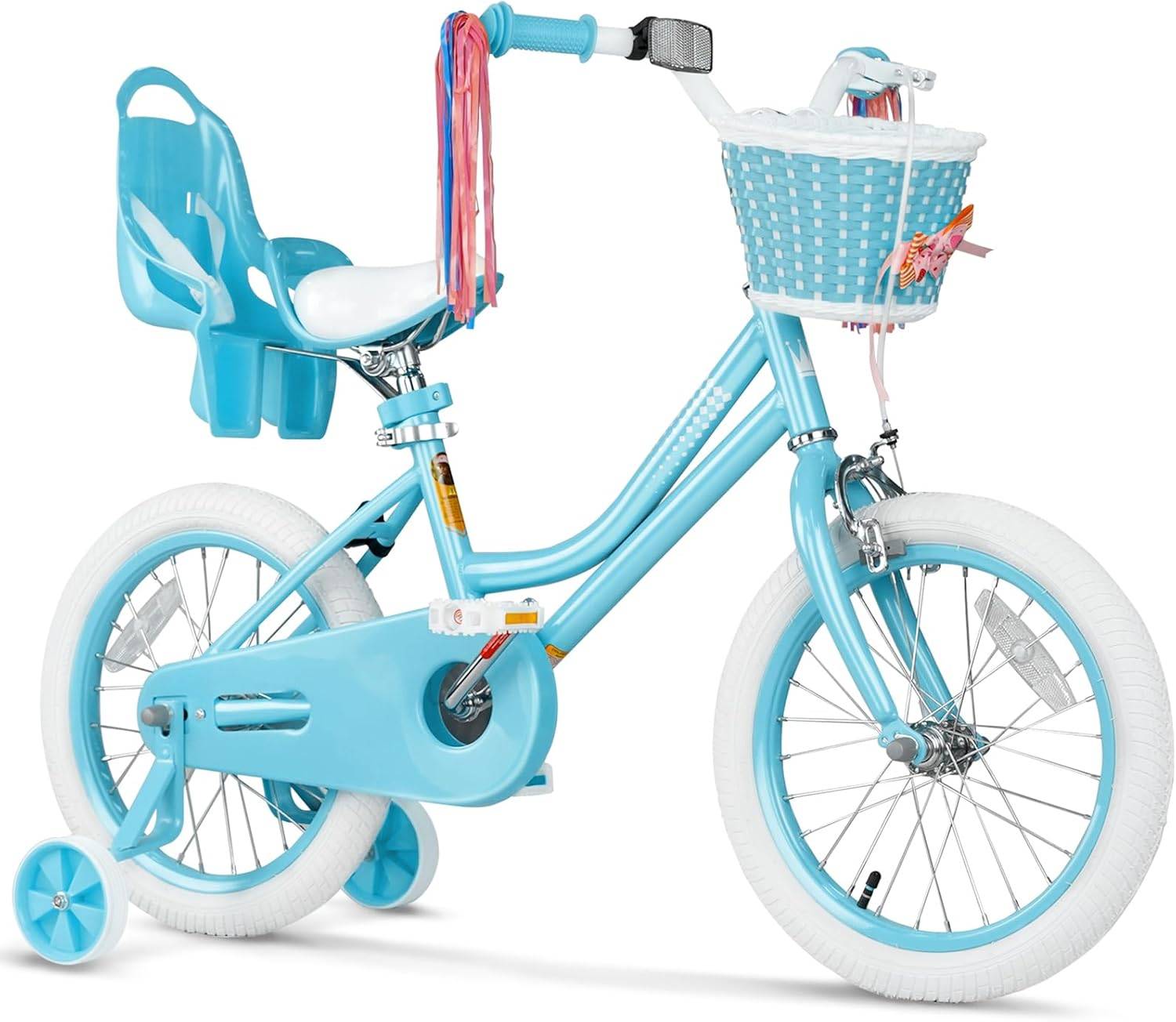 Blue XJD Girls Bike with Training Wheels – 12/14/16 Inch
A relevant comparison for riders whose individual fit check points to a 12 Inch, 14 Inch or 16 Inch training-wheel bike; price and other specifications were not supplied.
 XJD Boys 12/14/16" Training Wheel Bike – Blue
This Training Wheel Bike offers catalog size labels of 12 Inch, 14 Inch and 16 Inch, making it relevant only after measurements and an individual fit check confirm suitability.
Blue XJD Girls Bike with Training Wheels – 12/14/16 Inch is listed as a Training Wheel Bike with 12 Inch, 14 Inch and 16 Inch SKU labels. XJD Boys 12/14/16" Training Wheel Bike – Blue is also listed as a Training Wheel Bike in those same three labeled sizes. The wording in either title is a catalog label, not evidence that the bicycle fits a particular child.
These products are relevant only if the rider’s measurements and individual fit check point toward one of their supplied sizes and training wheels suit the intended stage of riding. If the fit check points to 18 Inch, 20 Inch, 24 Inch or 26 Inch, neither supplied product has that exact size; they are smaller-size comparison points, not substitutes.
Decide whether a lower or higher cost is justified
A lower-cost option can be reasonable when it fits correctly, allows confident control and does not require unexpected work to become usable. Spend more only for differences you can identify and value after comparing suitable bikes. Do not use price alone as shorthand for fit, control, durability or safety, and do not pay extra merely for a size the child may grow into later.
When considering a used bicycle, apply the same fit test and arrange an appropriate condition check. The purchase amount is only one part of the decision if worn, missing or incorrectly adjusted components require attention. Because no maintenance specifications are supplied here, a qualified bicycle mechanic should assess anything uncertain.
Make the purchase decision
- Measure standing height and inseam.
- Use the table to shortlist wheel sizes, treating age as secondary.
- Have the child try each candidate and check stand-over, reach, steering, brake operation and confidence.
- Compare the bike’s price together with helmet, setup and likely maintenance costs.
- Reject an oversized or poorly controlled bike even if it appears to offer longer use or a better deal.
A bicycle helmet should fit properly, sit level and have its straps used according to the manufacturer’s instructions. Once the correct current fit is confirmed, choose the lowest total cost among the candidates that the child can genuinely control—not the cheapest bike on the page or the largest one available.
Bikes for your next adventure
-

Kids Bike Helmet by XJD for Boys & Girls – Black, Blue, Green, Pink, Purple
The XJD Kids Bike Helmet covers a wide 2-to-8-year age range thanks to two head-…$59.99
-

Kids Bike Helmet by XJD for Girls – Pink
The XJD Kids Bike Helmet in Pink is a lightweight multi-sport helmet for girls r…$59.99
$99 -

XJD Kids Bike for Girls – Pink, 12/14/16/20 Inch with Training Wheels
The XJD Kids Bike for Girls in Pink is a training-wheel bike built to carry your…$139
$159