

How old for toddler first bike
Most toddlers are ready for a first bike around age 3, but age alone cannot determine readiness. Measure height and inseam, then check reach, balance, brake control and confidence on the actual bike.
When is a toddler old enough for a first bike?
Use age as a starting point, not a deadline. In the XBikes sizing standard, a 12 Inch bicycle starts at ages 3–4 and a rider height of 34–40 in (86–102 cm). A 14 Inch bicycle starts at ages 3–6 and 37–45 in (94–114 cm). These ranges overlap because children of the same age can differ greatly in size and coordination.
A toddler may be ready when they can walk and steer the bicycle without struggling, understand a simple instruction to stop, and remain interested rather than frightened. If the child cannot reach the ground appropriately, operate the brakes, or control the direction of travel, wait or try a more suitable size. Do not move up merely because the child will grow.
Measure before comparing wheel sizes
Measure the child without shoes against a wall for height. For inseam, measure from the floor to the crotch while the child stands upright with feet slightly apart. Record both measurements in inches or centimetres, and bring them to the fit check.
| Wheel size | XBikes age starting point | Rider-height starting point |
|---|---|---|
| 12 Inch | 3–4 | 34–40 in / 86–102 cm |
| 14 Inch | 3–6 | 37–45 in / 94–114 cm |
| 16 Inch | 4–7 | 40–48 in / 102–122 cm |
The table narrows the options; it does not prove fit. Inseam, body proportions and confidence can make two children of equal height need different setups. A 16 Inch bike is generally outside the toddler starting point unless the rider is at least 40 in (102 cm), falls within its age guidance, and passes an individual fit check.
Check the actual bicycle before buying
Have the child try the exact model and size. The American Academy of Pediatrics advises against buying an oversized bicycle for future growth. During the trial, check that the child can:
- stand over the bicycle with appropriate clearance rather than being pressed against the frame;
- sit in a stable position and reach the handlebars without stretching or locking the arms;
- turn the handlebars while remaining balanced and in control;
- reach and operate the brakes reliably with their hands in the normal riding position;
- place their feet as required for a confident start, stop and dismount.
If any of these checks fail, compare a smaller size or postpone the purchase. Wheel diameter by itself does not reveal stand-over clearance, reach or brake accessibility.
How the supplied training-wheel bikes compare
The supplied catalog options are relevant when a child is ready for a pedal bicycle with training wheels and their measured fit points toward 12, 14 or 16 Inch wheels. One option also includes a 20 Inch label, but that size is for ages 7–12 and heights of 48–60 in (122–152 cm), so it does not answer a typical toddler fit need.
 Light Pink XJD Girls' Bicycle with Basket & Training Wheels
Relevant for a fit-ready toddler because 12 Inch and 14 Inch versions are available with training wheels; 16 Inch and 20 Inch labels serve larger riders under the supplied sizing standard.
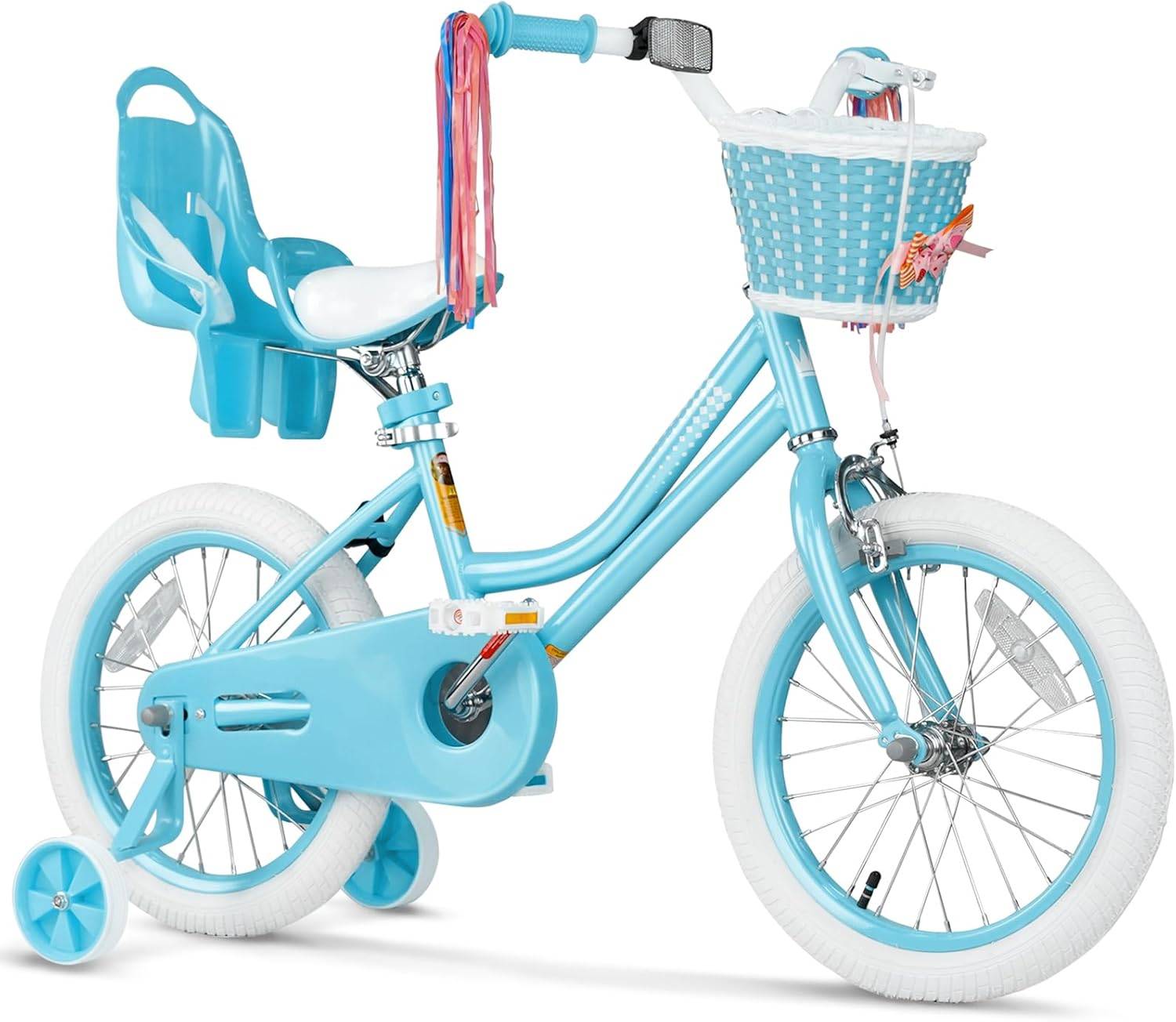 Blue XJD Girls Bike with Training Wheels – 12/14/16 Inch
Offers training-wheel bicycle choices in 12, 14 and 16 Inch sizes. Start with its 12 Inch option for a toddler within the supplied height range, then confirm individual fit.
 XJD Boys 12/14/16" Training Wheel Bike – Blue
Listed as a training-wheel bike in 12, 14 and 16 Inch sizes. Its smaller size labels are relevant to toddler comparisons, subject to height, inseam, reach and control checks.
Light Pink XJD Girls' Bicycle with Basket & Training Wheels is listed in 12, 14, 16 and 20 Inch sizes. Blue XJD Girls Bike with Training Wheels – 12/14/16 Inch is listed in 12, 14 and 16 Inch sizes. XJD Boys 12/14/16" Training Wheel Bike – Blue is likewise listed in 12, 14 and 16 Inch sizes.
For a toddler who measures 34–40 in (86–102 cm), begin the comparison with the 12 Inch versions. A child measuring 37–45 in (94–114 cm) may also fall within the 14 Inch starting range, but the larger option is relevant only if stand-over clearance, reach, brake operation and control all work on the actual bicycle. The catalog titles identify designs and available size labels; they do not replace the fit test.
Do training wheels change readiness?
Training wheels can support the bicycle while a child learns pedalling and steering, but their presence does not make an oversized frame suitable. The child still needs comfortable reach, reliable stopping control and enough confidence to start and dismount. These products are not relevant if the child is not yet ready to pedal, cannot control the bicycle, or needs a wheel size outside the supplied choices.
For assembly, adjustment, maintenance, compatibility, load limits and torque requirements, follow the manual for the exact product and size. If the instructions are missing or the setup is uncertain, use a qualified bicycle mechanic.
Prepare for the first ride
Choose a flat area away from traffic and obstacles, and supervise closely. Use a bicycle helmet that fits properly, sits level on the head and has its straps adjusted according to the helmet manufacturer's instructions, as directed by the U.S. Consumer Product Safety Commission.
Next step: measure the child's height and inseam today. If they are about age 3 or older and measure 34–40 in (86–102 cm), try a 12 Inch bicycle first; compare 14 Inch only when their height overlaps that range and they can comfortably stand over, reach, steer and brake on the exact bike.
Bikes for your next adventure
-

Kids Bike Helmet by XJD for Boys & Girls – Black, Blue, Green, Pink, Purple
The XJD Kids Bike Helmet covers a wide 2-to-8-year age range thanks to two head-…$59.99
-

Kids Bike Helmet by XJD for Girls – Pink
The XJD Kids Bike Helmet in Pink is a lightweight multi-sport helmet for girls r…$59.99
$99 -

XJD Kids Bike for Girls – Pink, 12/14/16/20 Inch with Training Wheels
The XJD Kids Bike for Girls in Pink is a training-wheel bike built to carry your…$139
$159