

How tall for an 18 inch bike frame
An 18-inch kids’ bike generally suits a rider 43–52 inches (109–132 cm) tall, often ages 5–9, but height and an individual fit check decide.
Does “18 inch” mean the frame or the wheels?
For a child’s bicycle, 18 inches usually describes the wheel size, not the frame height. Confirm how the bicycle is labeled before comparing it with your child’s measurements. An 18-inch wheel bike is not automatically suitable merely because the child falls within the suggested age range.
Use the XBikes range as a starting point: an 18-inch bike corresponds to a rider height of 43–52 inches (109–132 cm). Age 5–9 is only a secondary guide. Children of the same age can differ considerably in leg length, reach, coordination and confidence.
Measure the rider before choosing
- Measure total height: Have the child stand straight without shoes, with heels against a wall. Mark the top of the head and measure from the floor.
- Measure inseam: With feet slightly apart, measure from the floor to the crotch. Use this to assess stand-over clearance when the actual bicycle is available.
- Check current ability: Note whether the child starts, stops, turns and balances confidently. A tentative rider may need a different setup than a confident rider of the same height.
Do not convert the inseam measurement into a bike size using an invented formula. Bicycle geometry varies, so compare the measurement with the exact manufacturer’s guidance and then have the child try the bike.
What to check on an 18-inch bike
With the child wearing normal riding shoes, have them straddle the bicycle. They should be able to stand over it without the frame pressing uncomfortably against them. Seated, they should reach the handlebars without stretching, twisting forward or locking their elbows.
Ask the child to operate each brake control fitted to the bicycle. They should reach and use it reliably while maintaining control of the handlebar. Also observe a start, a controlled stop and a slow turn in a traffic-free area. If the rider cannot perform these actions comfortably, the height chart alone does not establish a good fit.
Do not choose an oversized bicycle solely to provide room for growth. A child needs usable stand-over clearance, manageable reach and dependable control now.
Compare the neighboring wheel sizes
| Wheel size | Rider height starting point | Age starting point |
|---|---|---|
| 16 Inch | 40–48 in / 102–122 cm | 4–7 |
| 18 Inch | 43–52 in / 109–132 cm | 5–9 |
| 20 Inch | 48–60 in / 122–152 cm | 7–12 |
The overlapping ranges are intentional starting points, not a rule that neighboring sizes are interchangeable. If the child measures within an overlap, compare the actual bicycles for stand-over clearance, seated reach, brake access and control. Avoid sizing up simply because a larger wheel may last longer.
How the supplied products are relevant
Neither supplied catalog product offers an 18-inch SKU, so these are nearest-size comparison points rather than substitutes for an 18-inch bike. Black XJD Kids Bike for Boys – 12, 14 & 16 Inch Sizes includes 12-, 14- and 16-inch options in the Training Wheel Bikes category. Girls' Training Wheel Bike by XJD with Basket – Purple includes 14-, 16- and 20-inch options in the same category. The 16- and 20-inch choices can help you compare the sizes immediately below and above 18 inches, but neither should be treated as equal to it.
 Black XJD Kids Bike for Boys – 12, 14 & 16 Inch Sizes
A Training Wheel Bikes option in 12-, 14- and 16-inch sizes. Its 16-inch SKU is a smaller neighboring-size comparison point, not a substitute for the requested 18-inch bicycle.
 Girls' Training Wheel Bike by XJD with Basket – Purple
A Training Wheel Bikes option offered in 14-, 16- and 20-inch sizes. Its 16- and 20-inch SKUs provide neighboring-size comparisons, but neither is equivalent to an 18-inch bicycle.
The black XJD model is relevant if the measured rider fits a 16-inch starting range of 40–48 inches (102–122 cm) and passes the individual fit check. The purple XJD model lets you consider either its 16-inch option on that same basis or its 20-inch option for the 48–60-inch (122–152 cm) starting range. Its 14-inch option corresponds to 37–45 inches (94–114 cm), but it is farther from the requested 18-inch size.
Use each exact product manual for assembly, maintenance, load limits and component compatibility. If the instructions are missing or the bicycle cannot be adjusted for comfortable control, use a qualified bicycle mechanic.
Make the final decision
Begin with the child’s measured standing height: 43–52 inches (109–132 cm) places an 18-inch bike in the comparison set. Next, test inseam clearance, handlebar reach, brake operation and a controlled start, stop and turn. Reject the 18-inch bike if any of those checks fail, even when age and height appear suitable.
Before riding, fit a bicycle helmet properly: it should sit level, and its straps should be adjusted according to the helmet manufacturer’s instructions. Choose the 18-inch bicycle only when it fits the rider today and the child can control it confidently; otherwise, compare the appropriate neighboring size in person rather than buying for future growth.
Bikes for your next adventure
-
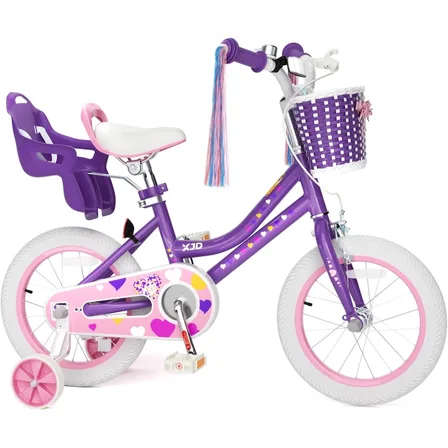
Purple XJD Girls' Bike with Doll Seat & Basket
For girls 71–122 cm tall (about ages 3–7), this XJD girls' bike in Purple pairs …$75.99
$99.99 -

Blue XJD Girls Bike with Training Wheels – 12/14/16 Inch
If you're shopping for a first pedal bike for a daughter roughly 3 to 8 years ol…$149
$169 -
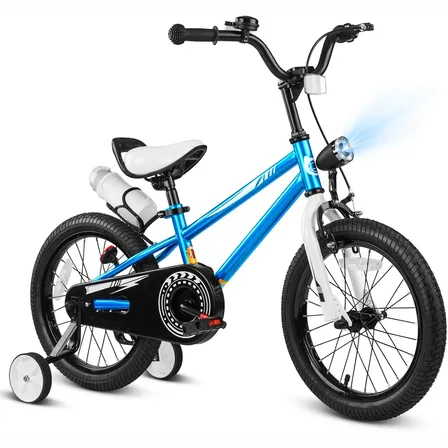
XJD Boys 12/14/16" Training Wheel Bike – Blue
The XJD Boys Bike in Blue is a training wheel bike for riders 71–122 cm tall—rou…$169
$199