

How tall should i be for a 26 inch bike
A 26-inch bike is an XBikes starting point for riders taller than 60 inches (153 cm). Height alone does not confirm fit: measure the rider, then check stand-over space, reach, brake control and confidence on the actual bicycle.
What to measure before choosing 26 inches
Measure the rider now rather than relying on age, an old measurement or expected growth. Shoes and bulky clothing can affect the result, so use the footwear normally worn for riding.
- Overall height: Have the rider stand straight against a wall, looking level, with feet flat. Measure from the floor to the top of the head. Compare that result with the XBikes wheel-size starting points below.
- Inseam: With the rider standing upright, measure from the floor to the crotch. This helps evaluate whether the rider can straddle the bicycle without the frame pressing into the body.
- Reach: On the actual bicycle, check that the rider can hold the handlebar without locking the elbows, stretching forward excessively or losing a balanced position.
- Brake control: The rider should be able to reach and operate the brake controls while maintaining a secure grip and steering normally.
Compare the height with the relevant starting points
| Wheel size | XBikes age starting point | XBikes rider-height starting point |
|---|---|---|
| 20 Inch | Ages 7–12 | 48–60 in / 122–152 cm |
| 24 Inch | Ages 10–14 | 54–64 in / 137–163 cm |
| 26 Inch | Youth and adults | Over 60 in / 153 cm |
These ranges are screening tools, not guarantees. The 24-inch and 26-inch starting points overlap near the transition, so a rider around that boundary should try both sizes where possible. Prioritize measured height and the individual fit check over age alone.
How to check a 26-inch bike in person
First, have the rider straddle the bicycle with both feet on the ground. There should be usable space between the rider and the frame; do not accept uncomfortable contact simply because the rider meets the height starting point.
Next, place the rider in a normal riding position. Check that starting, stopping and turning look controlled rather than hesitant or strained. The rider must be able to steer while reaching and operating the brakes without shifting the hands into an insecure position.
Finally, ask for a slow, supervised trial in a clear area. A suitable fit should let the rider start, stop, turn and put a foot down predictably. If the rider looks stretched, cannot manage the brakes confidently or struggles to control the bicycle, the 26-inch option is not the right choice yet—even when height exceeds 60 inches.
How the supplied bikes help with the comparison
The 26-Inch XJD Beach Cruiser Bike for Girls – Purple, V-Brake directly represents the requested wheel size: its supplied options include Purple / 26 Inch, Mint Green / 26 Inch and Pink / 26 Inch. The same catalog entry also lists 20-inch and 24-inch options in some colors, which can help when comparing a rider near a size transition.
The XJD 24-Inch Green Beach Cruiser Bike with U-Brake is titled as a green 24-inch model. Its supplied options list Green / 24 Inch, Pink / 24 Inch and Pink / 26 Inch. This makes it relevant to a 24-versus-26 comparison, but the option label must be checked carefully because the title alone does not describe every listed size and color.
These particular catalog options help answer the title because they provide actual 26-inch choices and nearby 24-inch comparison points; they still require an individual fit check before selection.
 26-Inch XJD Beach Cruiser Bike for Girls – Purple, V-Brake
A direct 26-inch option with Purple, Mint Green and Pink 26-inch SKU labels; its supplied 20-inch and 24-inch choices can also support an in-person size comparison.
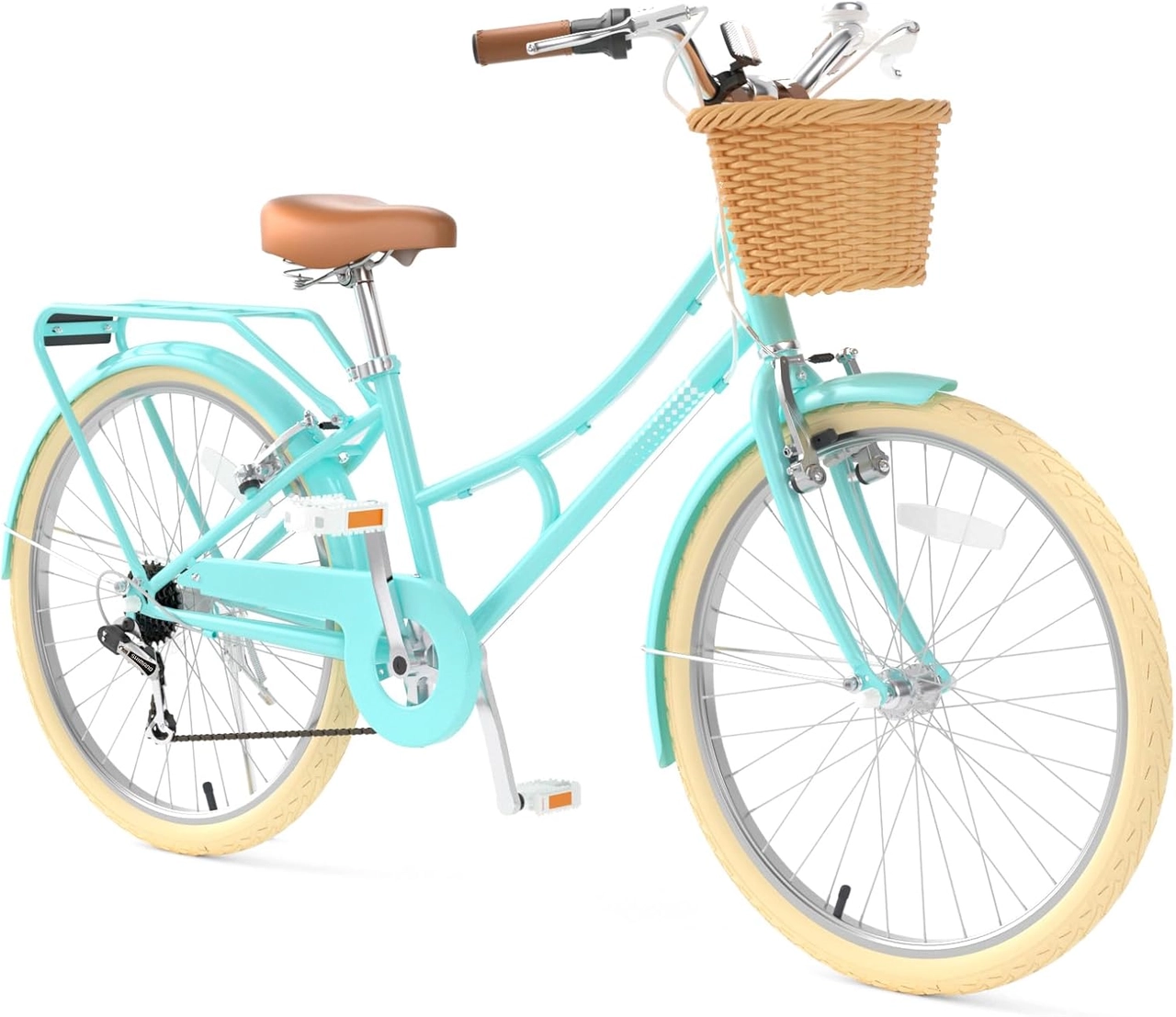 XJD 24-Inch Green Beach Cruiser Bike with U-Brake
Relevant as a nearby-size comparison: the catalog lists Green and Pink 24-inch options plus Pink / 26 Inch. Verify the selected size and complete an individual fit check.
Do not size up only for future growth
American Academy of Pediatrics guidance emphasizes having the child try the bicycle and not buying an oversized bike merely to allow room for growth. An oversized bicycle can make stand-over, steering and braking harder today. If the 26-inch bicycle fails any control check, select a currently manageable size instead of expecting the rider to grow into it.
Fit a bicycle helmet separately. U.S. Consumer Product Safety Commission guidance says it should fit properly, sit level and use its straps according to the helmet manufacturer's instructions. Wheel size does not determine helmet fit.
Your 26-inch decision
Begin with 26 inches only when the rider is over 60 inches (153 cm), then confirm comfortable stand-over space, natural handlebar reach, reliable brake operation and calm control during a supervised trial. If all checks pass, a 26-inch option is relevant. If any check fails—or the rider is not yet confident—compare a 24-inch bicycle instead and repeat the same fit test. Follow the exact bicycle manual or use a qualified bicycle mechanic for assembly, maintenance, compatibility, load limits and torque information.
Bikes for your next adventure
-
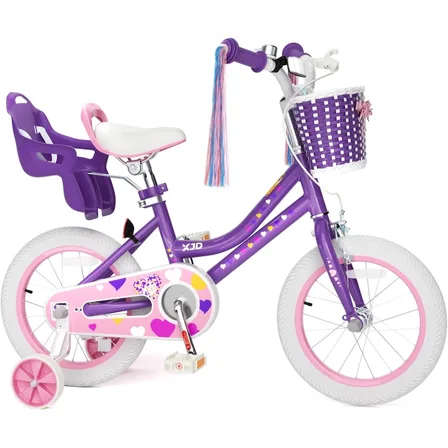
Purple XJD Girls' Bike with Doll Seat & Basket
For girls 71–122 cm tall (about ages 3–7), this XJD girls' bike in Purple pairs …$75.99
$99.99 -

Blue XJD Girls Bike with Training Wheels – 12/14/16 Inch
If you're shopping for a first pedal bike for a daughter roughly 3 to 8 years ol…$149
$169 -

XJD Boys 12/14/16" Training Wheel Bike – Blue
The XJD Boys Bike in Blue is a training wheel bike for riders 71–122 cm tall—rou…$169
$199