

How to convert a kids bike trailer
To convert a kids bike trailer, first identify its exact brand and model, then use only the manufacturer-approved kit and instructions for that specific conversion.
Decide what “convert” means
A bike trailer may be designed to change into a stroller, jogger, ski carrier or cargo trailer, but not every model supports every mode. Find the model label on the frame and check the product manual before buying parts or removing seats. A generic wheel, handle or hitch that appears to fit is not proof of compatibility.
If the intended conversion is not listed in the manual, stop and contact the manufacturer or a qualified bicycle mechanic. Do not drill the frame, improvise attachment points or combine parts from different systems unless the manufacturer expressly authorizes it.
Measure and compare before ordering
Record the trailer’s exact model name, model number and production year if shown. Then inspect and measure the connection points relevant to the intended mode. Useful comparisons include:
- The shape and dimensions of the receiver where a stroller wheel, tow arm or handle attaches.
- The number, position and type of locking pins, buttons or latches.
- The hitch interface on the towing bicycle, including axle and frame clearance.
- The trailer’s folded and open dimensions if storage or doorway clearance matters.
- The seated child’s headroom, shoulder room and harness position.
Measurements help reject obviously mismatched parts, but they do not establish safety or load compatibility. Match the kit’s stated model and production range exactly. Follow the trailer and conversion-kit manuals for passenger limits, cargo limits, tire pressure, maintenance and any required torque values.
Inspect the trailer before conversion
Do not convert or use a trailer with a bent frame, torn restraint, damaged hitch, cracked wheel, missing locking pin or latch that will not fully engage. Check that all original safety components required by the manual are present. If the trailer was bought used and its history is unclear, obtain the correct manual and have uncertain structural or attachment parts examined by a qualified bicycle mechanic.
Also confirm that the child still fits within the manufacturer’s stated limits. This article cannot supply a universal passenger age, height or weight because those limits are model-specific.
Install and verify the approved kit
- Place the trailer on a stable surface and remove only the parts named in the instructions.
- Fit the approved conversion components in the sequence shown by the manufacturer.
- Engage every pin, latch, secondary retainer and safety strap specified in the manual.
- Check that wheels rotate freely and that fabric, straps and loose items cannot touch moving parts.
- Test steering, parking stability and any brake or tether function described by the manufacturer before placing a child inside.
- Perform a slow, unloaded check in a clear area, then recheck every connection.
The exact assembly order and tightening requirements vary. If instructions are missing, a component does not seat completely or the converted trailer pulls, wobbles or folds unexpectedly, do not carry a child; use a qualified bicycle mechanic or the manufacturer’s support channel.
Protect the passenger in every mode
Use the restraint system and protective enclosure exactly as the trailer manual directs. When the trailer is being towed as a bicycle trailer, the child should wear a bicycle helmet that fits properly, sits level and has straps adjusted according to the helmet manufacturer’s instructions. Recheck the hitch, secondary retention device, tires and restraints before each ride.
A stroller conversion does not automatically make a trailer suitable for jogging, and a cargo configuration does not automatically permit removal of structural seat or frame parts. Treat each mode as a separate approved configuration with its own instructions and limits.
Where the supplied bike option fits
The supplied catalog item is not a trailer conversion kit. The XJD Girls Bike for Kids Ages 3-8, 12/14/16 Inch with Training Wheels – Purple is relevant only if the child is moving from riding in a trailer toward riding a separate training-wheel bicycle. Its available catalog sizes are 12 Inch, 14 Inch and 16 Inch, so these options help compare a next-stage bicycle after the trailer decision; they cannot replace compatible trailer hardware. The age wording in the product title is a catalog label, not individual fit evidence.
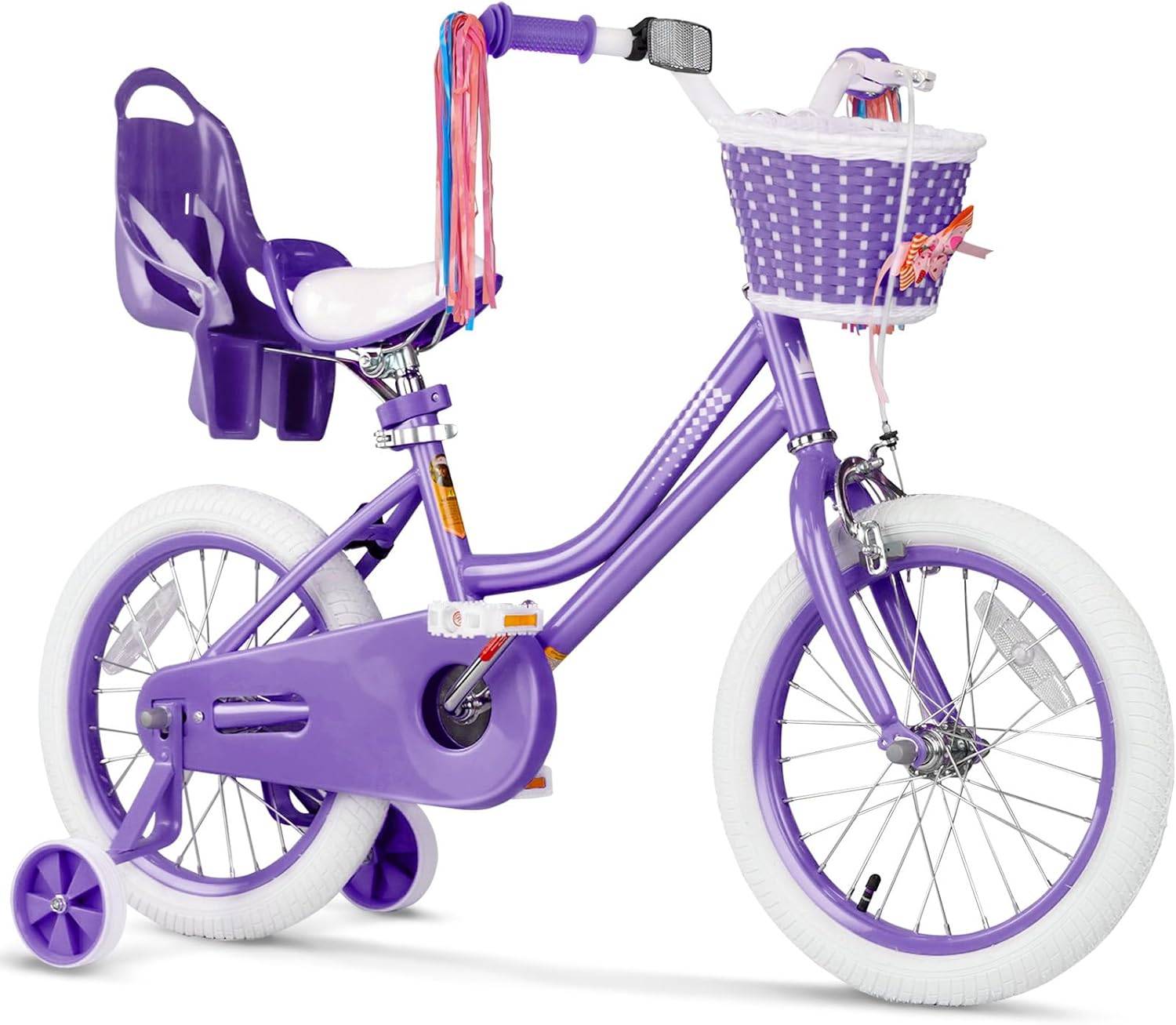
XBikes starting points are 12 Inch for heights 34–40 in (86–102 cm), 14 Inch for 37–45 in (94–114 cm), and 16 Inch for 40–48 in (102–122 cm). Measure the child rather than selecting by age alone. Have the child try the bicycle and confirm stand-over clearance, comfortable reach, brake control and current confidence; do not choose an oversized bicycle merely for growth.
Make the final conversion decision
Proceed only when the trailer model, intended mode and approved kit are an exact documented match, every connection locks as instructed, and the child remains within the trailer manual’s limits. Otherwise, keep the trailer in its existing approved configuration and ask the manufacturer or a qualified bicycle mechanic to identify the correct parts.
Bikes for your next adventure
-

Kids Bike Helmet by XJD for Boys & Girls – Black, Blue, Green, Pink, Purple
The XJD Kids Bike Helmet covers a wide 2-to-8-year age range thanks to two head-…$59.99
-

Kids Bike Helmet by XJD for Girls – Pink
The XJD Kids Bike Helmet in Pink is a lightweight multi-sport helmet for girls r…$59.99
$99 -

XJD Kids Bike for Girls – Pink, 12/14/16/20 Inch with Training Wheels
The XJD Kids Bike for Girls in Pink is a training-wheel bike built to carry your…$139
$159