

How to make kids bike brakes easier to pull
Make kids bike brakes easier to pull by first checking hand reach and bike fit, then having the lever and brake system adjusted for the child.
Measure the problem before changing anything
Ask the child to sit on the bike in a normal riding position while an adult keeps it stable. Their hands should remain securely around the grips while their fingers reach the brake levers. If they must rotate a wrist, release most of the grip, or stretch fingertips toward the lever, the problem is reach rather than simply hand strength.
Use a ruler to record the distance from the grip to the resting lever at the point where the child’s fingers naturally land. Then watch how far the lever moves before braking begins. Compare both sides: a large difference can indicate that one brake needs inspection or adjustment. Also note whether the lever approaches or touches the grip when pulled.
Do not diagnose the system by squeezing a parked bike once yourself. Let the child demonstrate whether they can reach, pull and release each lever repeatedly while maintaining control.
Check whether the bicycle fits the rider
A brake lever cannot compensate for a bicycle that is too large. Measure the child’s current height and inseam, then check stand-over clearance, seated reach, steering control and access to the brakes. Do not choose an oversized bicycle merely to allow room for growth. Age is only a starting point; measured fit, brake control and confidence take priority.
| Wheel size | XBikes starting point |
|---|---|
| 12 Inch | Ages 3–4; height 34–40 in / 86–102 cm |
| 14 Inch | Ages 3–6; height 37–45 in / 94–114 cm |
| 16 Inch | Ages 4–7; height 40–48 in / 102–122 cm |
These ranges do not replace an individual fit check. If the rider is stretched toward the handlebar or cannot operate the controls without changing hand position, compare a more suitable fit before attempting to solve everything through brake adjustment.
Choose the next action from what you observe
- The fingers cannot comfortably reach the resting lever: check the exact bicycle manual for an approved reach adjustment. If the method or compatible lever position is unclear, use a qualified bicycle mechanic.
- The lever is reachable but unusually hard to move: stop riding and have the brake, cable or hose, pivots and related parts inspected as applicable to that bicycle. Dirt, corrosion, routing, damage or incorrect setup may increase resistance.
- The lever moves close to or touches the grip: do not treat this as an easier-pull solution. The brake may need adjustment or service before riding.
- One side feels different: compare lever reach and movement, but have the cause corrected rather than teaching the child to compensate.
- Both controls work correctly but the child still cannot use them confidently: recheck overall fit and obtain mechanic guidance on compatible controls. Do not invent a substitute part or modification.
Adjustment procedures, replacement compatibility and tightening requirements vary. Follow the exact product manual, including its specified settings, or ask a qualified bicycle mechanic to complete the work.
How the catalog option helps with comparison
The XJD Pink Girls' Bike – Kids 12/14/16 Inch Training Wheel Bicycle is available with 12 Inch, 14 Inch and 16 Inch SKU labels. Those choices make it relevant when comparing the rider’s measured height with nearby wheel-size starting points and arranging an in-person fit and brake-reach check. Its title is a catalog name, not evidence that it fits a particular child, and the supplied facts do not identify its brake type or adjustment features.
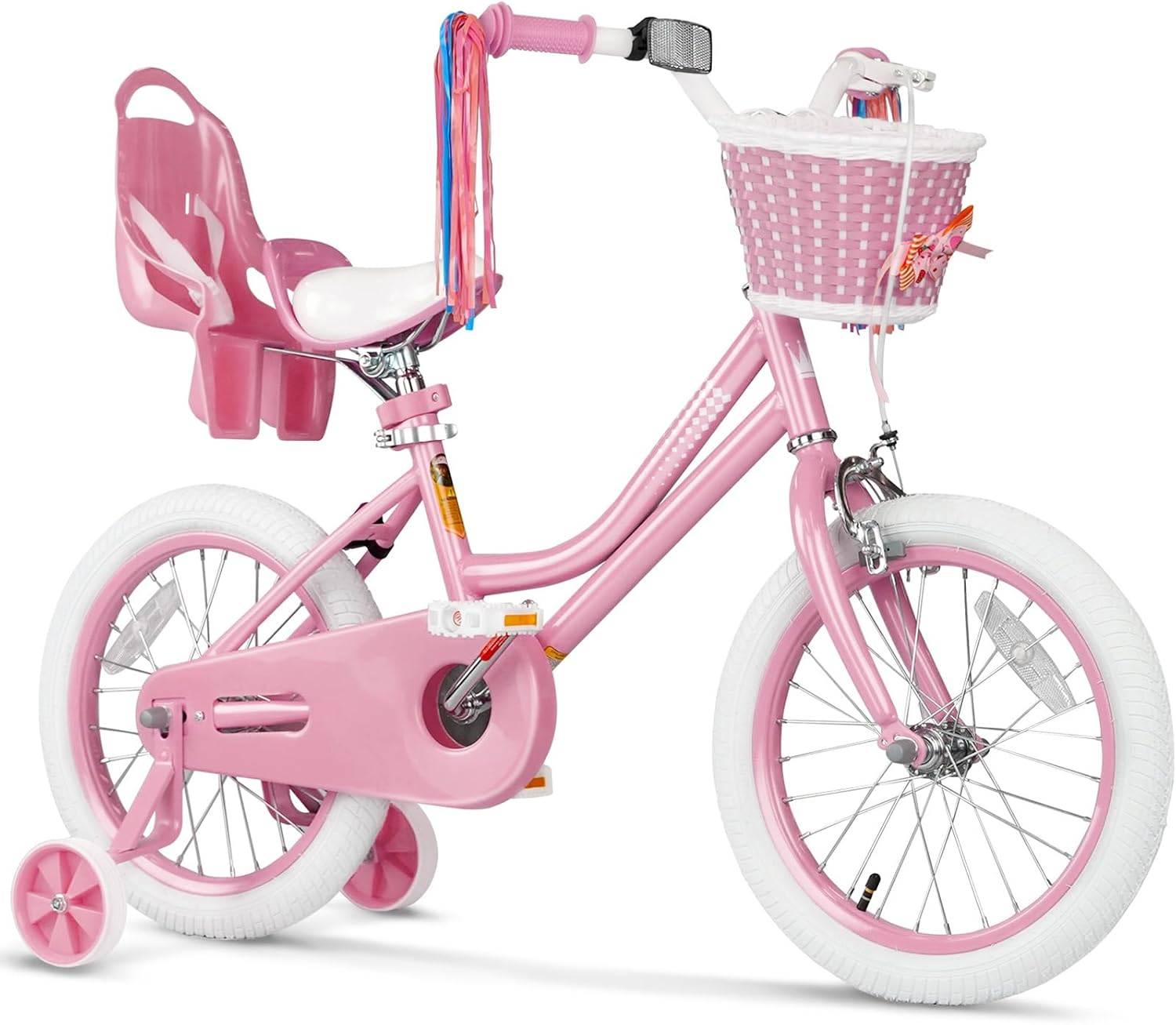
This product is relevant only if one of those three wheel sizes and the complete individual fit suit the rider. It should not be selected on wheel size alone, and no supplied catalog fact establishes that its brakes require less pulling force.
Recheck control after adjustment or service
Before riding, keep the bicycle stationary and supported. Confirm that the child can wrap their hands around the grips, reach each lever without stretching, pull it without the lever touching the grip, and release it cleanly. A qualified mechanic should resolve any sticking, excessive resistance, uncertain braking response or incompatible control.
Then practise starts, gentle stops and stronger controlled stops in a traffic-free area under adult supervision. Stop if the rider loses grip or steering control while braking. The child should also wear a bicycle helmet that fits properly, sits level and has straps positioned according to the helmet manufacturer’s instructions.
The decision is simple: if reach is wrong, correct fit or use an approved reach adjustment; if movement is stiff or braking response is uncertain, have the bicycle serviced before the child rides.
Bikes for your next adventure
-

Black XJD Kids Bike for Boys – 12, 14 & 16 Inch Sizes
For a son between roughly 3 and 8 years old, the XJD Kids Bike in Black covers t…$169
$199 -
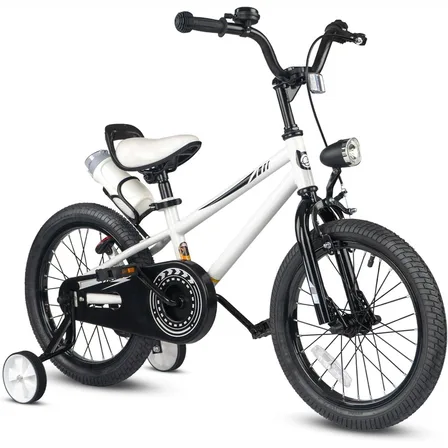
XJD Kids' Training Wheel Bike for Boys & Girls, 12/14/16 Inch – White
The XJD kids' training wheel bike in White is made for riders ages 3–8 (roughly …$169
$199 -

XJD Boys 12/14/16" Training Wheel Bike – Blue
The XJD Boys Bike in Blue is a training wheel bike for riders 71–122 cm tall—rou…$169
$199