

How to ride bike with infant
To ride a bike with an infant, first confirm that the child is ready for the chosen carrier, then verify bike compatibility, load limits, fit and helmet fit before riding.
Decide whether your infant is ready
Do not use age alone to decide. An infant must meet every developmental and physical requirement stated by the child-seat or trailer manufacturer. Ask the child’s pediatrician if you are uncertain, particularly when head and neck control, prematurity or a medical condition may affect readiness. Never improvise with a basket, rack, sling or carrier that was not designed and approved for transporting a child on that bicycle.
Check local laws as well. Rules for minimum passenger age, helmets and where a child may ride can differ by location. If the law, carrier manual or medical advice sets a stricter requirement, follow it.
Choose a carrier and verify compatibility
Compare a purpose-built child bicycle seat and a bicycle trailer according to your route, storage needs and the instructions for your exact equipment. Before buying or fitting either one, record the bicycle’s make, model, wheel size and frame or rack details. Then compare those details with the carrier manufacturer’s compatibility list.
- Child measurements: Measure current weight and height and compare both with the carrier’s stated limits.
- Bicycle details: Confirm the permitted mounting location and whether the frame, fork or rack is approved for that attachment.
- Total load: Include the infant and anything else carried. Follow the bicycle and carrier manuals where their limits differ.
- Moving parts: Ensure the child, straps and clothing cannot contact wheels, spokes, brakes, drivetrain or steering.
If compatibility, assembly, load limits or tightening instructions are absent or unclear, do not guess. Use the exact product manuals or ask a qualified bicycle mechanic to inspect the complete setup.
Make sure the bicycle fits the adult rider
A carrier changes how a bicycle feels while starting, stopping, steering and parking. The adult must already fit and confidently control the bicycle without the passenger. Measure the rider’s height and inseam, then check stand-over clearance, reach, brake control and the ability to start and stop steadily. Do not choose an oversized bicycle merely for future growth.
XBikes uses these relevant wheel-size starting points: 20-inch for riders 48–60 in (122–152 cm), 24-inch for 54–64 in (137–163 cm), and 26-inch for youth and adults over 60 in (153 cm). These are starting points, not a replacement for trying the bicycle. Current confidence and individual control matter more than age alone.
Where the supplied bicycle is relevant
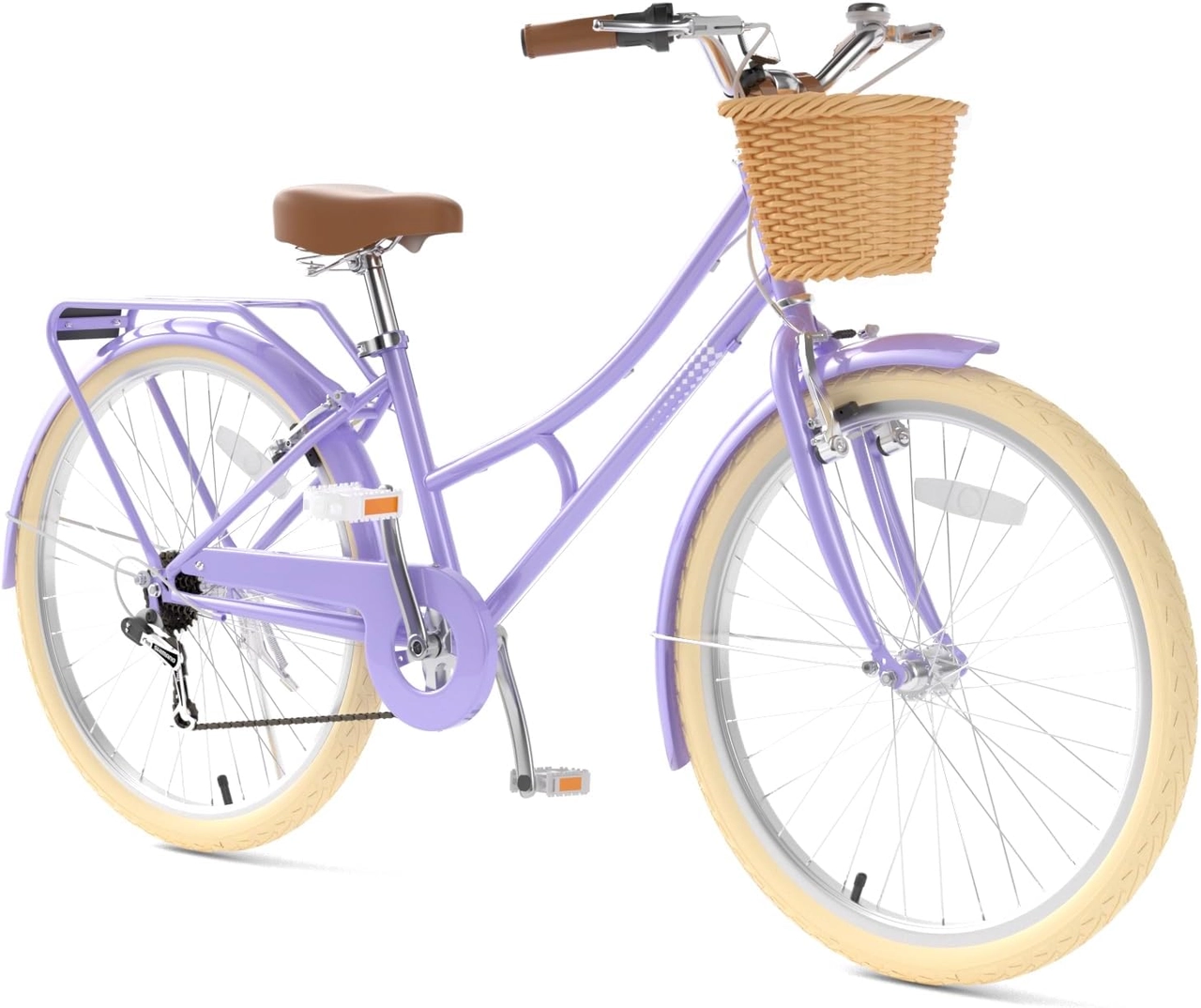
The 26-Inch XJD Beach Cruiser Bike for Girls – Purple, V-Brake is relevant only as a bicycle fit and compatibility comparison. Its supplied catalog options include 20-, 24- and 26-inch labels in Mint Green or Pink, plus Purple / 26 Inch. Those sizes let a rider compare against measured height, while the title identifies the purple 26-inch version and its V-brake. The catalog facts do not establish child-carrier compatibility, load capacity or suitability for carrying an infant, so the exact manuals and a mechanic must settle those questions.
Fit the infant’s helmet and restraint
Use a bicycle helmet intended for the infant only when the child is eligible to ride under the carrier instructions, local rules and medical guidance. The U.S. Consumer Product Safety Commission advises that a bicycle helmet should fit properly, sit level and have its straps adjusted according to the manufacturer’s instructions. Replace guesswork with the helmet maker’s fitting steps.
Secure every carrier harness, buckle and foot restraint exactly as its manual directs. Remove loose cords or clothing that could reach moving parts. Confirm that the child’s position remains supported and that no accessory interferes with the adult’s steering, pedaling or braking.
Practice before taking the first ride
- Have a mechanic check the installed carrier if any mounting detail is uncertain.
- Practice mounting, walking, starting, turning and braking with the carrier empty in a traffic-free area.
- Add only an allowed practice load described by the carrier manufacturer; do not use an improvised load.
- When all checks pass, choose a short, quiet route and ride conservatively.
Before every trip, inspect the mount, restraints, tires and brakes using the relevant manuals. Stop immediately if the carrier shifts, handling feels unstable, the infant becomes distressed or any component behaves unexpectedly.
Your next decision
Measure the adult rider and infant now, identify the exact carrier, and compare its compatibility and load limits with the exact bicycle manual. Consider the supplied XJD cruiser only if its wheel-size option fits the adult and its manufacturer confirms the intended carrier; otherwise, it is a comparison point rather than an infant-transport solution.
Bikes for your next adventure
-

Kids Bike Helmet by XJD for Boys & Girls – Black, Blue, Green, Pink, Purple
The XJD Kids Bike Helmet covers a wide 2-to-8-year age range thanks to two head-…$59.99
-

Kids Bike Helmet by XJD for Girls – Pink
The XJD Kids Bike Helmet in Pink is a lightweight multi-sport helmet for girls r…$59.99
$99 -

XJD Kids Bike for Girls – Pink, 12/14/16/20 Inch with Training Wheels
The XJD Kids Bike for Girls in Pink is a training-wheel bike built to carry your…$139
$159