

How to size a bike for a kid
Measure your child’s standing height and inseam, then compare height with the wheel-size chart below. Confirm stand-over clearance, easy reach and brake control on the actual bike before choosing.
Measure the rider first
Have the child wear the shoes they normally use for riding. Measure standing height from the floor to the top of the head. Then measure inseam from the floor to the crotch while the child stands straight with feet slightly apart.
Height provides the most useful starting point for wheel size. Inseam helps you check whether the child can stand over the bicycle comfortably. Record both measurements rather than choosing from age alone.
Compare height with the XBikes starting points
| Wheel size | Starting age | Rider height |
|---|---|---|
| 12 Inch | 3–4 | 34–40 in / 86–102 cm |
| 14 Inch | 3–6 | 37–45 in / 94–114 cm |
| 16 Inch | 4–7 | 40–48 in / 102–122 cm |
| 18 Inch | 5–9 | 43–52 in / 109–132 cm |
| 20 Inch | 7–12 | 48–60 in / 122–152 cm |
| 24 Inch | 10–14 | 54–64 in / 137–163 cm |
| 26 Inch | Youth and adults | Over 60 in / 153 cm |
These ranges are starting points, not proof of fit. Where ranges overlap, do not automatically choose the larger wheel. Compare both sizes on the child and favor the bike they can control confidently now.
Check the bike with the child aboard
Have the child try the assembled bicycle under close adult supervision. A suitable wheel-size label does not guarantee that a particular frame, saddle position or handlebar position will fit.
- Stand-over: Ask the child to straddle the bicycle with both feet flat on the ground. The frame should not prevent a comfortable, stable stance.
- Starting and stopping: The child should be able to get on, start and stop without the bicycle feeling too tall or unwieldy.
- Reach: With hands on the bars, the child should not need to stretch excessively or lose a relaxed, controlled posture.
- Brake control: Confirm that the child can reach and operate the bicycle’s brakes reliably. Do not assume that being able to touch a brake control means the child can use it effectively.
- Confidence: Watch for smooth steering and calm low-speed control. A hesitant rider may need the smaller of two plausible sizes.
Follow the exact product manual for assembly and adjustment. If the instructions are unclear, parts do not align correctly or you cannot verify brake operation, use a qualified bicycle mechanic.
Why buying for growth causes problems
Do not buy an oversized bicycle simply so the child can grow into it. A bike that is too large can make standing over, reaching, steering and braking harder today. Modest adjustment room is useful only when the child already passes every current fit check.
Repeat the checks after a growth spurt and whenever the child begins to look cramped, reaches awkwardly or loses easy control. Wheel size is only one part of fit; two bicycles with the same wheel label can still feel different.
How the supplied 12, 14 and 16 Inch options help
The supplied catalog choices are relevant when the measured rider falls within the 12, 14 or 16 Inch starting ranges and still passes an individual fit check. Each provides those three wheel-size labels, so the products can serve as direct catalog comparison points across overlapping ranges.
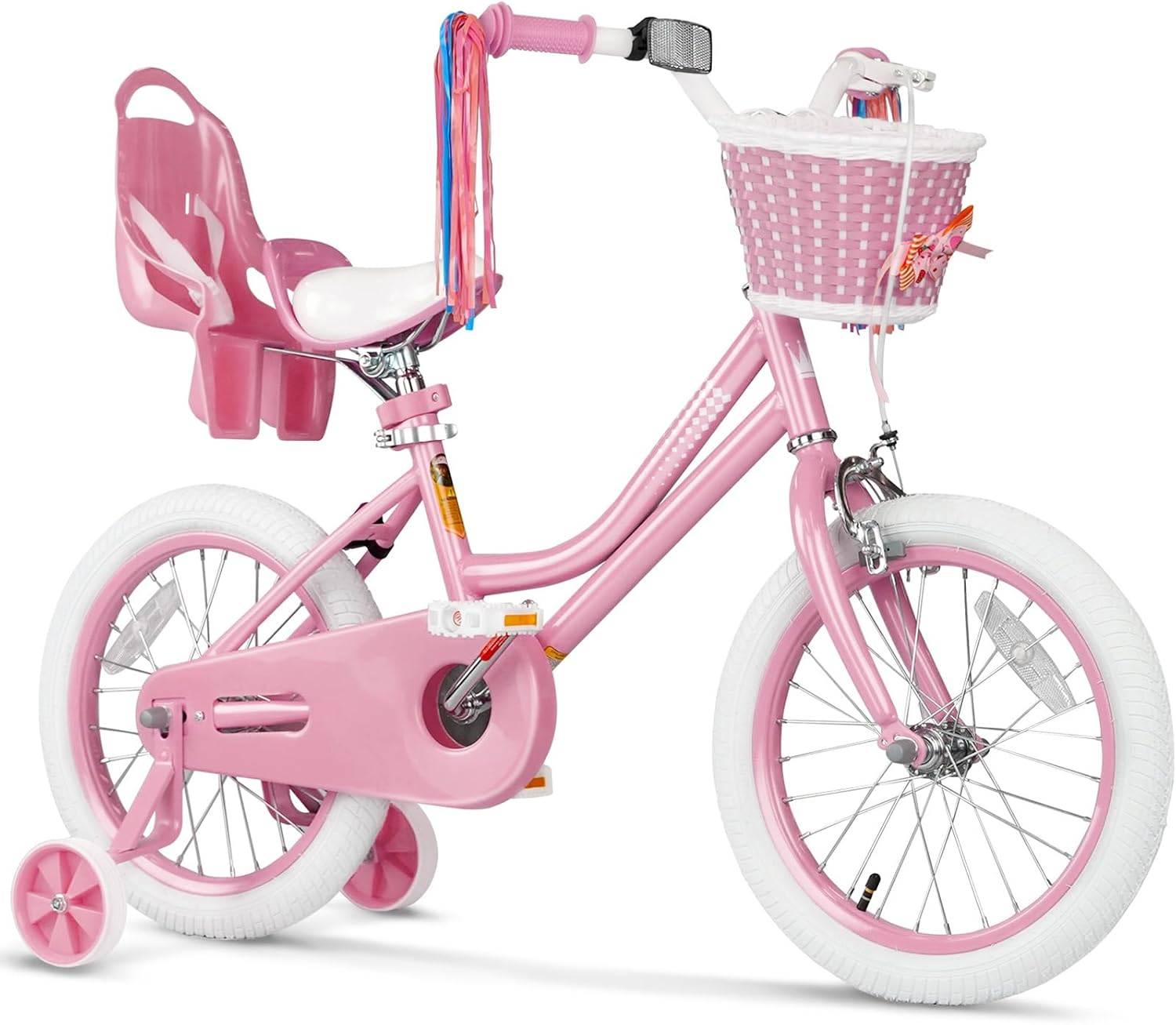 XJD Pink Girls' Bike – Kids 12/14/16 Inch Training Wheel Bicycle
A training wheel bike with supplied 12 Inch, 14 Inch and 16 Inch SKU labels, relevant for comparison only when the rider’s measured height and individual fit check support one of those sizes.
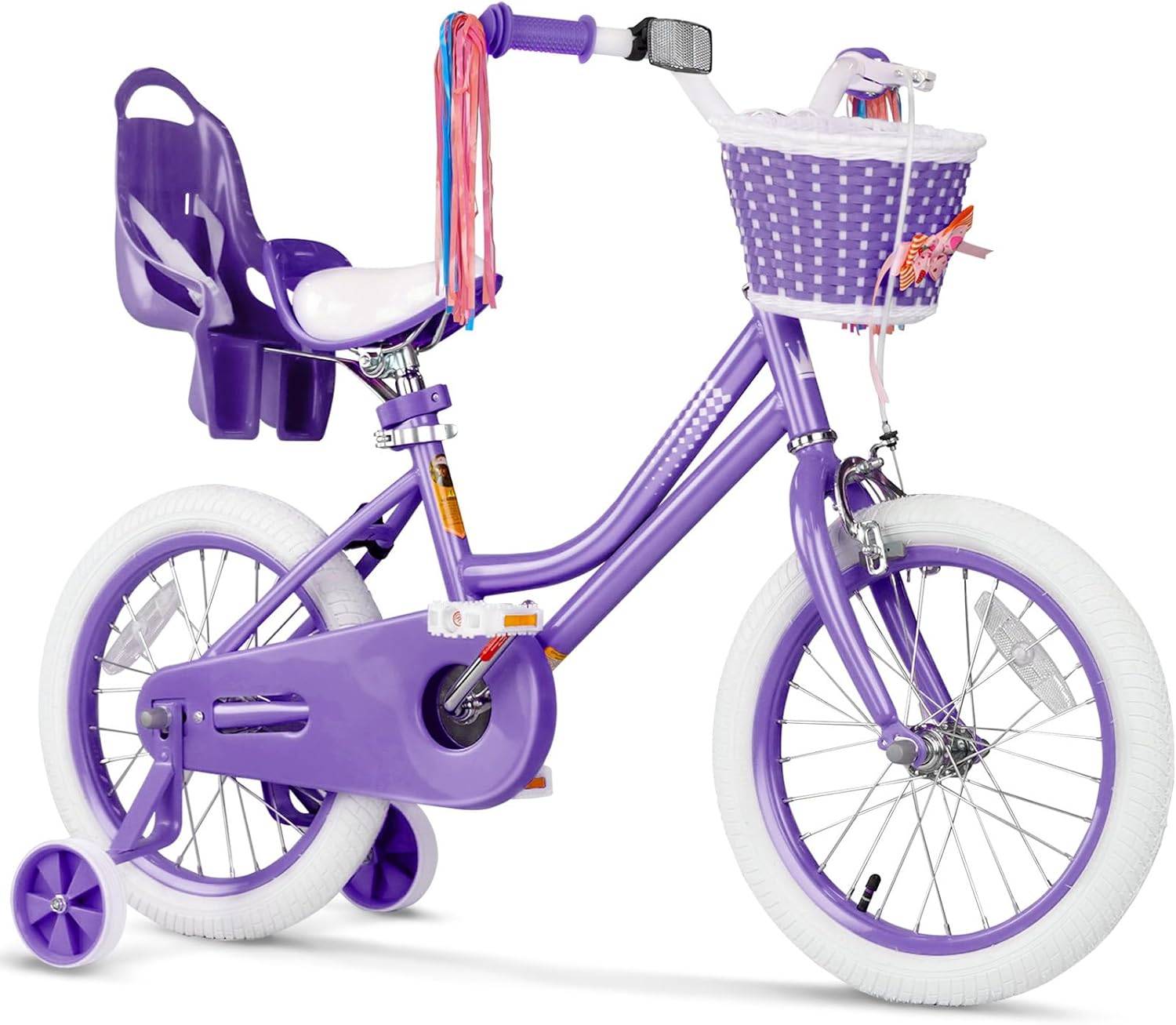 XJD Girls Bike for Kids Ages 3-8, 12/14/16 Inch with Training Wheels – Purple
Offers training wheel bike SKUs labeled 12 Inch, 14 Inch and 16 Inch. The age wording in its title is a catalog label, so determine fit from XBikes height ranges and an actual rider check.
 Girls 12/14/16 Inch Kids Bike by XJD with Training Wheels – Peach
A training wheel bike available under supplied 12 Inch, 14 Inch and 16 Inch SKU labels. Compare the appropriate labeled version only after measuring the child and confirming stand-over, reach, braking and control.
- XJD Pink Girls' Bike – Kids 12/14/16 Inch Training Wheel Bicycle is categorized as a training wheel bike and has 12 Inch, 14 Inch and 16 Inch SKU labels.
- XJD Girls Bike for Kids Ages 3-8, 12/14/16 Inch with Training Wheels – Purple is also categorized as a training wheel bike with the same three supplied size labels. “Ages 3-8” is part of its catalog title, not fit evidence; use the XBikes height ranges and an actual fit check.
- Girls 12/14/16 Inch Kids Bike by XJD with Training Wheels – Peach is a training wheel bike offered under 12 Inch, 14 Inch and 16 Inch SKU labels.
These products are not relevant substitutes if measurement and testing point to 18, 20, 24 or 26 Inch wheels. A nearby catalog size is not equivalent to the size the rider needs.
Make the final size decision
Choose only after completing this sequence: measure height and inseam, identify the plausible wheel range, have the child try the exact bicycle, and verify stand-over, reach, stopping, brake operation and confident control. If either overlapping size works, select according to present control rather than hoped-for growth.
Finish the setup with a properly fitting bicycle helmet. It should sit level and its straps should be used according to the helmet manufacturer’s instructions. If the child cannot confidently pass every fit check, pause the purchase and try another size or bicycle.
Bikes for your next adventure
-

Kids Bike Helmet by XJD for Boys & Girls – Black, Blue, Green, Pink, Purple
The XJD Kids Bike Helmet covers a wide 2-to-8-year age range thanks to two head-…$59.99
-

Kids Bike Helmet by XJD for Girls – Pink
The XJD Kids Bike Helmet in Pink is a lightweight multi-sport helmet for girls r…$59.99
$99 -

XJD Kids Bike for Girls – Pink, 12/14/16/20 Inch with Training Wheels
The XJD Kids Bike for Girls in Pink is a training-wheel bike built to carry your…$139
$159